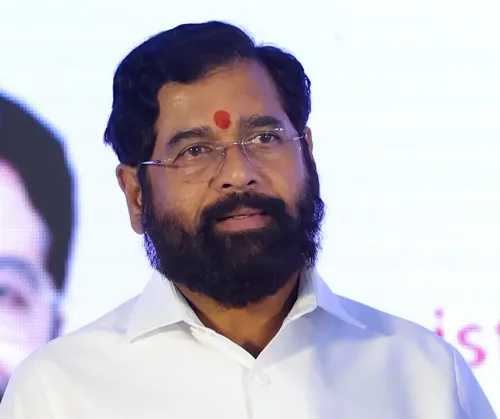
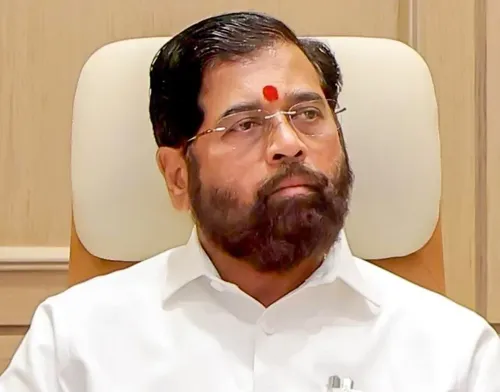
Eknath Shinde slams Uddhav Thackeray: 'Protect yourselves before Ram'
Synopsis
Eknath Shinde turned Uddhav Thackeray's Ram Raksha protest into a political ambush — invoking Balasaheb Thackeray, the Ramayana, and the 2019 power grab in a single speech. His core charge: the UBT's agitation is not about Lord Ram at all, but a desperate bid for political survival dressed in saffron.
Key Takeaways
Maharashtra Deputy CM Eknath Shinde attacked Uddhav Thackeray's Ram Raksha agitation on 18 July , calling it political opportunism.
Shinde accused the Shiv Sena (UBT) of abandoning Balasaheb Thackeray's Hindutva ideology by allying with the Congress in 2019 .
He drew a Ramayana parallel, arguing that those who abandoned their founder's principles have no moral right to invoke Lord Ram.
Shinde challenged the UBT to explain why it did not first invite its own allies — Rahul Gandhi , Sonia Gandhi , and Akhilesh Yadav — to the Ram Raksha protest.
He credited PM Narendra Modi with building the Ram Temple in Ayodhya and repealing Article 370 in Jammu and Kashmir .
Shinde cited the Maharashtra election results as voters' verdict on the UBT's ideological compromises.
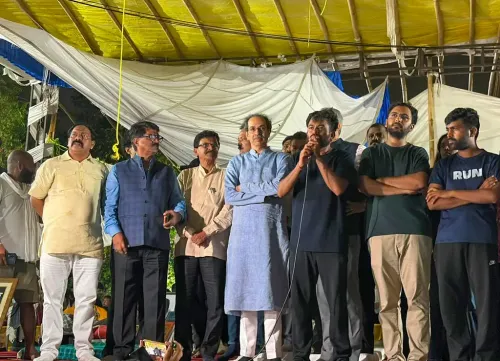
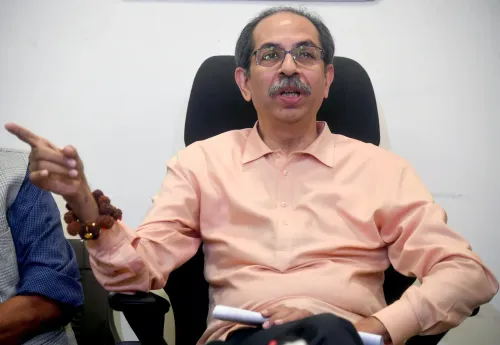
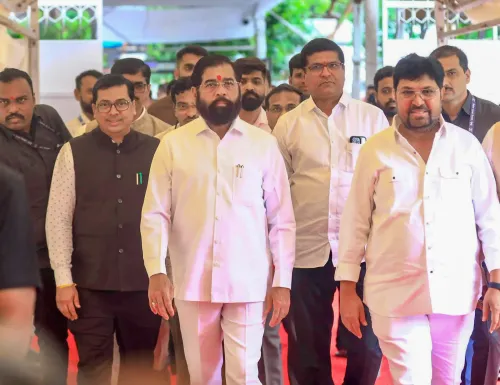
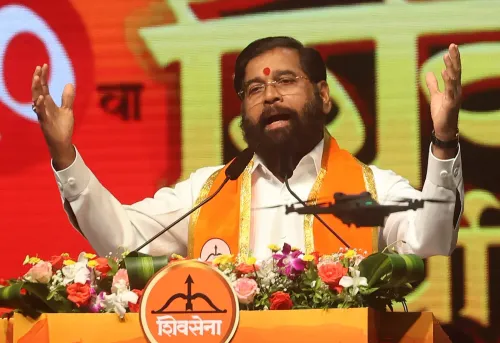
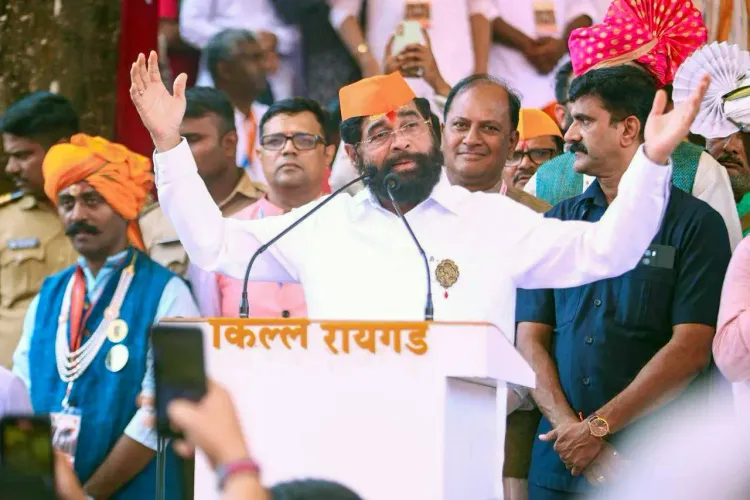
Maharashtra Deputy Chief Minister and Shiv Sena chief Eknath Shinde on Saturday, 18 July launched a sharp attack on the Uddhav Thackeray-led Shiv Sena (UBT) over its 'Ram Raksha' agitation, accusing the faction of opportunism and ideological betrayal. The broadside came hours after Thackeray led a Ram Raksha protest in Nagpur against the reported theft at the Ayodhya temple.
The Trigger: Ram Raksha Protest in Nagpur
Uddhav Thackeray led the Ram Raksha demonstration in Nagpur, framing the protection of Lord Ram as the duty of true devotees. Shinde, however, dismissed the agitation as political theatre, arguing that those who once made derogatory remarks about Ram devotees and publicly labelled their own Hindutva politics a 'mistake' have no credibility invoking the deity's name now.
'Hindutva is not a garment that can be shed and worn at convenience,' Shinde said, invoking the legacy of late Shiv Sena founder Balasaheb Thackeray, who taught the party to declare with pride: 'Garv se kaho, hum Hindu hain' (Say with pride, we are Hindus).
Shinde's Ramayana Parallel
In one of his sharpest rhetorical moves, Shinde drew a direct parallel with the Ramayana. He noted that Lord Ram willingly accepted a 14-year exile to honour a promise made by his father. By contrast, he argued, those who abandoned their own founder's principles midway possess no moral authority to speak on Ram's ideals.
'This is not an effort for Ram Raksha, but a desperate attempt at Self-Raksha to save their own party,' he said, framing the UBT's agitation as an act of political self-preservation rather than genuine devotion.
The Alliance Question
Shinde challenged the UBT leadership on the logic of its outreach for the agitation. He argued that if the Ram Raksha movement were sincere, the faction should have first invited its own political allies — Leader of the Opposition in Lok Sabha Rahul Gandhi, Sonia Gandhi, and Samajwadi Party chief Akhilesh Yadav — before reaching out to Rashtriya Swayamsevak Sangh (RSS) Sarsanghchalak and Maharashtra Chief Minister Devendra Fadnavis.
He reminded audiences that these very opposition leaders had once mockingly demanded to know the date of the Ram Mandir construction — a project that was ultimately completed under Prime Minister Narendra Modi.
Modi's Record vs UBT Criticism
Shinde highlighted two decisions he described as historic: the construction of the Ram Temple in Ayodhya and the repeal of Article 370 in Jammu and Kashmir, both under PM Modi's leadership. He contended that had Balasaheb Thackeray been alive, he would have wholeheartedly welcomed both moves.
'Instead, the UBT leadership remains consumed by criticising PM Modi and Union Home Minister Amit Shah, completely ignoring the country's rapid progress under their vision,' Shinde said.
Electoral Verdict as Moral Compass
Concluding his remarks, Shinde pointed to the Maharashtra election results as a public verdict on the UBT's ideological compromises. He asserted that voters had already delivered a fitting response to those who, in 2019, sacrificed Balasaheb Thackeray's ideology for the sake of power. The people of Maharashtra, he said, are politically astute and will not be misled by what he called convenient Hindutva.
The war of words signals that the Shiv Sena split — and the battle over Balasaheb Thackeray's legacy — remains one of Maharashtra's most combustible political fault lines ahead of future electoral contests.
Point of View
He forces the UBT into an impossible choice between its Hindutva optics and its Maha Vikas Aghadi obligations. The deeper contest, however, is over who owns Balasaheb Thackeray's legacy — a question Maharashtra's courts and voters have both weighed in on, without fully settling it. What mainstream coverage underplays is that Shinde's own Hindutva credentials depend on this narrative holding; any crack in the 'original Shiv Sena' claim weakens his factional legitimacy as much as it damages Uddhav's. The battle over Ram is, at its core, a battle over the Sena's soul — and neither side can afford to lose it.
NationPress
17 Oct 2026
Frequently Asked Questions
What is the Ram Raksha agitation that triggered Eknath Shinde's attack?
The Ram Raksha agitation was a protest led by Uddhav Thackeray in Nagpur on 18 July against the reported theft at the Ayodhya temple, framing the protection of Lord Ram as the duty of true devotees. Shinde dismissed it as a political stunt, calling it 'Self-Raksha' aimed at saving the UBT faction rather than genuine religious concern.
Why did Shinde invoke Balasaheb Thackeray in his remarks?
Shinde argued that the Shiv Sena (UBT) has betrayed the ideology of Shiv Sena founder Balasaheb Thackeray by allying with the Congress and forces historically opposed to Hindutva. He recalled Balasaheb's signature slogan — 'Garv se kaho, hum Hindu hain' — to contrast authentic Hindutva with what he called the UBT's convenient adoption of it.
What was Shinde's Ramayana parallel about?
Shinde noted that Lord Ram accepted a 14-year exile to honour his father's promise, and argued that those who abandoned their own founder's principles for political power have no moral authority to speak on Ram's ideals. The parallel was a direct dig at Uddhav Thackeray's 2019 decision to break with the BJP and ally with the Congress.
Who did Shinde say should have been invited first to the Ram Raksha protest?
Shinde argued that if the UBT were genuinely sincere about Ram Raksha, it should have first invited its own political allies — Rahul Gandhi, Sonia Gandhi, and Samajwadi Party chief Akhilesh Yadav — before reaching out to RSS leadership and Chief Minister Devendra Fadnavis.
How did Shinde link the Maharashtra election results to his argument?
Shinde contended that Maharashtra voters had already delivered a verdict on the UBT's ideological compromises in the elections, teaching a lesson to those who sacrificed Balasaheb Thackeray's ideology in 2019 for the sake of power. He described the public as politically astute and unlikely to be swayed by what he called opportunistic Hindutva.