CM Pema Khandu launches artisan data bank at 12th National Handloom Day
Synopsis
Arunachal Pradesh CM Pema Khandu launched a state Artisan Data Bank, the Department of Textiles and Handicrafts website, and Atii – Arunachal Honey at the 12th National Handloom Day in Itanagar, while distributing SAMARTH certificates and Yarn Pass Books to weavers.
Key Takeaways
Arunachal Pradesh launched a dedicated Artisan Data Bank and Department of Textiles and Handicrafts website on 7 August 2026 at the 12th National Handloom Day.
Atii – Arunachal Honey was unveiled as a branded state product alongside the handloom-focused initiatives.
SAMARTH certificates and Yarn Pass Books were distributed to craftspeople, connecting them to the Ministry of Textiles' skill-development framework.
The SAMARTH scheme, launched in 2017 , targets training and certification for 10 lakh textile workers nationwide, including tribal weavers in the Northeast.
Outstanding weavers and artisans were publicly felicitated, recognising their role in preserving Arunachal's indigenous craft traditions.
The Artisan Data Bank is intended to bring informal weavers into the formal economy, improving their access to welfare schemes, credit, and organised markets.
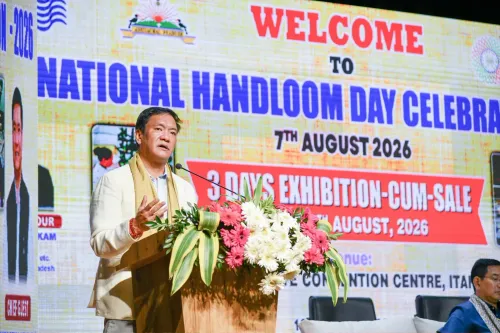
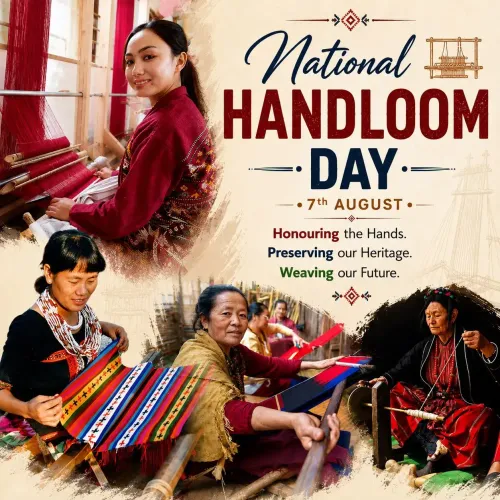
In Itanagar on 7 August 2026, Arunachal Pradesh Chief Minister Pema Khandu turned the 12th National Handloom Day into more than a ceremonial observance — he used it to arm the state's weavers and artisans with digital infrastructure, formal certification, and a new market identity.
A data bank, a website, and a jar of honey
The centrepiece of the event was the launch of the Department of Textiles and Handicrafts, Government of Arunachal Pradesh's official website alongside a dedicated Artisan Data Bank — a digital registry designed to bring the state's informal craft economy into the formal fold. Alongside these tools came the unveiling of Atii – Arunachal Honey, signalling a push to brand and market the state's natural produce alongside its textile heritage.
Khandu also oversaw the distribution of SAMARTH certificates and Yarn Pass Books to craftspeople — two instruments that sit at the heart of the Centre's strategy to formalise handloom livelihoods. The SAMARTH scheme, launched by the Ministry of Textiles in 2017, targets training and certification for 10 lakh workers across the textile value chain, and Arunachal's tribal weavers are among its intended beneficiaries.
Why a data bank changes everything for Arunachal's weavers
Northeastern India's handloom traditions are among the richest in the country, woven — literally — into the identity of dozens of tribal communities across Arunachal Pradesh. Yet for decades, those weavers operated largely outside the organised economy: no formal registration, limited access to welfare schemes, and little leverage in the market.
An artisan data bank directly attacks that gap. Once a weaver is registered, she becomes visible to scheme administrators, buyers, and banks. Yarn Pass Books extend that logic further, creating a documented supply-chain trail that can unlock credit and procurement links. Central and state governments have progressively built this architecture across the Northeast, and Arunachal's new data bank adds a state-specific layer to that national effort.
Felicitation and the faces behind the fabric
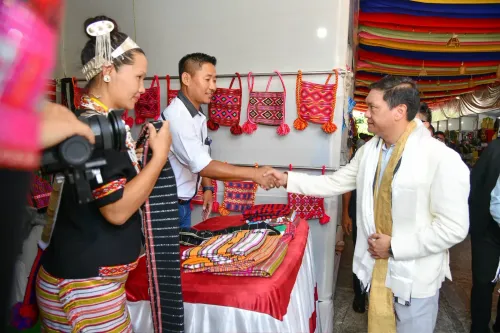
The event also made space for recognition. Outstanding weavers and artisans were felicitated publicly — a deliberate signal that the state sees cultural preservation and economic empowerment as the same project. National Handloom Day itself was instituted in 2015 by the Ministry of Textiles to commemorate the handloom sector and the Swadeshi movement, and the 12th edition in Itanagar carried that founding intent forward with tangible policy deliverables.
The next measure of success will be in the numbers: how many artisans enrol in the new data bank, how quickly SAMARTH certifications translate to income gains, and whether Atii honey and handloom products find organised retail and export channels. The infrastructure is now live — the work of filling it begins.
Point of View
Where tribal craft traditions carry both cultural weight and economic fragility. For CM Khandu, pairing infrastructure launches with public felicitation is a well-practised political grammar: it binds welfare delivery to visible recognition of community identity. The addition of a branded honey product alongside textile initiatives hints at an emerging effort to cluster Arunachal's artisanal economy under a single state brand. Whether the Artisan Data Bank achieves meaningful enrolment — the persistent weak link in similar schemes elsewhere — will determine if this day is remembered as a turning point or a ceremony.
NationPress
7 Aug 2026
Frequently Asked Questions
What is National Handloom Day and when is it celebrated?
National Handloom Day is observed every year on 7 August . It was instituted in 2015 by the Ministry of Textiles to honour India's handloom sector and commemorate the Swadeshi movement launched on the same date in 1905.
What is the SAMARTH scheme for weavers?
SAMARTH is a Ministry of Textiles skill-development scheme launched in 2017 that provides training and formal certification to workers across the textile value chain, including handloom weavers. It targets skilling of 10 lakh workers nationwide.
What is the Arunachal Pradesh Artisan Data Bank?
The Artisan Data Bank is a digital registry launched by the Department of Textiles and Handicrafts, Government of Arunachal Pradesh to formally register weavers and artisans, improving their access to government welfare schemes, credit, and organised markets.
What are Yarn Pass Books distributed to weavers?
Yarn Pass Books are documents issued to handloom weavers that record their yarn procurement, creating a formal supply-chain trail. They help weavers access subsidised yarn and can support credit linkages with banks and financial institutions.
What is Atii – Arunachal Honey?
Atii – Arunachal Honey is a branded honey product launched by the Arunachal Pradesh government at the 12th National Handloom Day event in Itanagar on 7 August 2026 , as part of a broader effort to market the state's artisanal products.