CM Pema Khandu Meets Padma Shri Literary Icons from Arunachal
Synopsis
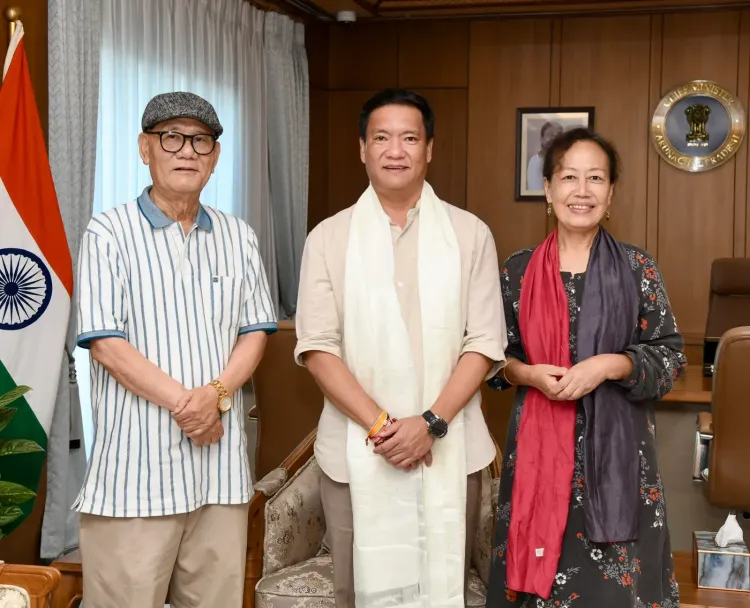
Arunachal Pradesh Chief Minister Pema Khandu received Padma Shri awardees Yeshe Dorjee Thongchi and Mamang Dai on July 29, 2026, honouring two of the state's most celebrated literary voices rooted in tribal culture and the Northeast's indigenous traditions.
Key Takeaways
CM Pema Khandu met Padma Shri awardees Yeshe Dorjee Thongchi and Mamang Dai on July 29, 2026 .
Yeshe Dorjee Thongchi is a nationally recognised Monpa-language writer documenting tribal life in Arunachal Pradesh .
Mamang Dai is a poet, novelist and journalist writing in English, known for capturing the ecology and indigenous traditions of the Northeast .
The meeting reflects a recurring pattern of Arunachal Pradesh state leaders publicly honouring Padma awardees from tribal literary communities.
Both writers hold the Padma Shri , India's fourth-highest civilian honour.
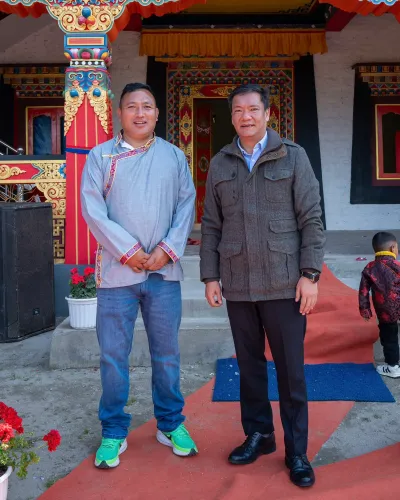
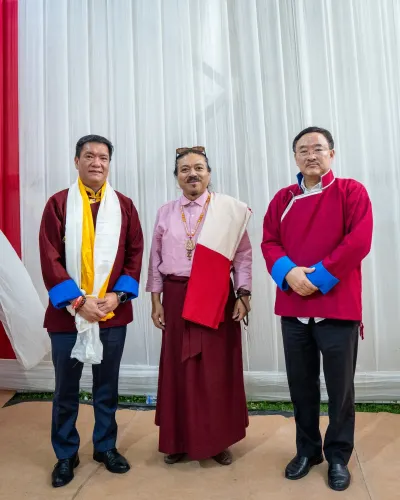
Two writers who have spent lifetimes giving voice to Arunachal Pradesh's tribal worlds walked into the Chief Minister's office on Wednesday, July 29, 2026 — and Arunachal Pradesh Chief Minister Pema Khandu made a point of marking the moment.
Padma Shri awardees Shri Yeshe Dorjee Thongchi and Smt. Mamang Dai — two of the state's most celebrated literary figures — called on the Chief Minister, who described the interaction as a genuine pleasure and wished both writers continued health and creative excellence.
The two writers and what they represent
Yeshe Dorjee Thongchi is one of the foremost voices in Monpa-language literature, his body of work a sustained act of documentation — tribal life, oral memory, and the cultural textures of Arunachal Pradesh rendered into prose that has earned national recognition. Mamang Dai works in English, her poetry and novels threading together the ecology, indigenous traditions, and layered histories of the Northeast for readers far beyond the region's borders. Together, they represent two distinct but complementary literary traditions: one rooted in a tribal mother tongue, the other carrying those same landscapes into a global idiom.A pattern of recognising the Northeast's literary voices
State leaders in Arunachal Pradesh have periodically hosted Padma awardees to publicly acknowledge contributions to literature and culture from the state's tribal communities. The gesture sits within a broader national pattern of elevating indigenous writers from the Northeast — communities whose literary and oral traditions have long existed outside mainstream visibility. A meeting at the Chief Minister's level signals that the state views cultural recognition as a matter of official importance, not merely a ceremonial footnote. For both writers, the Padma Shri — India's fourth-highest civilian honour — marks a form of national acknowledgement that their work, rooted in some of the country's most remote and ecologically distinct landscapes, belongs in the wider conversation about Indian literature and identity.Point of View
Not just peripheral recognition. It fits a broader BJP-era pattern of deploying Padma honours as a bridge between New Delhi's national narrative and the Northeast's distinct cultural identities. For a frontier state where indigenous languages and oral traditions face pressure from modernisation, state-level visibility for writers like Thongchi and Dai carries real symbolic weight. The question going forward is whether such gestures translate into sustained institutional support — literary festivals, translation grants, school curricula — or remain warm photo opportunities.
NationPress
29 Jul 2026
Frequently Asked Questions
Who are Yeshe Dorjee Thongchi and Mamang Dai?
Yeshe Dorjee Thongchi is an Arunachali writer celebrated for his work in the Monpa language , documenting tribal life and culture. Mamang Dai is a poet, novelist and journalist who writes primarily in English, known for her portrayal of the Northeast's indigenous traditions and ecology.
Why did CM Pema Khandu meet these writers?
CM Pema Khandu received the two writers as Padma Shri awardees to acknowledge their contributions to literature and culture from Arunachal Pradesh 's tribal communities, a practice state leaders in the region have followed periodically.
What is the Padma Shri award?
The Padma Shri is India's fourth-highest civilian honour, awarded by the Government of India to recognise distinguished contributions in fields including arts, literature, science, and public service.
What language does Mamang Dai write in?
Mamang Dai writes primarily in English , using the language to bring the landscapes, ecology, and indigenous traditions of Arunachal Pradesh and the broader Northeast to a wider national and international readership.
What is Pema Khandu's role?
Pema Khandu is the Chief Minister of Arunachal Pradesh and a senior leader of the BJP .