CM Pema Khandu Welcomes Buddha's Holy Relics to Arunachal
Synopsis
The sacred Piprahwa Relics of Bhagwan Buddha arrived in Arunachal Pradesh on 31 October 2026 for a public exposition at Tawang, Bomdila and Namsai. CM Pema Khandu welcomed the relics and thanked PM Modi for his message recognising the state's place in India's Buddhist civilisational heritage.
Key Takeaways
The Piprahwa Relics of Bhagwan Buddha arrived in Arunachal Pradesh on 31 October 2026 for a historic public exposition.
The relics will be displayed at three sites: Tawang , Bomdila , and Namsai — representing the state's Mahayana and Theravada Buddhist communities.
Prime Minister Narendra Modi sent a personal message recognising Arunachal Pradesh's role in India's Buddhist heritage.
CM Pema Khandu invited devotees, scholars and international visitors to attend the exposition.
The event continues a pattern of rotating relic expositions across Indian states, linked to the Swadesh Darshan Buddhist Circuit launched in 2014-15 .
Tawang's monastery, one of India's largest, gives the exposition geopolitical as well as spiritual significance given Arunachal's border with Bhutan and China.
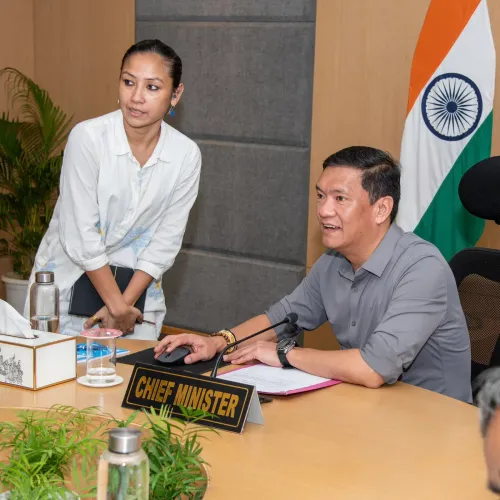
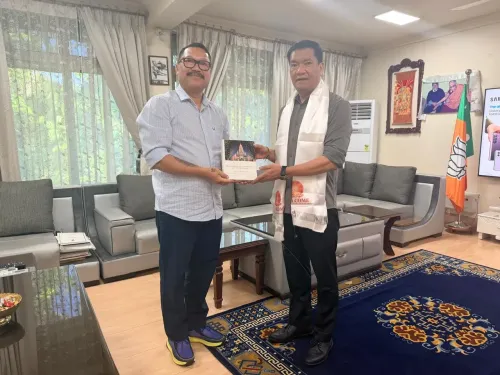
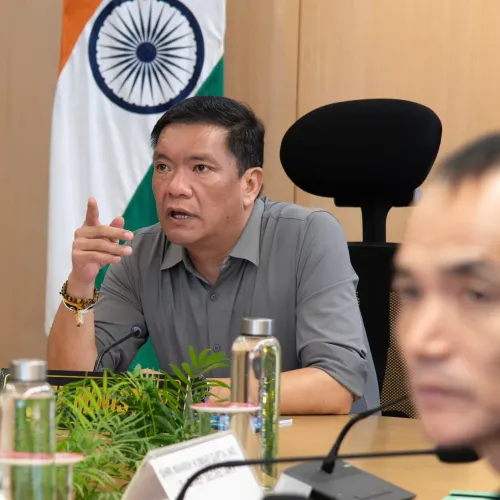
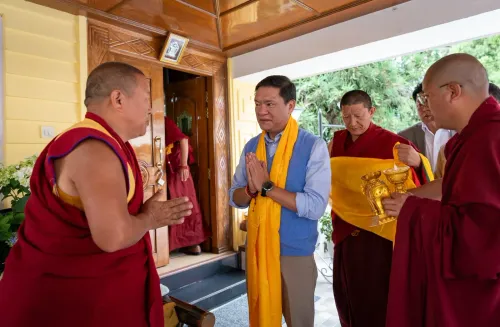
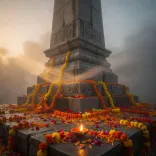
A moment centuries in the making arrived in Arunachal Pradesh on Saturday, 31 October 2026, as the sacred Piprahwa Relics of Bhagwan Buddha touched down in the state — drawing devotees, scholars, and pilgrims toward three of Northeast India's most storied Buddhist heartlands. Arunachal Pradesh Chief Minister Pema Khandu marked the occasion with a message of spiritual gratitude, welcoming the relics and acknowledging a personal note from Prime Minister Narendra Modi that recognised the state's deep roots in India's Buddhist civilisational heritage.
Piprahwa Relics reach Tawang, Bomdila and Namsai
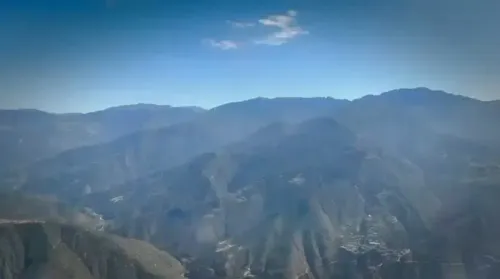
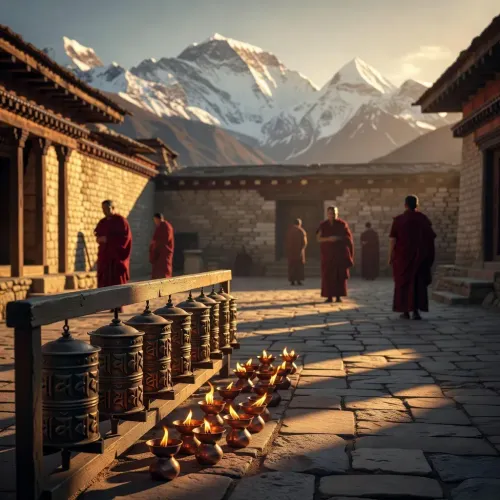
The exposition spans three distinct Buddhist centres across the state: Tawang, home to one of India's largest and most revered Himalayan monasteries; Bomdila, a hill town with strong Tibetan Buddhist traditions; and Namsai, in the state's eastern plains, known as the 'Land of the Golden Pagoda.' Together, the three sites represent the full geographic and sectarian breadth of Buddhism in Arunachal Pradesh — Mahayana in the high mountains, Theravada in the lowlands.
The Piprahwa Relics are among the most significant Buddhist artefacts held in India. Discovered at Piprahwa in Uttar Pradesh, the site identified with ancient Kapilavastu, the relics have been periodically placed on public exposition across Indian states with substantial Buddhist populations. Each such event draws pilgrims from across South and Southeast Asia, as well as Tibet-linked diaspora communities.
PM Modi's message and the soft-power signal it carries
Chief Minister Khandu expressed particular gratitude for Prime Minister Modi's personal message, noting that it 'recognises Arunachal Pradesh's special place in India's rich Buddhist heritage.' That framing is deliberate. Central governments have consistently positioned India's Buddhist circuit — from Bodh Gaya to Tawang — as a pillar of both domestic spiritual tourism and international soft power, particularly in dialogue with Buddhist-majority nations in Southeast and East Asia.
The Swadesh Darshan scheme, launched in 2014-15, specifically included a Buddhist Circuit component covering sites in Arunachal Pradesh, embedding the state's monasteries into a wider national pilgrimage network. The current exposition continues that arc, giving Arunachal a visible moment on India's civilisational stage.
A state defined by its monasteries — and its geopolitics
Arunachal Pradesh's Buddhist identity is inseparable from its geopolitical position. The state shares a long border with both Bhutan and a disputed line with China, and Tawang's Gelug monastery has historically held significance for Tibetan Buddhism — making every major religious event here resonate well beyond state boundaries. Hosting the Piprahwa Relics at this moment is as much a cultural affirmation as it is a spiritual one.
Khandu extended a warm welcome to 'devotees, scholars and visitors from across the country and the world,' framing the exposition as an open, universal event rather than a closed religious observance. The state's tourism sector stands to benefit from the footfall, with visitor numbers at all three venues expected to climb sharply over the exposition period.
When relics travel, history moves with them — and Arunachal Pradesh just put itself at the centre of India's living Buddhist story.
Point of View
New Delhi and Itanagar are reasserting India's custodianship of the global Buddhist tradition at a site whose spiritual and territorial significance is contested by Beijing. PM Modi's personal message to CM Khandu amplifies the Centre's sustained strategy of using Buddhist soft power as a foreign-policy instrument, particularly in its engagement with Bhutan, Southeast Asia, and the Tibetan diaspora. For the BJP government in Arunachal, the event also cements Pema Khandu's positioning as both a guardian of the state's cultural identity and a trusted partner of the national leadership.
NationPress
31 Oct 2026
Frequently Asked Questions
What are the Piprahwa Relics of Buddha?
The Piprahwa Relics are sacred remains of Bhagwan Buddha discovered at Piprahwa in Uttar Pradesh, the site associated with ancient Kapilavastu. They are among the most revered Buddhist artefacts held in India and are periodically placed on public exposition across the country.
Where will the Buddha relics be displayed in Arunachal Pradesh?
The relics are being exhibited at three sites: Tawang, Bomdila, and Namsai — covering both the high-altitude Mahayana Buddhist communities in the west and the Theravada Buddhist communities in the eastern plains of Arunachal Pradesh.
Why is Tawang significant for Buddhism in India?
Tawang is home to one of the largest Buddhist monasteries in India, with deep ties to the Gelug school of Tibetan Buddhism. It holds immense religious, cultural, and geopolitical importance given Arunachal Pradesh's borders with Bhutan and its disputed boundary with China.
What is the Swadesh Darshan Buddhist Circuit?
The Swadesh Darshan scheme, launched in 2014-15 by the Ministry of Tourism, included a Buddhist Circuit component to develop and promote pilgrimage and heritage sites in states like Arunachal Pradesh, connecting them to a national network of Buddhist cultural tourism.
Who can attend the Piprahwa Relics exposition in Arunachal Pradesh?
CM Pema Khandu has extended an open invitation to devotees, scholars, and visitors from across India and the world to attend the exposition at Tawang, Bomdila, and Namsai.