CM Pinarayi Backs SFI Hunger Strike at Jantar Mantar
Synopsis
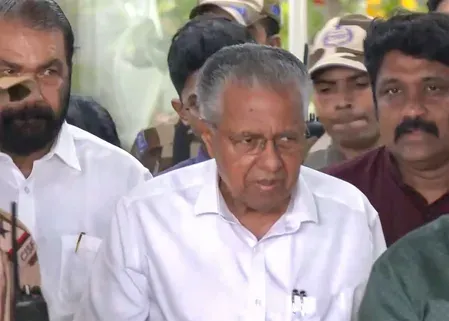
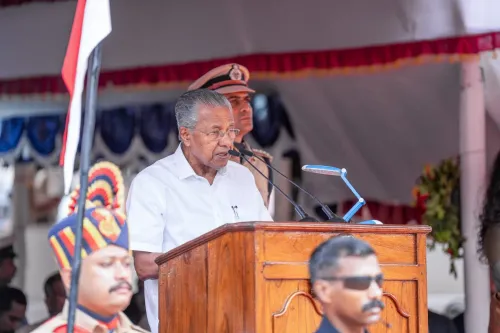
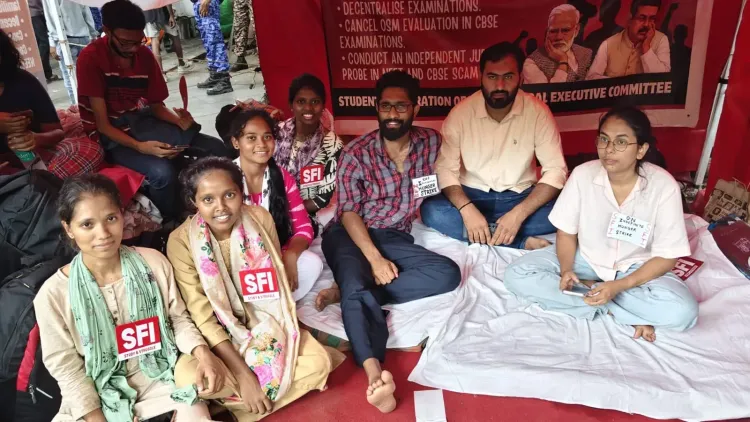
Kerala Chief Minister Pinarayi Vijayan on 19 July 2026 expressed solidarity with SFI leaders Adarsh M Saji and Aishe Ghosh, who are on hunger strike at Jantar Mantar, framing their protest as a generational fight against what he called authoritarian politics of the Sangh Parivar and the Modi government.
Key Takeaways
Kerala Chief Minister Pinarayi Vijayan publicly backed the SFI hunger strike at Jantar Mantar on 19 July 2026 .
SFI leaders Adarsh M Saji and Aishe Ghosh are the named participants in the hunger strike.
Vijayan characterised the protest as resistance to 'the authoritarian politics of the Sangh Parivar and the Modi government.' Jantar Mantar in New Delhi has been a recurring venue for left and opposition student protests, including during the Citizenship Amendment Act agitation of 2019-2020 .
The Kerala LDF government has consistently opposed central government policies on education and federal resource allocation since 2016 .
No official response from the central government or BJP to the specific protest was available at the time of publication.
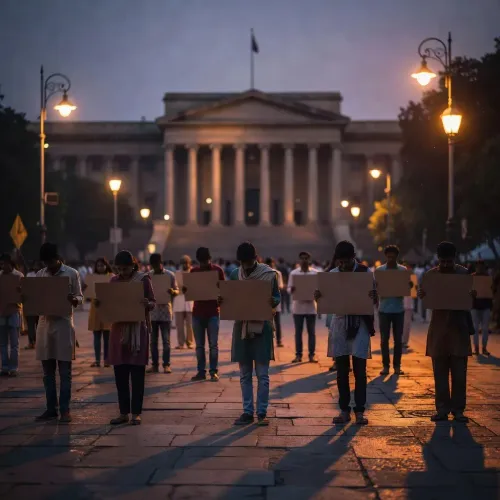
Kerala Chief Minister Pinarayi Vijayan on Sunday, 19 July 2026, expressed solidarity with Student Federation of India (SFI) leaders Adarsh M Saji and Aishe Ghosh, who are on hunger strike at Jantar Mantar, New Delhi, calling their protest a symbol of a generation 'that refuses to be silenced.'
Context
In his post on X, Vijayan declared that 'no amount of repression can force India's students and youth to surrender to the authoritarian politics of the Sangh Parivar and the Modi government.' He described the hunger strike by the two SFI leaders as reflecting 'the determination of a generation' fighting for 'justice, democratic rights and the future of our nation.' The Chief Minister closed with an unequivocal message: 'Unwavering solidarity with this struggle. Salute!'
Aishe Ghosh is a prominent left student activist and former president of the Jawaharlal Nehru University Students' Union (JNUSU), closely associated with the SFI, the student wing of the Communist Party of India (Marxist). Adarsh M Saji is a central leadership figure of the SFI. The two leaders chose Jantar Mantar, a designated protest site in the heart of New Delhi, as the venue for their demonstration.
Policy Backdrop
The SFI and allied student organisations have a long record of mobilising at Jantar Mantar on issues ranging from the Citizenship Amendment Act protests of 2019-2020 to university autonomy and federal education policy. The Kerala government under the Left Democratic Front (LDF), in power since 2016, has consistently opposed several policies of the BJP-led central government, including measures affecting higher education institutions and state fiscal transfers.
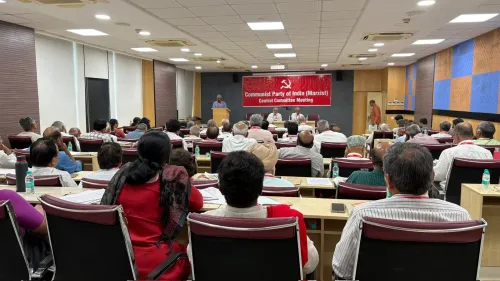
Vijayan, as a CPI(M) Politburo member, occupies one of the most senior positions in the Indian left and has routinely used his public platform to contest what he characterises as centralising tendencies of the Modi government. His statement frames the hunger strike not as an isolated student action but as part of a broader democratic struggle.
Stakeholders and Impact
The hunger strike and the Chief Minister's backing draw attention to the continuing contestation over student rights, campus freedoms, and the space for political dissent in Indian public life. For the SFI and left student politics more broadly, a statement of solidarity from a sitting Chief Minister lends institutional weight to what is otherwise a street-level protest.
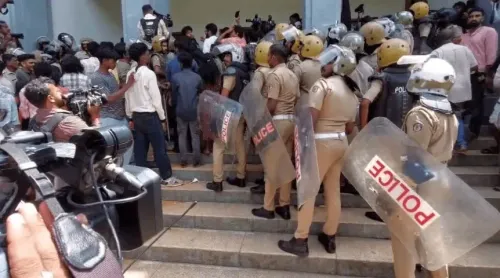
The BJP and Sangh Parivar affiliates have in the past contested characterisations of their governance as authoritarian, arguing that law enforcement actions on campuses respond to genuine public-order concerns. No official response from the central government or BJP to this specific protest had been issued at the time of publication.
What's Next
Observers will watch whether other opposition leaders or state governments add their voices to the solidarity chorus, and whether the hunger strike prompts any formal response from the Union government or Delhi authorities. The protest also tests the organisational capacity of the SFI to sustain momentum and attract wider coalition support beyond the left. If the demonstration grows in scale or draws a government reaction, it could sharpen the already polarised debate over democratic dissent and student politics ahead of upcoming electoral cycles.
Point of View
Positioning left student activism as the frontline of federal and democratic resistance. The choice of Jantar Mantar, historically freighted with protest symbolism, underscores the performative dimension of such demonstrations. Whether this solidarity translates into sustained policy pressure or remains rhetorical will depend on the protest's ability to build cross-party coalitions in the weeks ahead.
NationPress
20 Jul 2026
Frequently Asked Questions
Why is Kerala CM Pinarayi Vijayan supporting the SFI hunger strike?
Vijayan expressed solidarity because the SFI hunger strike at Jantar Mantar aligns with the CPI(M)'s opposition to what he called the authoritarian politics of the Sangh Parivar and the Modi government, framing it as a fight for democratic rights and student freedoms.
Who are Adarsh M Saji and Aishe Ghosh?
Adarsh M Saji is a central leader of the Student Federation of India (SFI), the student wing of CPI(M). Aishe Ghosh is a prominent left student activist and former president of the Jawaharlal Nehru University Students' Union (JNUSU), also closely associated with the SFI.
What is the SFI hunger strike at Jantar Mantar about?
The SFI leaders are on hunger strike at Jantar Mantar in New Delhi to protest against what they describe as repression of student dissent. The specific immediate trigger of the 2026 hunger strike has not been independently verified beyond the Chief Minister's statement.
What is Jantar Mantar and why is it used for protests?
Jantar Mantar in New Delhi is a designated protest site with historical significance, commonly used by political parties, unions, and civil society groups for demonstrations. It has hosted major protests including the 2019-2020 agitation against the Citizenship Amendment Act.
Has Kerala's government previously opposed the Modi government on student or education issues?
Yes. The Kerala LDF government has publicly opposed several central government policies since 2016, including measures affecting higher education and state fiscal transfers, and CPI(M) student bodies have regularly mobilised on campus freedom and federal rights issues.