CM Pinarayi flags concern over Vizhinjam stake transfer to MSC
Synopsis
Kerala CM Pinarayi Vijayan on July 2, 2026, publicly opposed reports of a 49% stake transfer in Vizhinjam International Seaport to global shipping giant MSC, asserting the concession agreement mandates state government approval and warning against compromising competition, national security, and Kerala's long-term interests.
Key Takeaways
Kerala CM Pinarayi Vijayan on July 2, 2026 , publicly opposed reports of a 49% stake transfer in Vizhinjam Port to MSC .
The concession agreement signed in 2015 with Adani Vizhinjam Port Pvt Ltd requires the Kerala government's prior approval for any ownership transfer.
Vijayan framed Vizhinjam as a 'strategic public asset' designed for multi-operator use, not single-corporate monopoly.
The Chief Minister cited risks to competition, national security , and Kerala's long-term interests as grounds for blocking the move.
Any formal stake-transfer application would also require security review by the central Ministry of Ports, Shipping and Waterways .
The case is emerging as a test of state governments' contractual veto powers in PPP port concessions involving foreign entities.
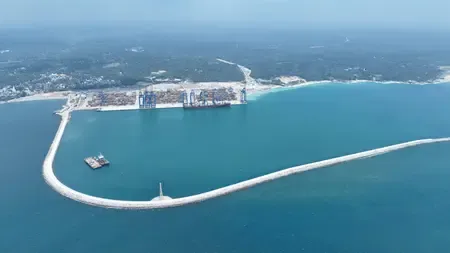
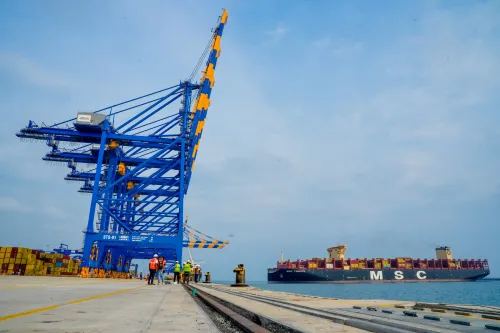
Kerala Chief Minister Pinarayi Vijayan on Thursday, July 2, 2026, publicly flagged what he called 'deeply concerning' reports of a move to transfer a 49% stake in Vizhinjam International Seaport to Mediterranean Shipping Company (MSC), a multinational shipping conglomerate, asserting that the state government's prior approval is mandatory under the concession agreement for any such transfer.
Context
Vijayan's post directly challenges reports of a potential ownership change at Vizhinjam Port, which is operated under a 40-year build-operate-transfer (BOT) concession awarded in 2015 to Adani Vizhinjam Port Pvt Ltd following international competitive bidding. The Chief Minister stated that the port 'was envisioned as a world-class multi-operator port, not the monopoly of a single corporate entity,' and called on the Government of Kerala (GoK) to block any move that could compromise competition, national security, and the state's long-term interests.
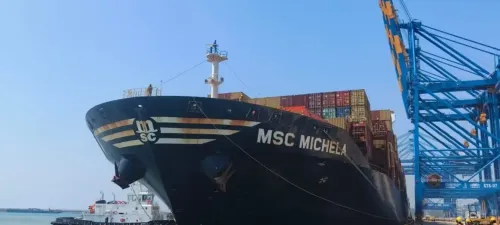
MSC, headquartered in Switzerland, is one of the world's largest container shipping companies. Reports of its interest in acquiring a stake in the Vizhinjam concession have drawn attention given the port's strategic positioning near international shipping lanes at India's southern tip.
Policy Backdrop
Vizhinjam International Seaport was conceived as a deep-water transshipment hub designed to reduce India's dependence on foreign ports such as Colombo for cargo transshipment. The project has a lineage stretching back to the early 2000s, when Kerala explored the project through a special purpose vehicle before settling on the PPP model. The state retained strategic oversight rights — including prior-approval clauses for ownership changes — in the final concession structure.
The port aligns with the Sagarmala Project, the central government's 2015 programme to modernise ports and drive port-led economic development. Its design as a multi-user facility reflects a deliberate policy emphasis on open access rather than exclusive, single-operator control. Vijayan's intervention underscores that this design principle is not merely aspirational but is embedded in the legal architecture of the concession agreement.
Stakeholders and Impact
The Government of Kerala holds a contractual veto over any change in the concessionaire's ownership structure, making it a direct and legally empowered party in any stake-transfer negotiation. Maritime security agencies at the central level would also be expected to weigh in, given that port infrastructure with significant foreign equity stakes typically requires security clearances from the Ministry of Ports, Shipping and Waterways.
For transshipment operators and shipping lines that currently use or plan to use Vizhinjam, the outcome of any ownership review will determine whether the port retains its multi-operator character or shifts toward a model where a single global carrier controls access and pricing. Small and mid-size operators could face competitive disadvantage if a dominant carrier consolidates control over berth allocation and tariff structures.
What's Next
The immediate trigger for formal proceedings would be a written application from the concessionaire — Adani Vizhinjam Port Pvt Ltd — to the Kerala Cabinet seeking approval for the stake transfer, as required under the concession agreement. Any such application would then likely trigger a parallel review by central maritime authorities on national security grounds.
Vijayan's public statement signals that the state government is unlikely to grant approval without rigorous scrutiny of competition and security implications. The episode is set to become a test case for how Indian states exercise their contractual rights as gatekeepers in PPP port concessions where strategic and commercial interests intersect.
Point of View
Particularly where foreign corporate interests are involved. If the transfer bid proceeds to a formal application, it will force a high-stakes negotiation between state rights, central security mandates, and private contractual obligations.
NationPress
2 Jul 2026
Frequently Asked Questions
What is the Vizhinjam Port stake transfer controversy?
Reports have emerged of a plan to transfer a 49% stake in Vizhinjam International Seaport's concession to MSC, a global shipping company, prompting Kerala CM Pinarayi Vijayan to publicly oppose the move on July 2, 2026.
Does Kerala government have the power to block the Vizhinjam stake transfer?
Yes. The concession agreement signed in 2015 explicitly requires the Kerala state government's prior approval before any ownership transfer in the Vizhinjam port concession can proceed.
Who currently operates Vizhinjam International Seaport?
Vizhinjam International Seaport is operated by Adani Vizhinjam Port Pvt Ltd under a 40-year build-operate-transfer concession awarded in 2015 after international competitive bidding.
What is MSC and why is it interested in Vizhinjam?
MSC, or Mediterranean Shipping Company, is a Switzerland-headquartered global container shipping major and one of the world's largest carriers. Vizhinjam's deep-water transshipment capacity near key international shipping lanes makes it strategically attractive.
What are the national security concerns around the Vizhinjam stake transfer?
Port infrastructure with significant foreign equity stakes typically requires security clearances from India's Ministry of Ports, Shipping and Waterways, as such assets are considered strategically sensitive for maritime and national security.