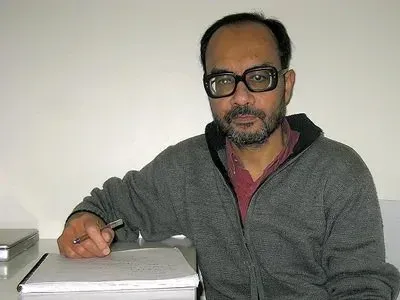
CM Pinarayi hails Ashoke Sen's Oskar Klein Medal win
Synopsis
Kerala Chief Minister Pinarayi Vijayan congratulated theoretical physicist Dr. Ashoke Sen on winning the Oskar Klein Medal, honouring both his scientific legacy in string theory and his outspoken defence of rational thought, democratic values, and freedom of expression.
Key Takeaways
Ashoke Sen has been awarded the Oskar Klein Medal , presented annually by Stockholm University in partnership with the Nobel Committee for Physics .
Kerala Chief Minister Pinarayi Vijayan extended congratulations on October 25, 2026 , calling Sen's contributions 'a source of immense pride.' Vijayan praised Sen's 'courage to speak truth to power' and his defence of scientific temper, rational thought, and democratic values.
Sen is globally recognised for foundational work in string theory , black hole physics , and quantum field theory .
The tribute reflects CPI(M)-led Kerala 's long-standing public positioning around rationalism, rooted in the state's social reform tradition and Article 51A(h) of the Constitution.
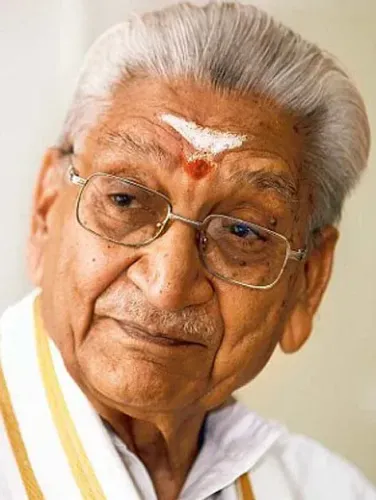
When one of India's most celebrated theoretical physicists picks up one of physics' most prestigious honours, Kerala's Chief Minister takes notice — and takes a stand. Kerala Chief Minister Pinarayi Vijayan on Sunday, October 25, 2026, extended congratulations to Dr. Ashoke Sen on receiving the Oskar Klein Medal, calling his work 'a source of immense pride' and saluting what he described as Sen's courage to 'speak truth to power.'
A physicist who redrew the boundaries of string theory
Dr. Ashoke Sen is widely regarded as one of the most consequential theoretical physicists of his generation. His foundational contributions to string theory, black hole physics, and quantum field theory have shaped research agendas across the world's leading institutions for decades. Among his most celebrated breakthroughs is his work on string duality and the calculation of black hole entropy — problems that sit at the very edge of human understanding of the universe.
The Oskar Klein Medal is an annual award presented by Stockholm University in partnership with the Nobel Committee for Physics, honouring outstanding contributions to theoretical physics in the spirit of the Swedish physicist Oskar Klein. For an Indian scientist to receive it is a moment of genuine international recognition.
Why Vijayan's tribute reaches beyond the medal
Chief Minister Vijayan's congratulatory message was not limited to Sen's scientific achievements. He praised Sen's 'steadfast defence of scientific temper, rational thought and democratic values,' framing science itself as a force that 'must challenge dogma, uphold freedom of expression and remain committed to justice and human dignity.'
The language is deliberate and unmistakable. Kerala's CPI(M)-led governments have long rooted their public identity in rationalism and social reform — a tradition traceable to the state's 19th-century reform movements and to Article 51A(h) of the Indian Constitution, which enshrines the duty to develop scientific temper and the spirit of inquiry. When Vijayan praises a scientist for speaking 'truth to power,' he is reaching for that tradition and, pointedly, connecting it to ongoing national debates about intellectual freedom.
The signal in the salute
There is a pattern here worth noting. Left-led commentary in India has frequently positioned outspoken scientists and public intellectuals as exemplars of constitutional values at moments of political tension around free expression. By publicly anchoring Sen's honour to themes of 'democratic values' and resistance to 'dogma,' Vijayan is doing more than celebrating a physicist — he is placing a world-class scientific achievement into a political and cultural argument about the kind of India that produces, and protects, such minds.
For the scientific community, the recognition itself — an Indian physicist receiving a medal named for a Nobel laureate's contemporary — is the headline. For the political observer, the framing of that recognition tells its own story.
India now watches whether Dr. Sen's Oskar Klein Medal becomes a moment purely of scientific celebration, or the opening note of a louder conversation about the conditions in which great science gets done.
Point of View
And a pointed ideological statement about scientific temper and free expression. By weaving 'democratic values' and resistance to 'dogma' into a congratulatory message, he is invoking Article 51A(h) and Kerala's rationalist heritage in a context that implicitly comments on the national climate for intellectual dissent. This is characteristic CPI(M) political communication — using an unimpeachable occasion to reinforce a larger argument. The move underscores how scientific recognition, in polarised times, rarely remains apolitical.
NationPress
25 Oct 2026
Frequently Asked Questions
What is the Oskar Klein Medal?
The Oskar Klein Medal is an annual award in theoretical physics presented by Stockholm University in collaboration with the Nobel Committee for Physics, honouring outstanding contributions to the field in memory of physicist Oskar Klein.
Who is Dr. Ashoke Sen?
Dr. Ashoke Sen is an Indian theoretical physicist renowned for seminal contributions to string theory, black hole entropy calculations, and quantum field theory, making him one of the most cited physicists of his generation.
Why did Kerala CM Pinarayi Vijayan congratulate Ashoke Sen?
Vijayan congratulated Sen on receiving the Oskar Klein Medal, praising both his scientific achievements and his outspoken defence of scientific temper, rational thought, and democratic values.
What is scientific temper and why does Kerala emphasise it?
Scientific temper refers to a spirit of inquiry, reason, and evidence-based thinking; it is enshrined as a fundamental duty under Article 51A(h) of the Indian Constitution. Kerala's CPI(M)-led governments have historically emphasised it as a pillar of governance and social reform.
What has Ashoke Sen contributed to string theory?
Sen's most celebrated contributions include his work on string duality — showing that seemingly different string theories are equivalent — and his calculations related to black hole entropy, which provided a statistical foundation for understanding black holes in quantum terms.