CM Pinarayi slams Delhi Police move against SFI leader Aishe Ghosh
Synopsis
Kerala CM Pinarayi Vijayan has condemned Delhi Police's attempt to enter the CPI(M) Central Committee office and arrest SFI leader Aishe Ghosh, calling it political retaliation for NEET protests at Jantar Mantar and a misuse of state power by the BJP-led Union Government.
Key Takeaways
Kerala CM Pinarayi Vijayan publicly condemned Delhi Police's attempt to enter the CPI(M) Central Committee office to arrest SFI leader Aishe Ghosh on 28 July 2026 .
Vijayan linked the police action directly to SFI's participation in Jantar Mantar protests against the NEET examination scandal , calling it 'political retaliation.' Delhi Police is controlled by the Union Home Ministry , not the Delhi state government, making the action a centre-state flashpoint.
Aishe Ghosh is a former JNUSU President and a prominent figure in left-aligned student politics and the anti-NEET protest movement.
Vijayan called on all who 'believe in democracy to speak out' and defend the constitutional right to protest .
The NEET-UG examination has faced allegations of paper leaks and irregularities since at least 2024 , fuelling nationwide student agitation.
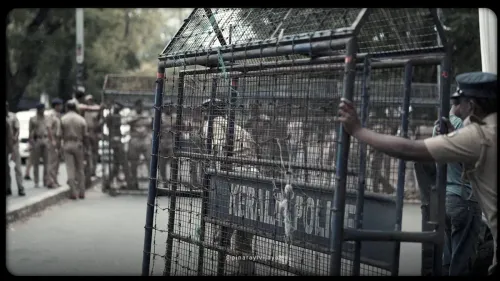
A police force walking into an opposition party's central office to arrest a student leader — that is the scene Kerala Chief Minister Pinarayi Vijayan condemned on Tuesday, 28 July 2026, calling Delhi Police's attempt to enter the CPI(M) Central Committee office and detain SFI leader and former JNUSU President Aishe Ghosh a 'serious assault on democratic rights and the rule of law.'
The arrest attempt and the NEET protest link
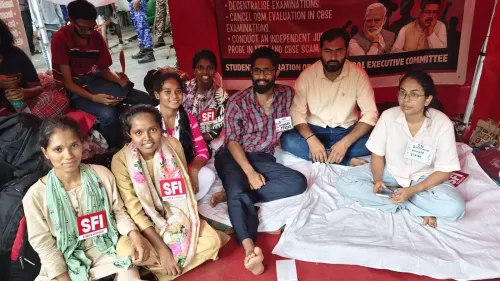
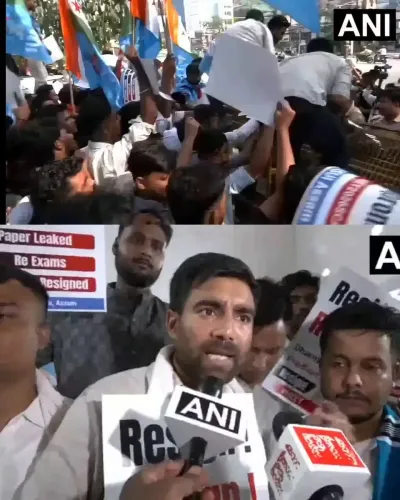
CM Vijayan's post drew a direct line between the police action and the Students' Federation of India (SFI)'s participation in recent protests at Jantar Mantar against the NEET examination scandal. 'This action bears all the hallmarks of political retaliation,' he wrote, framing the attempted arrest not as routine law enforcement but as a consequence of student activism on a politically charged national issue.
Aishe Ghosh, a prominent face of left-aligned student politics, has been a visible presence in demonstrations over alleged irregularities in the National Eligibility cum Entrance Test (NEET-UG) — the single gateway to medical admissions in India that has faced sustained scrutiny over paper leaks and procedural lapses since 2024.
Delhi Police, the Centre, and a federal fault line
Delhi Police operates under the authority of the Union Home Ministry, not the Delhi state government — a structural fact that makes every controversial police action in the capital a potential flashpoint between the Centre and opposition parties. CM Vijayan named that dynamic explicitly, calling the move a reflection of the 'BJP-led Union Government's growing intolerance of dissent.'
This is not an isolated episode. Opposition chief ministers have repeatedly issued statements when central law-enforcement agencies act against organisations affiliated with their parties — a pattern that has intensified around campus politics and national-examination protests. The CPI(M)'s central office in Delhi being the site of this attempt adds a sharp institutional dimension: it is not a street corner but the nerve centre of a national political party.
A call to defend the right to protest
Vijayan's post ended as a call to action, not just a condemnation. 'This is a moment for everyone who believes in democracy to speak out,' he wrote, urging resistance to what he described as attempts to 'intimidate and criminalise dissent' and a defence of the 'constitutional right to protest.'
The broader stakes are real. The NEET controversy has mobilised students across party lines, and any perception that protest participation invites police targeting could have a chilling effect on student activism well beyond the SFI's own constituency.
Whether courts intervene, and how the Centre responds to the political backlash, will determine whether this episode becomes a one-day controversy or a sustained federal confrontation.
Point of View
With state leaders using social media to frame the narrative as democratic backsliding rather than routine policing. By anchoring his statement to the NEET controversy — which commands cross-partisan sympathy — Vijayan is attempting to widen the coalition of outrage beyond the CPI(M)'s own base. The choice of the CPI(M) Central Committee office as the site of the attempted arrest, rather than a public space, is politically significant: it transforms a student-politics story into a question about the inviolability of opposition party spaces. Court proceedings, if initiated, will be the real test of whether the legal system treats this as a legitimate law-enforcement action or an overreach.
NationPress
28 Jul 2026
Frequently Asked Questions
Why did Delhi Police try to arrest Aishe Ghosh?
The specific legal grounds for the attempted arrest have not been officially confirmed. Kerala CM Pinarayi Vijayan alleged it was political retaliation for Aishe Ghosh and the SFI's participation in Jantar Mantar protests against the NEET examination scandal.
What is the NEET scandal about?
The National Eligibility cum Entrance Test (NEET-UG) is India's medical college entrance examination. Since 2024, it has faced serious allegations of paper leaks and procedural irregularities, triggering large-scale student protests across the country, including at Jantar Mantar in Delhi.
Why does Delhi Police come under the Centre and not the Delhi government?
Under Indian law, Delhi Police reports to the Union Home Ministry rather than the elected Delhi state government, making it a frequent point of contention between the Centre and opposition-ruled states or parties.
What did Pinarayi Vijayan say about the Delhi Police action?
CM Vijayan called the attempted arrest a 'serious assault on democratic rights and the rule of law,' described it as 'political retaliation' for NEET protests, and urged all believers in democracy to resist attempts to 'intimidate and criminalise dissent.'