CM Rekha Gupta Launches Online Slot Booking for Delhi's 70-Lakh Tree Drive

Synopsis
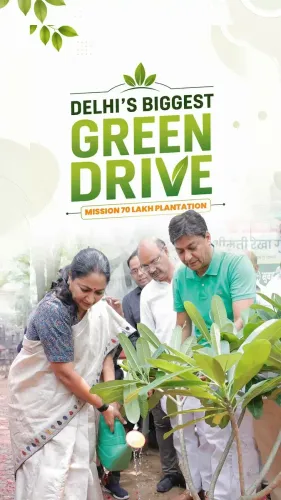
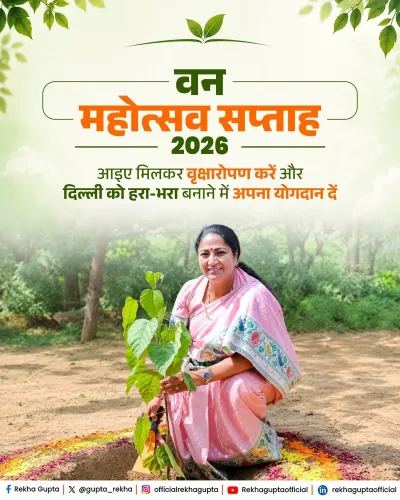
Delhi Chief Minister Rekha Gupta on 6 July 2026 announced a digital slot-booking system for the government's 70-lakh sapling plantation campaign under Van Mahotsav, urging residents to register at greendrive.delhivanmahotsav.in and join the city's largest tree-planting drive.
Key Takeaways
Delhi CM Rekha Gupta announced a fully digital citizen-participation model for the city's Van Mahotsav plantation drive on 6 July 2026 .
Residents can book a planting slot via a single click at greendrive.delhivanmahotsav.in .
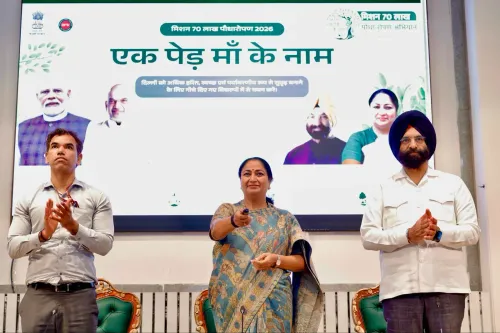
The campaign targets the planting of 70 lakh (7 million) saplings across Delhi.
Van Mahotsav , launched in 1950 , is India's oldest annual afforestation festival; July plantings leverage monsoon conditions for higher sapling survival.
The digital booking model follows a national trend of states digitising green missions to widen civic participation and improve tracking.
Sapling survival rates and forest-department audits will determine the drive's real-world environmental impact.
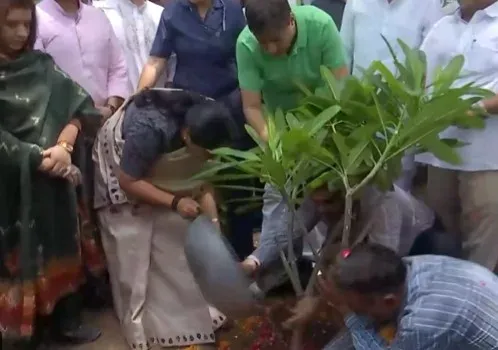
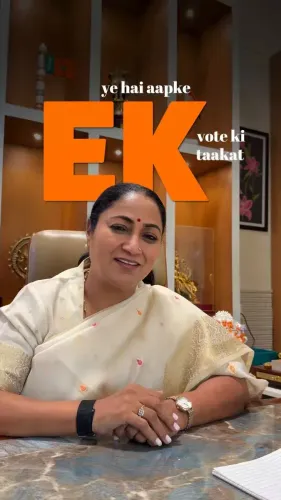
Delhi Chief Minister Rekha Gupta on Monday, 6 July 2026, announced that the Delhi government has made citizen participation in its 70-lakh sapling plantation campaign fully digital, enabling residents to book a planting slot with a single click through a dedicated portal.
Posting on X, Chief Minister Gupta wrote: 'दिल्ली सरकार ने पौधारोपण को पहले से कहीं अधिक आसान बना दिया है' ('The Delhi government has made tree-planting easier than ever before. Book a slot in just one click and become part of the 70-lakh plantation campaign.'). The post directed residents to the campaign portal at greendrive.delhivanmahotsav.in.
Context
Van Mahotsav is India's oldest annual afforestation festival, launched in 1950 by then Union Agriculture Minister K.M. Munshi to build a culture of tree-planting across the country. Over seven decades, the event has been adopted by state governments as a platform for large-scale citizen-led plantation drives, typically held in the first week of July to coincide with the onset of the monsoon season — the optimal period for sapling survival.
Delhi, as India's capital and one of its most densely populated cities, has historically recorded low per-capita green cover relative to national urban benchmarks. Successive administrations have used Van Mahotsav as an anchor for scaled-up plantation targets, with numerical goals rising sharply through the 2010s in response to the city's chronic particulate pollution crisis.
Policy Backdrop
The shift to a digital booking model marks an incremental but significant evolution in how Delhi mobilises civic participation for environmental programmes. Earlier plantation camps required residents to physically locate and attend designated sites, limiting reach to those already aware of and close to such events. The online slot system, accessible via a single URL, lowers the barrier to entry considerably.
This approach mirrors a broader national trend: major Indian cities and state forest departments have increasingly digitised citizen-facing green missions to widen participation and generate traceable data on volunteer turnout. The 70-lakh sapling target — roughly 7 million saplings — represents one of the larger single-season goals announced for the capital, signalling the current administration's intent to scale up urban forestry as both an environmental and public-health measure.
Stakeholders and Impact
Delhi residents and civic volunteers stand as the primary participants, with the digital platform designed to reduce coordination friction and allow individuals, resident welfare associations, schools, and corporate groups to self-schedule participation. For a city where air quality routinely breaches safe limits during winter months, expanding green cover is directly linked to long-term public health outcomes.
Urban ecologists and forest-department officials will be watching whether the digital mobilisation translates into on-ground turnout at scale. Historically, the gap between announced plantation targets and verified sapling survival rates has been a persistent challenge for urban afforestation programmes across India — a metric that independent assessments and legislative oversight bodies have flagged repeatedly.
What's Next
The campaign's credibility will ultimately rest on mid-season and post-monsoon audits of sapling survival, which the Delhi forest department is expected to track. Any progress report tabled in the Delhi Assembly or released by the department will be a key indicator of whether the digital-first model delivered measurable results beyond registration numbers. Chief Minister Gupta's framing of the drive under the #GreenDelhi and #ViksitDelhi hashtags also positions urban greening as a plank of the BJP-led government's broader development narrative for the capital.
Point of View
Participatory environmental action — a domain her predecessors claimed strongly. By anchoring the campaign under #ViksitDelhi, the administration is weaving urban greening into its development narrative ahead of future electoral cycles. The move also reflects a wider pattern of Indian state governments using low-cost digital tools to amplify the optics of citizen engagement in public programmes. The harder test, as with every plantation drive in Delhi's history, will be whether sapling survival data backs up the headline target.
NationPress
5 Oct 2026
Frequently Asked Questions
How can I book a slot for Delhi's tree plantation drive in 2026?
Residents can book a slot online at greendrive.delhivanmahotsav.in, the official portal launched by the Delhi government for its 70-lakh sapling plantation campaign under Van Mahotsav 2026.
What is Van Mahotsav and why is it held in July?
Van Mahotsav is India's annual tree-planting festival, started in 1950 by K.M. Munshi. It is held in July to coincide with the monsoon season, which provides the moisture needed for newly planted saplings to survive and establish roots.
What is Delhi's tree plantation target for 2026?
The Delhi government, under Chief Minister Rekha Gupta, has announced a target of planting 70 lakh (7 million) saplings as part of its Van Mahotsav 2026 campaign.
Why does Delhi run large-scale plantation drives every year?
Delhi has historically low per-capita green cover and suffers from severe seasonal air pollution. Annual plantation drives under Van Mahotsav are part of a long-term strategy to expand urban forest cover and improve air quality for residents.
How will the success of Delhi's 2026 plantation drive be measured?
Success will depend on post-monsoon sapling survival audits conducted by the Delhi forest department. Progress reports may also be tabled in the Delhi Assembly, and independent assessments of survival rates will indicate whether the 70-lakh target was meaningfully achieved.