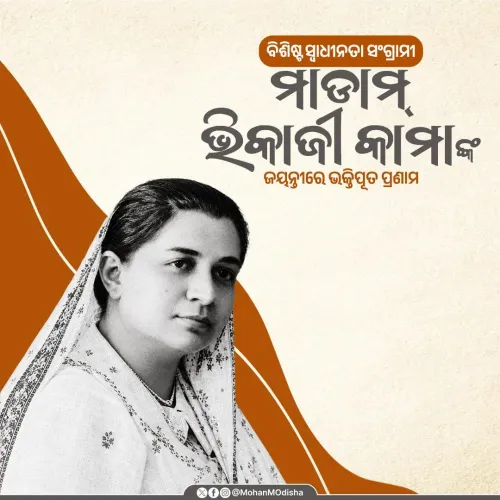
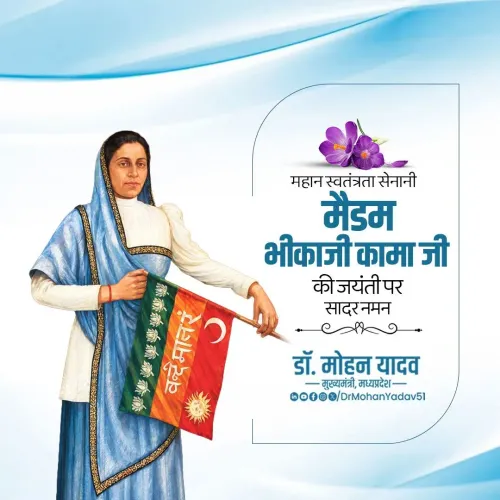
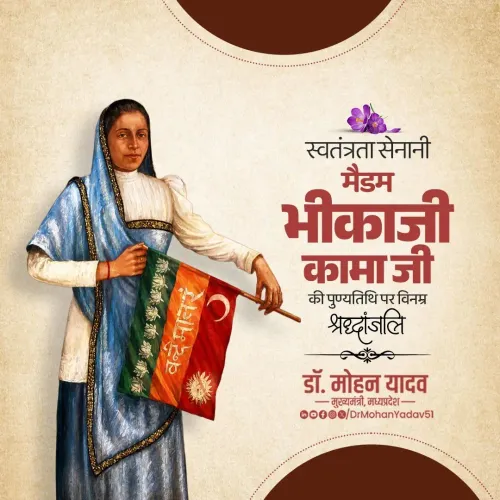
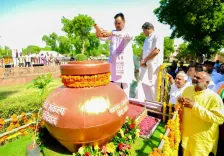
CM Rekha Gupta pays tribute to Bhikaji Cama on her birth anniversary
Synopsis
Delhi Chief Minister Rekha Gupta honoured revolutionary Bhikaji Cama on her birth anniversary on 24 September 2026, praising her fearless advocacy for India's freedom on foreign soil and her enduring legacy of patriotism and sacrifice.
Key Takeaways
Delhi CM Rekha Gupta posted a tribute to Bhikaji Cama on her birth anniversary on 24 September 2026 .
Gupta lauded Cama for raising the voice of India's independence fearlessly on foreign soil.
Bhikaji Cama was born in 1861 in Bombay and spent years in exile in Britain and France campaigning for Indian self-rule.
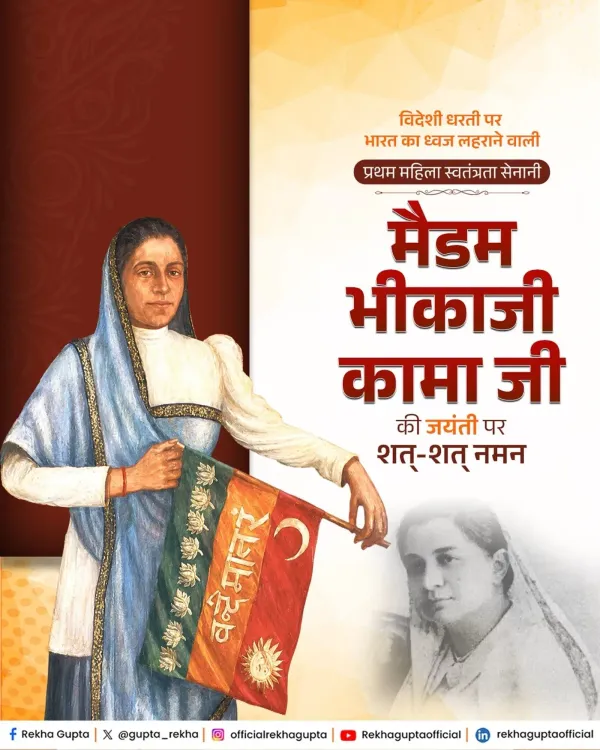
At the International Socialist Congress in Stuttgart in 1907 , she unfurled one of the earliest versions of an Indian national flag before an international audience.
Cama's portrait is displayed in the Parliament of India , recognising her place in the national freedom narrative.
Such annual tributes by political leaders keep lesser-known independence figures visible in public memory without direct policy links.
A woman who carried India's freedom cry all the way to European soil gets her annual moment of national remembrance — and Delhi Chief Minister Rekha Gupta marked the birth anniversary of revolutionary Bhikaji Cama on Thursday, 24 September 2026, with a heartfelt tribute on X, honouring a life defined by fearless patriotism far from home.
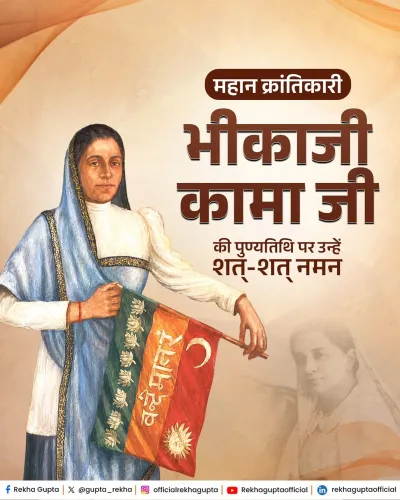
In her post, CM Gupta wrote: 'मां भारती की स्वतंत्रता और स्वाभिमान के लिए अपना संपूर्ण जीवन समर्पित करने वाली महान क्रांतिकारी मैडम भीकाजी कामा जी की जयंती पर शत-शत नमन।' — 'Heartfelt salutations on the birth anniversary of the great revolutionary Madam Bhikaji Cama, who dedicated her entire life to the freedom and self-respect of Mother India.' She added that even on foreign soil, Cama raised the voice of India's independence without fear, and that her patriotism, sacrifice, and courage would forever inspire countrymen to serve the motherland.
The woman who unfurled a flag before India was free
Bhikaji Rustom Cama stands as one of the most singular figures in India's long independence struggle. Born in 1861 in Bombay to a prosperous Parsi family, she chose exile over silence — spending years in Britain and France, using the platforms of European socialist and nationalist movements to amplify India's demand for self-rule.
Her defining moment came at the International Socialist Congress in Stuttgart, Germany, in 1907, where she unfurled what is widely regarded as one of the earliest versions of an Indian national flag before an international audience — a brazen, symbolic act of defiance that reverberated well beyond the conference hall. She declared, in that setting, that India deserved freedom just as any other nation. The British colonial government took note; she was barred from returning to India for years.
A legacy reclaimed, year after year
Across the political spectrum, Indian leaders observe the birth anniversaries of freedom fighters as both a civic ritual and a statement of national identity. These tributes rarely attach to new policy announcements — their power lies in the act of collective memory itself, keeping lesser-told stories of the independence movement visible in the public conversation.
Bhikaji Cama's story, in particular, carries a resonance that feels modern: a woman operating in international spaces, building coalitions, using the media and public forums of her era to shift perception of a colonised people. Her portrait hangs in the Parliament of India, a permanent nod to her place in the national story.
Every September, her birth anniversary serves as a small but deliberate reminder that India's freedom was not won in a single place — it was fought for on stages and in print shops, in Paris apartments and Stuttgart congress halls, by people who never came home until the fight was done.
Point of View
Honouring Bhikaji Cama — a Parsi woman who operated internationally — allows the BJP to project an inclusive, pan-Indian memory of the freedom struggle. Cama's story also carries a contemporary subtext: the idea of carrying India's cause onto global stages resonates with modern foreign-policy messaging. These commemorations may be ceremonial in form, but they are deliberate in framing.
NationPress
24 Sept 2026
Frequently Asked Questions
Who was Bhikaji Cama?
Bhikaji Rustom Cama was an Indian revolutionary born in 1861 in Bombay who lived in exile in Europe and became famous for unfurling one of the earliest versions of an Indian national flag at the International Socialist Congress in Stuttgart in 1907.
Why is Bhikaji Cama remembered on 24 September?
24 September is observed as the birth anniversary of Bhikaji Cama, prompting Indian leaders and citizens to pay tribute to her contributions to the independence movement.
What did Rekha Gupta say about Bhikaji Cama?
Delhi CM Rekha Gupta saluted Cama for dedicating her entire life to India's freedom and self-respect, and praised her courage in raising the voice of Indian independence fearlessly on foreign soil.
What is the significance of Bhikaji Cama's 1907 Stuttgart act?
At the 1907 International Socialist Congress in Stuttgart, Germany, Bhikaji Cama unfurled what is widely regarded as an early Indian national flag before an international audience, declaring India's right to freedom — a landmark symbolic act that drew global attention to India's independence cause.
Is Bhikaji Cama's portrait in the Indian Parliament?
Yes, Bhikaji Cama's portrait hangs in the Parliament of India, reflecting her recognised place in the nation's freedom struggle history.