CM Rekha Gupta Pays Tribute to Tricolour Designer Pingali Venkayya
Synopsis
Delhi Chief Minister Rekha Gupta on 4 July 2026 paid tribute to Pingali Venkayya, the Andhra-born freedom fighter who designed the Indian national flag in 1921, calling his contribution to the Tricolour immortal and a lasting inspiration for patriotism and duty.
Key Takeaways
Delhi Chief Minister Rekha Gupta posted a tribute to Pingali Venkayya on his death anniversary on 4 July 2026 .
Pingali Venkayya designed the prototype of the Indian national flag in 1921 , featuring saffron, white and green stripes and a spinning wheel.
The Constituent Assembly adopted the Tricolour — with the Ashoka Chakra replacing the spinning wheel — on 22 July 1947 .
Gupta described Venkayya's contribution as 'invaluable' and said it would remain 'immortal in the memories of a grateful nation.' The tribute follows a recurring pattern of BJP leaders marking freedom-movement anniversaries with messages centred on patriotism and national duty.
Independence Day 2026 on 15 August is expected to bring further commemorative programmes honouring figures like Venkayya.
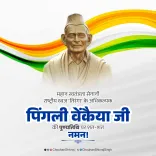
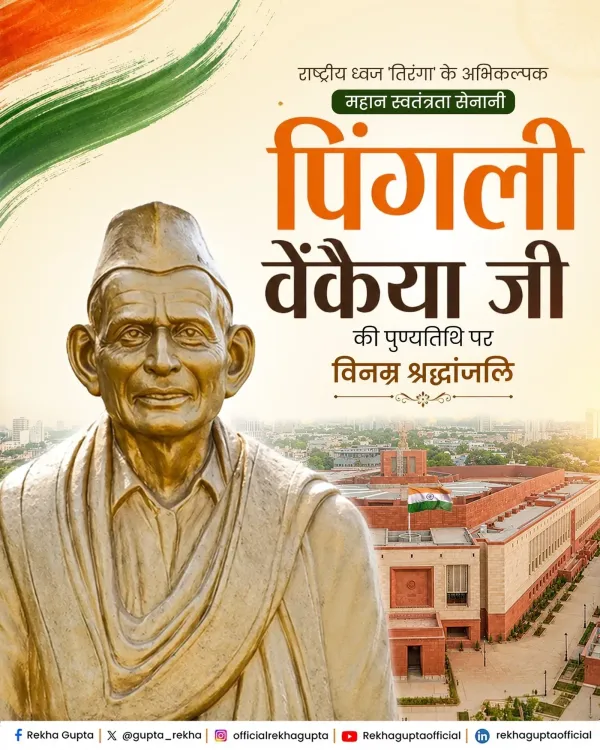
Delhi Chief Minister Rekha Gupta on Saturday, 4 July 2026, paid tribute to Pingali Venkayya, the freedom fighter credited with designing the Indian national flag, on his death anniversary. Gupta posted a heartfelt message in Hindi on X, honouring Venkayya's enduring contribution to the nation and calling his legacy a source of inspiration for patriotism and duty.
Context
In her post, Rekha Gupta offered vinmra shraddhanjali (humble tribute) to Venkayya, describing his contribution to the creation of the Tricolour as invaluable. She wrote that 'your priceless contribution to the making of the Tricolour will remain immortal in the memories of a grateful nation,' and that 'your dedication to the nation will always inspire the countrymen toward patriotism and a sense of duty.'
The tribute was accompanied by an image, consistent with the practice of senior political leaders marking the anniversaries of independence-era figures on official social-media handles.
Policy Backdrop
Pingali Venkayya, born in present-day Andhra Pradesh, was a freedom fighter and geologist who presented a prototype design for a national flag — featuring saffron, white and green stripes with a spinning wheel at the centre — to Mahatma Gandhi in 1921. His design became the foundation for the flag that the Constituent Assembly formally adopted on 22 July 1947, with the Ashoka Chakra replacing the spinning wheel.
The Tricolour has since stood as one of the most visible symbols of Indian sovereignty, making Venkayya's contribution a subject of recurring national commemoration across political parties and government institutions.
Stakeholders and Impact
Tributes to independence-era figures serve a dual purpose in Indian political communication: they reinforce national identity and signal continuity with the freedom movement. BJP leaders in particular have made such commemorations a consistent feature of their public messaging, often framing them around themes of rashtrabhakti (patriotism) and kartavyanishtha (dedication to duty) — the precise language used by Gupta in this post.
For Delhi residents and citizens nationally, such official acknowledgements keep the memory of lesser-celebrated freedom fighters in public discourse, especially ahead of key national occasions such as Independence Day on 15 August.
What's Next
With Independence Day 2026 approaching, state governments across India are expected to announce flag-hoisting ceremonies and commemorative programmes. Delhi, as the national capital, typically hosts prominent official events, and tributes such as this one often set the tone for the broader commemorative calendar. Whether any dedicated programme honouring Pingali Venkayya is planned at the state level remains to be announced by the Delhi government.
Point of View
' the Delhi CM connects a ceremonial gesture to the party's broader nationalist messaging architecture. With Independence Day weeks away, such posts also serve as early-season signals of the state government's patriotic positioning. The tribute is unlikely to generate policy debate but reinforces the symbolic politics that dominate official social media ahead of August commemorations.
NationPress
4 Jul 2026
Frequently Asked Questions
Who was Pingali Venkayya?
Pingali Venkayya was an Andhra-born Indian freedom fighter and geologist who designed the prototype of the Indian national flag in 1921, presenting a design with saffron, white and green stripes and a spinning wheel to Mahatma Gandhi.
When was the Indian national flag officially adopted?
The Indian national flag, based on Pingali Venkayya's design but with the Ashoka Chakra replacing the spinning wheel, was officially adopted by the Constituent Assembly on 22 July 1947.
Why did Rekha Gupta pay tribute to Pingali Venkayya?
Delhi Chief Minister Rekha Gupta paid tribute to Pingali Venkayya on his death anniversary on 4 July 2026, honouring his contribution to designing the Indian Tricolour and calling his legacy an inspiration for patriotism.
What did Rekha Gupta say about Pingali Venkayya?
Rekha Gupta said Venkayya's contribution to the making of the Tricolour was invaluable and would remain immortal in the memories of a grateful nation, adding that his dedication would always inspire Indians toward patriotism and a sense of duty.
What is the significance of the Tricolour's Ashoka Chakra?
The Ashoka Chakra, a 24-spoke wheel derived from the Lion Capital of Ashoka at Sarnath, replaced the spinning wheel in Pingali Venkayya's original design when the Constituent Assembly adopted the national flag on 22 July 1947, symbolising the eternal wheel of law and progress.