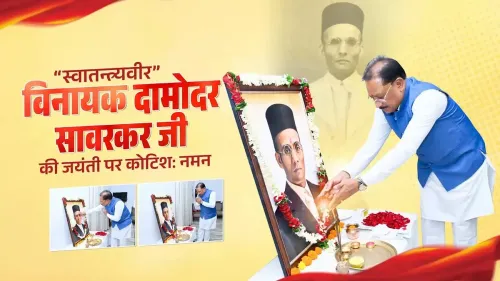
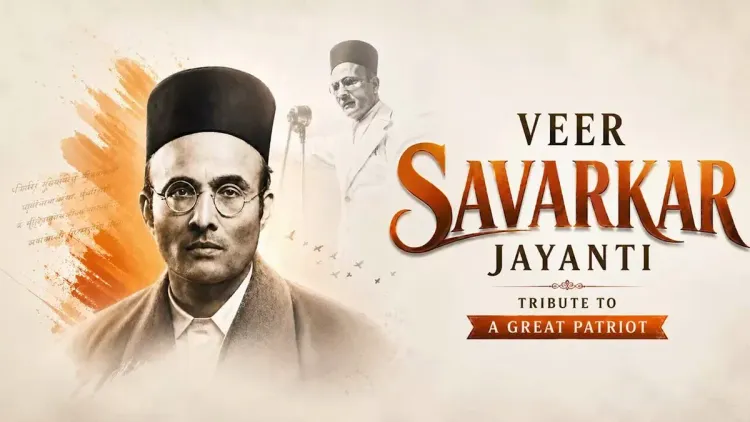
Delhi CM Rekha Gupta pays tribute to Veer Savarkar on Jayanti
Synopsis
Delhi Chief Minister Rekha Gupta paid tribute to Veer Savarkar on his birth anniversary on 28 May 2026, honouring his sacrifices at Kala Pani, his 'Nation First' resolve, and his vision of an undivided India as an enduring source of patriotic inspiration.
Key Takeaways
Delhi Chief Minister Rekha Gupta posted a tribute to Vinayak Damodar Savarkar on his birth anniversary, 28 May 2026 .
She described Savarkar as a 'devoted worshipper of Mother India,' a 'fierce nationalist thinker,' and a 'symbol of indomitable courage.' The tribute specifically referenced his endurance of the 'inhuman tortures' of Kala Pani (the Cellular Jail , Andaman Islands ), where he was imprisoned from 1911 .
CM Gupta invoked Savarkar's ideological pillars: 'Nation First,' cultural pride, and the consciousness of Akhand Bharat (undivided India).
In 2003 , the BJP-led NDA government installed Savarkar's portrait in the Central Hall of Parliament , reflecting a long-standing party effort to institutionalise his legacy.
The BJP routinely marks Savarkar Jayanti with public statements as part of a broader pattern of elevating figures associated with cultural nationalism.
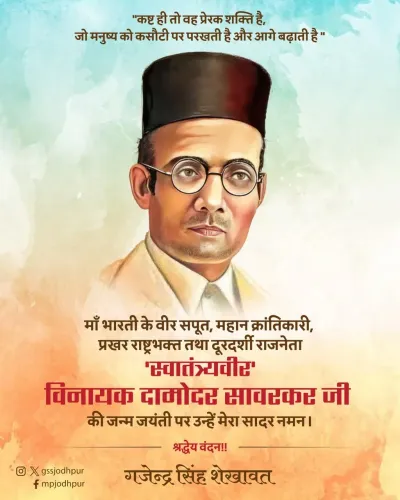
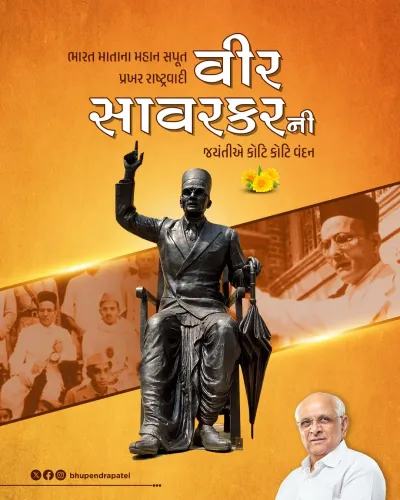
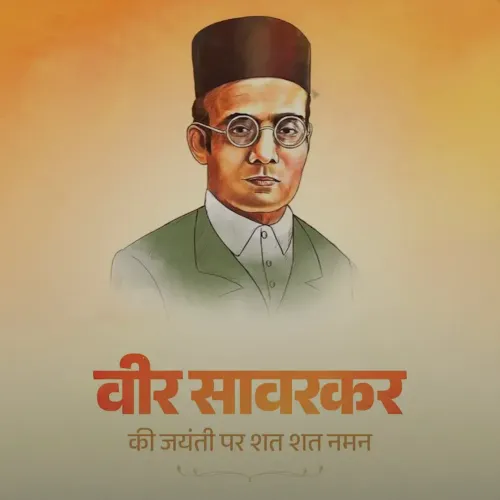
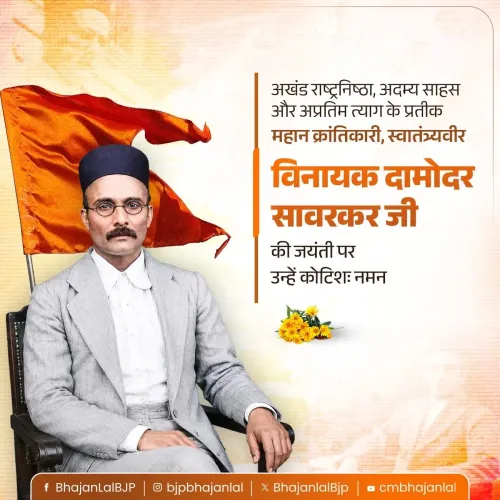
Delhi Chief Minister Rekha Gupta on Thursday, 28 May 2026, paid tribute to freedom fighter Vinayak Damodar Savarkar on his birth anniversary, honouring him as a devoted worshipper of the motherland, a fervent nationalist thinker, and a symbol of indomitable courage.
Context
In her post, CM Gupta wrote: 'मां भारती के अनन्य उपासक, प्रखर राष्ट्रवादी चिंतक और अदम्य साहस के प्रतीक 'स्वतंत्रवीर' विनायक दामोदर सावरकर जी की जयंती पर उन्हें कोटि-कोटि नमन।' — translated: 'On the birth anniversary of 'Swatantraveer' Vinayak Damodar Savarkar — an unparalleled devotee of Mother India, a fierce nationalist thinker, and a symbol of indomitable courage — I offer him crores of salutations.' She further stated that Savarkar's entire life was dedicated to the resolve of 'Nation First', cultural pride, and the consciousness of an undivided India, and that his unwavering struggle for the country's freedom — endured even through the inhuman tortures of Kala Pani — along with his ideological philosophy, would remain an inexhaustible source of inspiration for every patriot.
Policy Backdrop
Vinayak Damodar Savarkar (1883–1966) was an independence activist, writer, and political thinker who was imprisoned in the Cellular Jail in the Andaman Islands — popularly known as Kala Pani — from 1911 onward for his nationalist activities against British colonial rule. He is widely credited with articulating the concept of Hindutva and advocating the idea of Akhand Bharat (undivided India), themes that CM Gupta's tribute explicitly echoed.
The Bharatiya Janata Party (BJP) has long foregrounded Savarkar as a symbol of cultural nationalism. In 2003, during the BJP-led NDA government, a portrait of Savarkar was installed in the Central Hall of Parliament — a landmark act of institutional recognition. BJP leaders at the national and state level have since marked his birth anniversary with public statements as a matter of political tradition.
Stakeholders and Impact
The tribute carries significance for BJP workers, nationalist organisations, and citizens who regard Savarkar as a central figure in India's freedom movement. For these constituencies, such statements by a sitting Chief Minister reinforce the party's ideological continuity and its ongoing effort to place Savarkar alongside more widely recognised freedom fighters in public memory.
At the same time, Savarkar remains a contested historical figure. His legacy — particularly his philosophical writings on cultural nationalism — continues to generate debate among historians, political commentators, and opposition parties, making tributes by elected officials a politically resonant act beyond mere ceremony.
What's Next
State-level commemorative events and parliamentary references are customarily observed on 28 May each year. With the BJP in power in Delhi, official programmes marking Savarkar Jayanti are expected to receive greater visibility in the capital. The broader pattern of elevating Savarkar's legacy through institutional channels — from parliamentary portraits to Chief Ministerial tributes — suggests this commemoration will continue to grow in public prominence in the coming years.
Point of View
Akhand Bharat, and 'Nation First' — the ideological vocabulary Savarkar is most associated with — the statement goes beyond ceremonial remembrance and functions as an affirmation of the party's ideological lineage. The installation of Savarkar's portrait in Parliament in 2003 marked a turning point in this effort; Chief Ministerial tributes two decades later signal how deeply that reframing has been institutionalised. As long as Savarkar remains a contested historical figure, such statements by elected officials will continue to carry political weight well beyond their ceremonial form.
NationPress
19 Sept 2026
Frequently Asked Questions
Who is Veer Savarkar and why is he remembered?
Vinayak Damodar Savarkar (1883–1966) was an Indian independence activist, writer, and political thinker best known for articulating the concept of Hindutva and for enduring years of imprisonment in the Cellular Jail (Kala Pani) in the Andaman Islands for his anti-colonial activities.
When is Savarkar Jayanti celebrated?
Savarkar Jayanti is observed on 28 May each year, marking the birth anniversary of Vinayak Damodar Savarkar in 1883.
What is Kala Pani and what was Savarkar's connection to it?
Kala Pani refers to the Cellular Jail in the Andaman Islands, a colonial-era prison notorious for its harsh conditions. Savarkar was imprisoned there from 1911 for his nationalist activities against British rule.
Why does the BJP pay tribute to Savarkar?
The BJP regards Savarkar as a central symbol of cultural nationalism and the Hindutva ideology. The party has consistently highlighted his legacy, including installing his portrait in the Central Hall of Parliament in 2003 during the BJP-led NDA government.
What did Delhi CM Rekha Gupta say about Savarkar?
CM Rekha Gupta described Savarkar as an unparalleled devotee of Mother India, a fierce nationalist thinker, and a symbol of indomitable courage, saying his endurance of Kala Pani's tortures and his 'Nation First' resolve would remain an inexhaustible source of inspiration for every patriot.