CM Revanth Reddy Pitches Blue-Collar Jobs as AI Antidote
Synopsis
At The Hindu Huddle 2026 in Bengaluru, Telangana CM Revanth Reddy urged youth to embrace blue-collar careers as AI erodes white-collar jobs, while detailing 67,760 government hires, a Rs 20,616 crore farm loan waiver, zero-interest SHG loans worth Rs 60,000 crore, and a $3-trillion economic vision under TelanganaRising2047.
Key Takeaways
CM Revanth Reddy called blue-collar jobs the primary alternative to AI-displaced white-collar employment, urging youth to upskill accordingly.
Telangana claims to have filled 67,760 government posts in 15 months through a reformed TGPSC process; a 5,000-post police recruitment notification is imminent.
Rs 20,616 crore in farm loans for 25,035 families were waived; the NCRB reportedly recorded zero farmer suicides in Telangana in 2024-25.
67 lakh SHG women accessed Rs 60,000 crore in zero-interest loans; groups now operate buses, petrol bunks, solar plants, and government canteens.
The CURE-PURE-RARE urban zoning framework targets a net-zero Hyderabad core, a manufacturing belt, and an agricultural periphery under the TelanganaRising2047 plan.
Telangana is positioning itself as a China+1 investment destination ; the CM announced a forthcoming visit to China to study infrastructure and manufacturing practices.
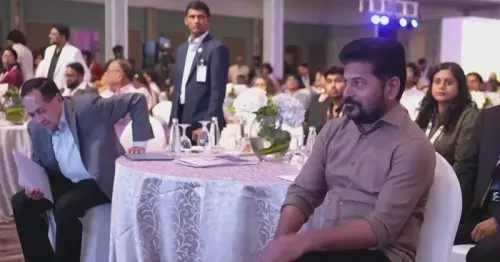
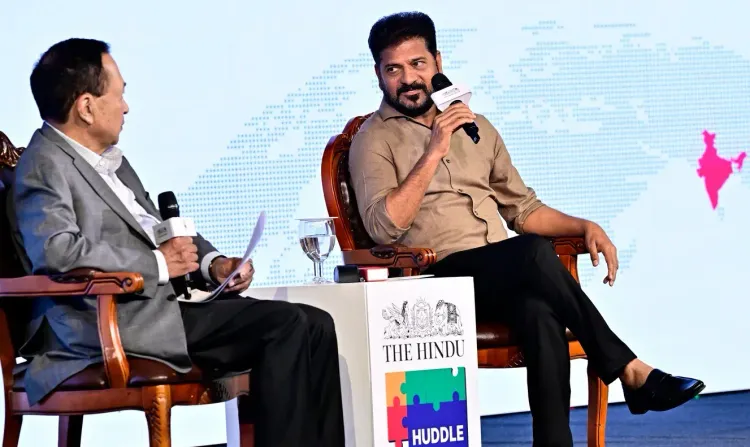
Chief Minister Revanth Reddy of Telangana on Saturday, June 6, 2026, called on Indian youth to pivot toward blue-collar careers and skill-building as artificial intelligence displaces white-collar employment, speaking at The Hindu Huddle 2026 forum in Bengaluru. The Chief Minister's Office of Telangana shared an extensive account of his remarks, which ranged from farm loan waivers and public recruitment to a $3-trillion state economic vision.
Context
'As circumstances change, youth must focus on alternatives. If skills are built in the relevant sectors, opportunities can be seized,' the Chief Minister said in Telugu. He argued directly that vait kalar jablu (white-collar jobs) being lost to AI should push young people toward blu kalar jabsu (blue-collar jobs), urging them to acquire the skills those roles demand.
The remarks came during a wide-ranging interview at The Hindu Huddle 2026, where he answered questions on Telangana's development plans, governance, politics, and his personal background.
Policy Backdrop
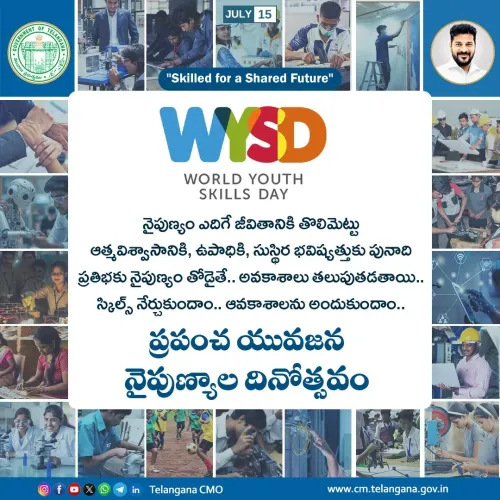
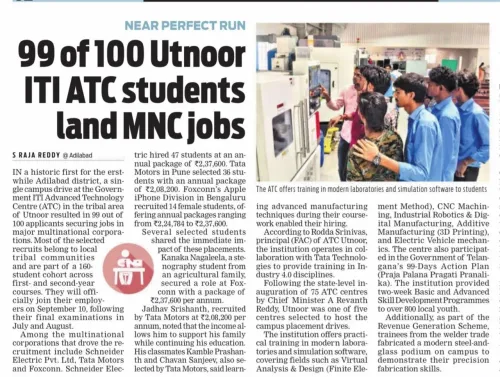
Revanth Reddy cited two flagship skill initiatives: the Young India Skills University, a dedicated vocational higher-education institution, and the upgrade of conventional ITIs into Advanced Technology Centres (ATCs) equipped with modern technology. Both are positioned as the state's structural response to AI-driven job disruption.
On public recruitment, he stated that after consulting the UPSC chairman on controversy-free hiring practices, the Telangana Public Service Commission (TGPSC) filled 67,760 posts in 15 months — a figure he described as the highest in the country. He added that a notification for 5,000 police recruitments would be issued shortly.
On agriculture, he said Rs 20,616 crore in farm loans belonging to 25,035 farmer families were waived after he took office, calling it the largest such waiver in India. He also cited the National Crime Records Bureau (NCRB) report stating Telangana recorded zero farmer suicides in 2024-25, attributing it to debt relief and the Rythu Bharosa scheme, which provides Rs 12,000 per acre annually. Paddy farmers additionally receive a Rs 500 per quintal bonus over the minimum support price.
Stakeholders and Impact
For women, Revanth Reddy said 67 lakh women in self-help groups (SHGs) across Telangana have accessed Rs 60,000 crore in zero-interest loans, with the state paying the interest. SHG members have purchased 1,000 buses, operate petrol bunks, manage solar plants, run canteens at government institutions, and handle facilities in government schools.
On urban planning, he outlined the CURE-PURE-RARE framework: the area within the 160-km Outer Ring Road is designated the Core Urban Region Economy (CURE) focused on services; the belt between the ORR and the Regional Ring Road (RRR) is the Peri Urban Region Economy (PURE) focused on manufacturing; and the zone beyond the RRR is the Rural Agricultural Region Economy (RARE). CURE is being developed as a net-zero city, with EV taxes waived despite a Rs 2,000 crore annual revenue sacrifice. A 30,000-acre Bharat Future City is being developed to attract Fortune 500 companies.
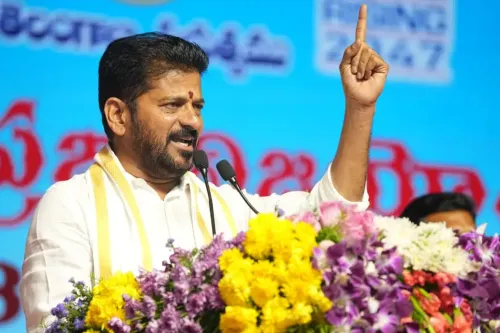
Telangana's long-term ambition is framed under #TelanganaRising2047, targeting growth to a $3-trillion economy. The CM said the state benchmarks itself against China, Japan, South Korea, and Germany — not neighbouring states — and is positioning itself as a China+1 investment destination. He also announced a planned visit to China to study best practices in infrastructure and manufacturing.
What's Next
The immediate deliverable is the promised 5,000 police recruitment notification, which Revanth Reddy said would be issued soon. His planned China visit will be closely watched for any resulting policy or investment announcements. The outcomes of the CURE net-zero and Bharat Future City projects, along with the next NCRB data cycle for 2025, will serve as key benchmarks for the claims made at the forum.
As Indian states compete to attract China+1 manufacturing investment and manage AI-driven employment anxiety, Telangana's integrated approach — combining skilling, large-scale public recruitment, farmer welfare, and differentiated spatial economic planning — positions it as a model other states will scrutinise closely.
Point of View
The largest farm loan waiver in India, and a zero-farmer-suicide NCRB citation, he is building a governance scorecard ahead of the next electoral cycle. The pivot to blue-collar skilling and the China+1 framing signal an attempt to move Telangana's identity beyond its IT-sector heritage toward a broader, more inclusive economic story. The CURE-PURE-RARE spatial framework, if implemented at scale, could become a replicable model for other large Indian states managing metropolitan sprawl and investment attraction simultaneously. However, the credibility of the headline numbers — jobs filled, loan waivers, and the suicide-free claim — will face sustained scrutiny, making the upcoming NCRB data release and police recruitment timeline critical tests for the administration.
NationPress
19 Sept 2026
Frequently Asked Questions
What did CM Revanth Reddy say about AI and jobs at The Hindu Huddle 2026?
CM Revanth Reddy said AI is eliminating white-collar jobs and that youth should shift focus to blue-collar careers, building the skills needed in those sectors to seize emerging opportunities.
How many government jobs has Telangana filled under Revanth Reddy?
The Chief Minister stated that Telangana filled 67,760 government posts in 15 months by reforming the TGPSC recruitment process, and a notification for 5,000 police jobs is expected soon.
What is the Telangana Rising 2047 vision?
TelanganaRising2047 is the state's long-term development blueprint targeting growth to a $3-trillion economy, with a spatial planning framework dividing the Hyderabad region into CURE, PURE and RARE economic zones.
Did Telangana have zero farmer suicides in 2024-25?
CM Revanth Reddy cited the NCRB — a central government body — as reporting zero farmer suicides in Telangana in 2024-25, attributing the outcome to a Rs 20,616 crore farm loan waiver and the Rythu Bharosa income support scheme.
What is the Young India Skills University in Telangana?
Young India Skills University is a Telangana government initiative providing vocational and skill-based higher education; the state has also upgraded conventional ITIs into Advanced Technology Centres to prepare youth for modern industry demands.