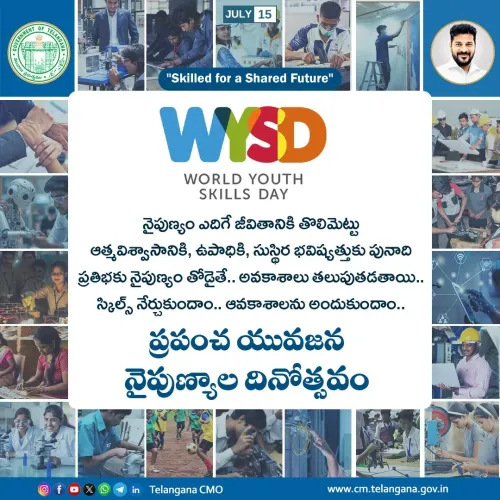
Telangana CM Revanth Reddy's Youth Day Pledge
Synopsis
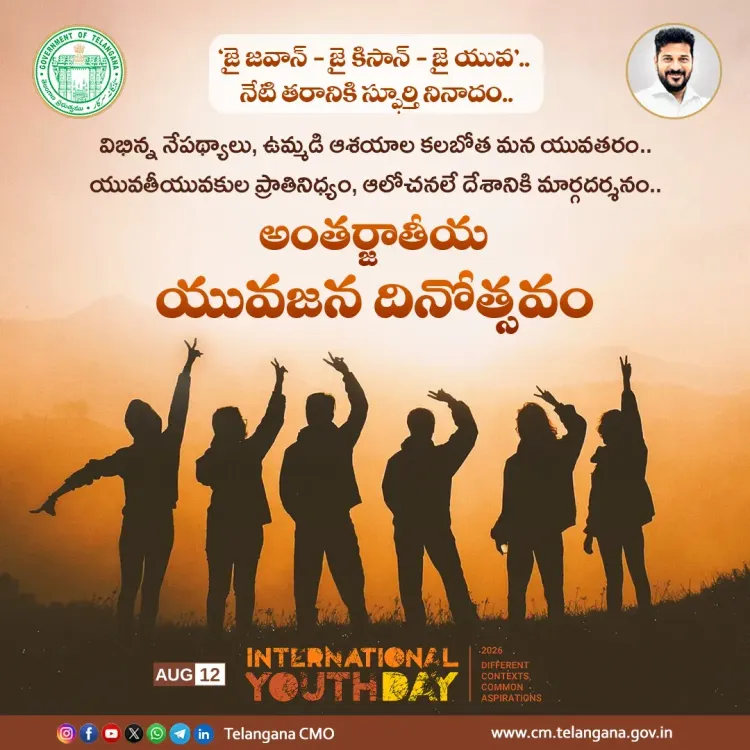
On International Youth Day 2026, Telangana CM Revanth Reddy pledged AI-era blue-collar job support, overseas placements via TOMCOM in Singapore, Japan and Germany, Skills and Sports Universities, and strict anti-drug enforcement as pillars of the state's youth welfare agenda.
Key Takeaways
Revanth Reddy issued a comprehensive youth-welfare statement on International Youth Day, 12 August 2026 .
The government explicitly acknowledged AI-driven threats to white-collar jobs and pledged to redirect youth toward blue-collar opportunities.
TOMCOM is facilitating overseas employment placements in Singapore, Japan, and Germany .
Advanced Training Centres (ATCs) , a Skills University , and a Sports University are cited as active institutional pillars of youth development.
The state government has taken 'strict measures' on narcotics control as part of its youth-protection strategy.
The CM framed education, skill-building, sports, employment, and leadership opportunities as collectively necessary to build a 'golden future'.
On International Youth Day, 12 August 2026, Telangana Chief Minister A. Revanth Reddy issued a sweeping commitment to the state's young population — promising not just opportunity, but the infrastructure, skills, and protection needed to seize it. The message, shared by the Chief Minister's Office of Telangana, arrives at a moment when AI-driven disruption is quietly rewriting the rules of employment across India.
From White-Collar Anxiety to Blue-Collar Ambition
At the heart of CM Revanth Reddy's statement is a frank acknowledgement of a structural shift most governments have been slow to name. 'AI కారణంగా వైట్ కాలర్ జాబ్స్ ప్రమాదంలో పడుతున్న పరిస్థితుల్లో' — 'in a situation where white-collar jobs are falling under threat due to AI' — the government, he said, is taking every step to ensure youth can access and claim blue-collar opportunities instead. It is a rare instance of a sitting Chief Minister anchoring a welfare message to the realities of automation rather than the comforts of political boilerplate.
Revanth Reddy's statement declared: 'If youth are encouraged in their thinking, given a platform for their talent, and provided the necessary resources for their efforts, they can turn the impossible into the possible.' He listed poverty, inequality, unemployment, climate change, and technology gaps as the defining challenges his government is orienting its youth policy around.
ATCs, Skills University, and the TOMCOM Pipeline
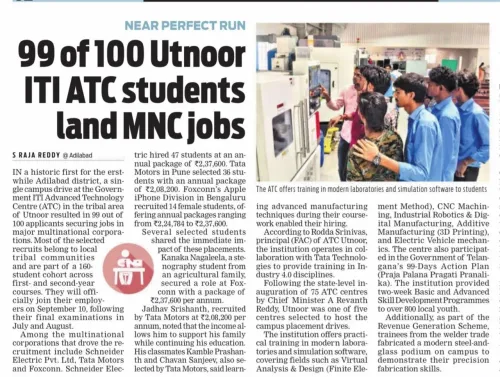
The CM pointed to three concrete institutional pillars already in motion. Advanced Training Centres (ATCs) and a dedicated Skills University are being positioned as the backbone of vocational readiness. A Sports University rounds out the state's bet on non-traditional pathways to a stable future.
Beyond the state's borders, TOMCOM — the Telangana Overseas Manpower Company — is the government's vehicle for placing young Telangana workers in Singapore, Japan, and Germany. The CM confirmed that necessary steps have been taken to secure opportunities in these three countries, giving the youth agenda an explicitly international dimension that few state governments have matched.
Anti-Drug Drive as a Youth-Welfare Plank
Revanth Reddy also folded drug control into his youth agenda, stating that the state government has taken 'strict measures' on narcotics to ensure young people do not fall prey to addiction. The framing is deliberate — positioning social protection alongside skill-building as twin pillars of the same policy architecture.
He closed with a line that doubles as a political rallying cry: 'యువతే మన బలం – యువతే మన భవిష్యత్తు' — 'Youth is our strength — youth is our future.' The sentiment is familiar; the specificity of the institutions named around it is what gives it weight.
The real test, of course, will be in the placement numbers from TOMCOM, the graduation rates from the Skills and Sports Universities, and whether the ATCs scale fast enough to meet Telangana's youth population. The government has named the arena — now it must fill the scoreboard.
Point of View
Now updated for the AI era. By openly naming automation as a threat to white-collar employment, the CM is attempting to get ahead of a politically explosive issue before it becomes a crisis. The TOMCOM overseas-placement push signals that Telangana is positioning itself as a labour-exporting state with institutional backing, a model that could become a template — or a cautionary tale — depending on execution. Anti-drug messaging woven into a youth-welfare frame also suggests the government is trying to consolidate a broad social-contract narrative ahead of future electoral cycles.
NationPress
26 Sept 2026
Frequently Asked Questions
What did Telangana CM Revanth Reddy say on International Youth Day 2026?
CM Revanth Reddy extended greetings to youth on International Youth Day and outlined the state government's commitments: blue-collar job support in the face of AI-driven disruption, overseas placements via TOMCOM in Singapore, Japan and Germany, Skills University, Sports University, ATCs, and strict anti-drug enforcement.
What is TOMCOM and how does it help Telangana youth?
TOMCOM stands for Telangana Overseas Manpower Company, a state agency that facilitates overseas employment placements. The Telangana government has used it to secure job opportunities for youth in countries including Singapore, Japan, and Germany.
What is Telangana's Skills University?
The Skills University is a state-level institution established by the Telangana government to provide vocational and skills-based education, aimed at making youth employment-ready in sectors beyond traditional white-collar roles.
Why did Revanth Reddy mention AI and white-collar jobs on Youth Day?
The CM acknowledged that AI is putting white-collar jobs at risk and said the government is taking steps to ensure youth can access blue-collar opportunities instead, reflecting a broader policy shift toward vocational and overseas employment.
What anti-drug steps has the Telangana government taken for youth?
CM Revanth Reddy stated that the state government has taken strict measures on narcotics control to prevent youth from falling prey to addiction, though specific operational details of these measures were not enumerated in the statement.