CM Revanth Reddy Hails Telangana's Education Gains
Synopsis
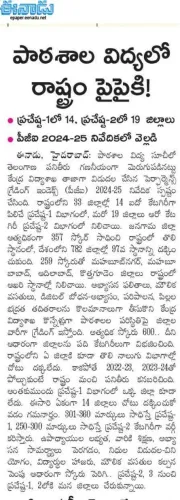
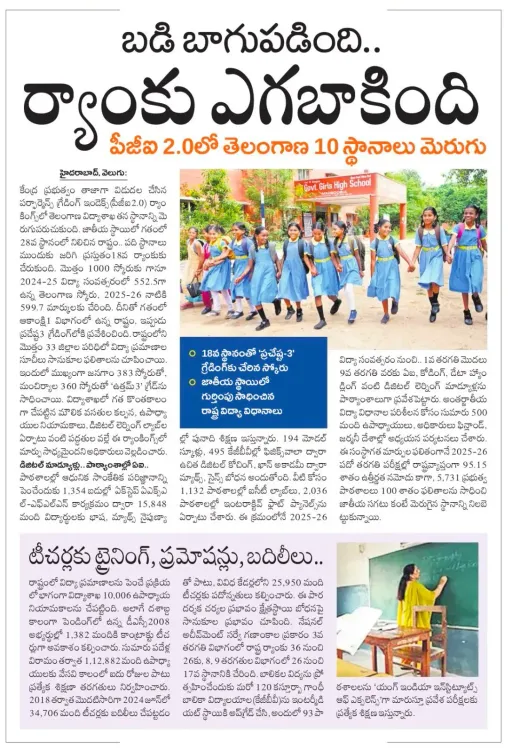
Telangana CM A. Revanth Reddy on 9 July 2026 hailed Central government-announced education results as proof that the Praja Palana administration's push on teacher recruitment and school infrastructure is delivering, urging the state to press ahead toward becoming a national model in education.
Key Takeaways
Revanth Reddy on 9 July 2026 attributed the state's latest Central government-announced education results to his administration's work on teacher recruitment and school infrastructure.
The Praja Palana governance framework underpins the Congress government's education agenda, covering welfare delivery and public-sector reform across districts.
The state conducted DSC teacher recruitment exams in 2024-25 to fill thousands of long-pending vacancies in government schools.
The Mana Ooru Mana Badi scheme funded classroom and facility upgrades across all Telangana districts, with allocations in the 2021-22 and 2023-24 budgets.
Revanth Reddy extended special congratulations to teachers and officials at all levels for the 'significant progress' in the education system.
The Chief Minister called for continued efforts to build an education system that serves as a model for the entire country .
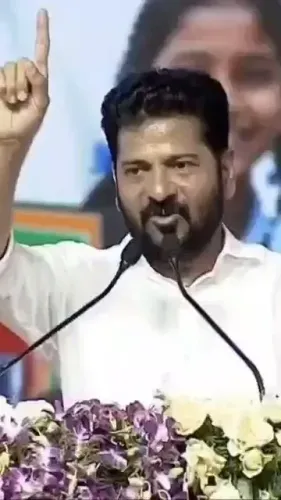
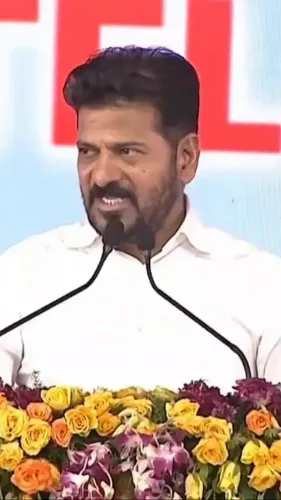
Telangana Chief Minister A. Revanth Reddy on Thursday, 9 July 2026, credited his government's uncompromising approach to teacher recruitment and school infrastructure for the state's latest education performance results announced by the Central government, calling the outcomes a fulfilment of the Congress-led Praja Palana administration's ambition to make Telangana a benchmark in educational standards.
Context
Posting in Telugu on X, Chief Minister Revanth Reddy said the results vindicate the state government's work 'without compromise' — from teacher appointments to the provision of basic infrastructure. In translation, he wrote: 'తెలంగాణను అత్యున్నత విద్యా ప్రమాణాల నిలయంగా మార్చాలన్న ప్రజా ప్రభుత్వ ఆకాంక్ష నెరవేరుతోంది' ('The aspiration of the people's government to transform Telangana into a home of the highest educational standards is being fulfilled'). He extended 'special congratulations' to teachers and officials at all levels responsible for the 'significant progress' in the education system, and called on the state to continue its efforts toward building an education system that is a 'model for the entire country.'
Policy Backdrop
The Telangana Congress government, which came to power in December 2023, has pursued education reform under its Praja Palana governance framework — a wide-ranging public-delivery programme spanning welfare and social-sector initiatives. On the teacher recruitment front, the state conducted District Selection Committee (DSC) examinations in 2024-25 to fill thousands of vacancies accumulated over previous years, addressing a chronic shortage that had long affected learning outcomes in government schools.
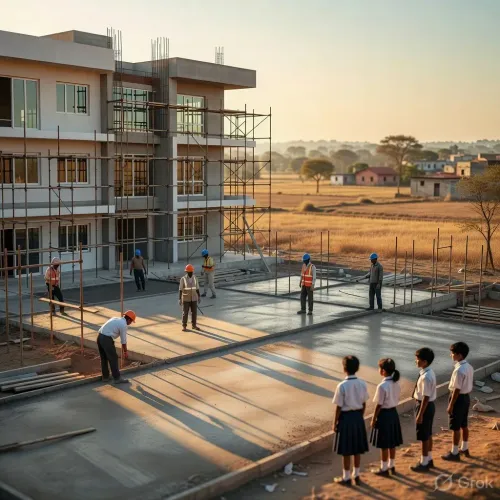
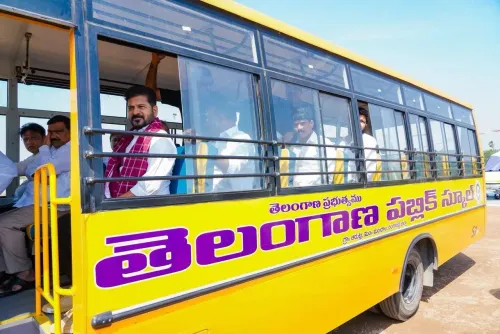
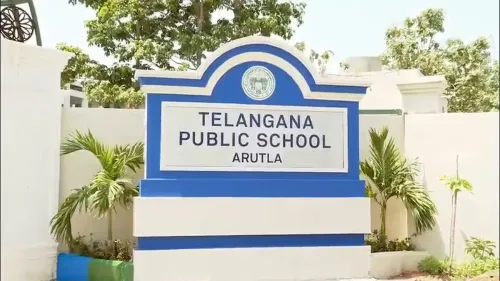
On the infrastructure side, the Mana Ooru Mana Badi scheme — launched in 2021 and carried forward with budget allocations in 2023-24 — has funded upgrades to classrooms, toilets, and basic facilities across government schools in all districts of the state. Telangana has also been implementing provisions of the National Education Policy 2020 in phases since 2022, including foundational literacy and numeracy programmes at the primary level.
Stakeholders and Impact
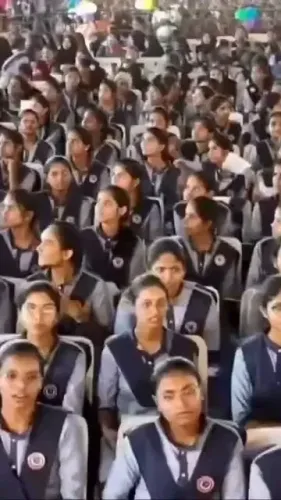
The Chief Minister's remarks are directed squarely at Telangana's teaching community and district-level education officials, whose on-ground execution he credited for the state's improved standing. For students and parents in government schools — historically underserved in terms of both qualified teachers and physical facilities — the Central government's assessment represents an external validation of improvements that have been incremental and multi-year in nature.
State-level rankings on national education indices have become significant political currency across India since the rollout of NEP 2020, with successive state governments citing Central assessments to demonstrate administrative effectiveness. Telangana's latest recognition follows a broader pattern of states competing on national education metrics, using teacher recruitment drives and infrastructure spending as the primary levers.
What's Next
Attention will now turn to the next round of national assessments — including the National Achievement Survey (NAS) and the PARAKH evaluation framework — which will provide a more granular picture of learning outcomes beyond infrastructure and recruitment. The Telangana education budget for 2026-27 will also be closely watched to see whether the state sustains or scales its current level of investment. Chief Minister Revanth Reddy's post signals that education performance will remain a centrepiece of the Praja Palana government's public narrative heading into the next phase of its term.
Point of View
He also attempts to build bureaucratic goodwill, which is essential for sustaining reform momentum in a large public-education system. The framing under the 'Praja Palana' banner ties individual scheme outcomes to a broader ideological identity for the Telangana Congress, distinguishing it from the previous BRS administration. The post signals that education will be a primary pillar of the party's performance narrative as it looks toward the next assembly cycle.
NationPress
8 Oct 2026
Frequently Asked Questions
What education results did the Central government announce for Telangana in 2026?
The Central government announced education performance results recognising Telangana's progress, which CM Revanth Reddy cited as evidence of the state's improved standing — though the precise metrics and the name of the specific assessment have not been officially detailed in public statements beyond the Chief Minister's post.
What is Praja Palana and how does it relate to education in Telangana?
Praja Palana is the Telangana Congress government's overarching governance framework, launched after it came to power in December 2023, encompassing welfare schemes and public-service delivery including teacher recruitment, school infrastructure upgrades, and NEP 2020 implementation.
What is the Mana Ooru Mana Badi scheme in Telangana?
Mana Ooru Mana Badi is a Telangana school infrastructure programme launched in 2021 that funds upgrades to classrooms, toilets, and basic facilities in government schools across all districts, with budget allocations made in 2021-22 and 2023-24.
Has Telangana filled teacher vacancies in government schools?
Yes. Telangana conducted District Selection Committee (DSC) teacher recruitment examinations in 2024-25 to fill thousands of vacancies that had accumulated in government schools over previous years.
How does Telangana's education performance compare nationally?
Telangana has been part of a broader state-level competition on national education indices since the rollout of NEP 2020. Central government assessments serve as external benchmarks, and the state's latest results have been cited by CM Revanth Reddy as placing Telangana on a path to becoming a national model in education.