CM Revanth Reddy Lays Foundation for Eco-Palm Factory in Kodangal
Synopsis
Telangana Chief Minister A. Revanth Reddy unveiled foundation plaques for an Eco-Palm Factory at Lagacherla, Kodangal in Vikarabad District on 9 November 2026, signalling the Congress government's push to bring decentralised manufacturing to rural constituencies.
Key Takeaways
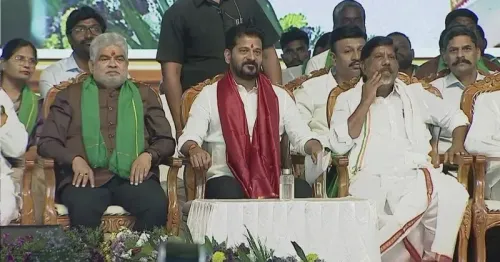
Revanth Reddy attended the foundation plaque unveiling for an Eco-Palm Factory at Lagacherla, Kodangal, Vikarabad District on 9 November 2026 .
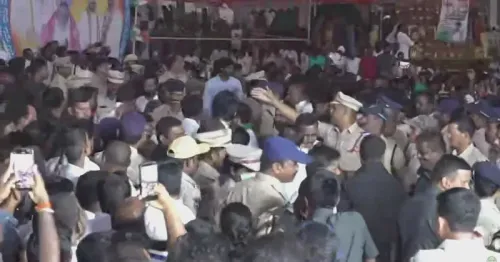
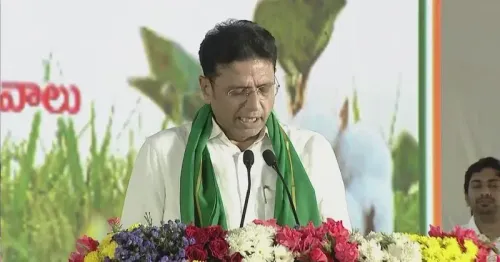
The Chief Minister also addressed a public meeting at the site, speaking directly to local farmers and workers.
Vikarabad District falls within Kodangal — Revanth Reddy's own constituency — giving the event both developmental and political significance.
The project aligns with Telangana's pattern of promoting decentralised industrial growth beyond Hyderabad.
Exact funding, production scope, and employment targets for the factory have not yet been officially disclosed.
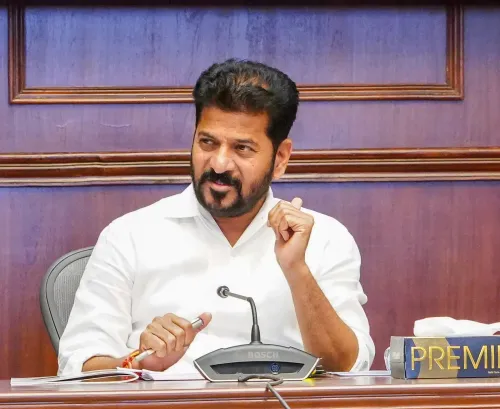
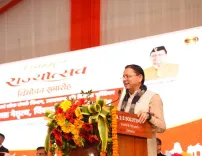
A new manufacturing unit is coming to rural Telangana — and Chief Minister A. Revanth Reddy made sure it happened in his own backyard. On Monday, 9 November 2026, the Chief Minister's Office of Telangana announced that Revanth Reddy participated in the unveiling of foundation plaques for an Eco-Palm Factory at Lagacherla, Kodangal, Vikarabad District, also addressing a public meeting at the site.
A Factory Takes Root in Vikarabad's Fields
Vikarabad District, a predominantly rural expanse southwest of Hyderabad, has become a focal point for the state's push to seed industry beyond the capital. The Eco-Palm Factory foundation event at Lagacherla follows a broader pattern under Telangana's Congress government — which came to power in December 2023 — of anchoring small and medium manufacturing projects in districts that have historically depended on agriculture. Kodangal, Revanth Reddy's own constituency, sits within this district, adding political weight to what is framed as a development initiative.
The ceremony involved the formal unveiling of plaques marking the factory's foundation — a standard state ritual that signals a project's official commencement. The Chief Minister also addressed a public meeting at the venue, using the occasion to speak directly to local farmers and workers who stand to gain from new employment opportunities the facility is expected to generate.
Decentralised Industry as a Governing Signal
Successive Telangana governments have used district-level foundation-laying events as a mechanism to demonstrate that development is not confined to Hyderabad. For the Revanth Reddy administration, Vikarabad represents an early and recurring test case of that promise. The specific scope, funding size, and product focus of the Eco-Palm Factory have not been disclosed in detail, but the event itself signals the state's intent to promote agro-industrial linkages — palm-based manufacturing typically connecting to local agricultural inputs and creating downstream jobs for rural workers.
What matters next is execution: construction timelines, the number of jobs created once the facility becomes operational, and whether the project catalyses further private investment in the district. Foundation stones are promises. The factory's first shift will be the proof.
Point of View
Investing visibly in Kodangal-Vikarabad through agro-industrial projects builds on a Congress campaign narrative that promised to spread growth beyond Hyderabad's orbit. The Eco-Palm Factory, however modest in scale, fits a pattern of the administration using district-level ceremonies to demonstrate delivery. The real test of this governance posture will come when — and if — the factory becomes operational and begins generating the rural employment it implicitly promises.
NationPress
9 Nov 2026
Frequently Asked Questions
What is the Eco-Palm Factory in Telangana?
The Eco-Palm Factory is a manufacturing project whose foundation was laid at Lagacherla in Kodangal, Vikarabad District. Chief Minister A. Revanth Reddy unveiled its foundation plaques on 9 November 2026. Full details on its scope, funding, and products have not yet been officially disclosed.
Where is Lagacherla located in Telangana?
Lagacherla is a locality in Kodangal constituency within Vikarabad District, situated in the rural southwest of Telangana, beyond the Hyderabad metropolitan area.
Why did CM Revanth Reddy attend the factory foundation event in Kodangal?
Kodangal is CM A. Revanth Reddy's own legislative constituency, making the event both a development initiative and a signal of the government's focus on rural industrial growth in his home district.
What jobs will the Eco-Palm Factory create in Vikarabad?
Official employment generation figures have not yet been announced. The factory is expected to benefit local farmers and rural workers once construction is complete and operations begin.
What is Telangana's approach to industrial growth outside Hyderabad?
Since the Congress government took office in December 2023, Telangana has used foundation-laying events and small manufacturing project announcements in rural districts to promote decentralised industrial growth, with Vikarabad District among the targeted areas.