CM Revanth Reddy Champions Thammidikunta Lake Revival
Synopsis
Telangana CM A. Revanth Reddy posted about reviving Hyderabad's Thammidikunta lake, invoking water conservation, drought relief, and responsibility to future generations — placing the effort within the state's long-running Mission Kakatiya tradition of restoring water bodies.
Key Takeaways
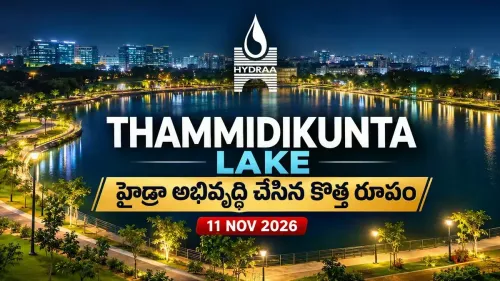
Revanth Reddy highlighted the restoration of Thammidikunta , a lake in Hyderabad , on 12 November 2026 .
His Telugu post linked lake conservation directly to ending drought and securing water for future generations.
Mission Kakatiya , launched in 2014 , set out to rejuvenate over 46,000 tanks and water bodies across Telangana.
Hyderabad's traditional lake network has faced severe pressure from urbanisation, encroachment, and siltation since the 1990s .
The CM framed conservation and economic progress as complementary, not competing, goals.
Specific project timelines and funding details for Thammidikunta works are yet to be formally announced.
Every drop counts — and Telangana Chief Minister A. Revanth Reddy is making that case at Thammidikunta, one of Hyderabad's storied urban lakes, invoking the twin imperatives of water conservation and generational responsibility in a post on 12 November 2026.
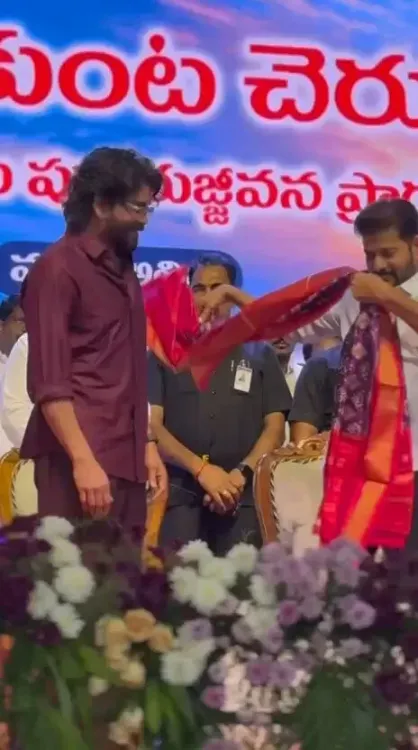
Writing in Telugu, the Chief Minister framed the effort in lyrical, purpose-driven terms: 'చెరువు బతకాలని… కరువు తీరాలని…' — 'So that the lake may live… so that drought may end… so that every drop of water is captured… so that future generations may have assurance… protecting nature, we move forward on the path of progress.' The language is deliberate: linking ecological survival directly to drought relief and intergenerational equity.
Thammidikunta and Hyderabad's shrinking blue network
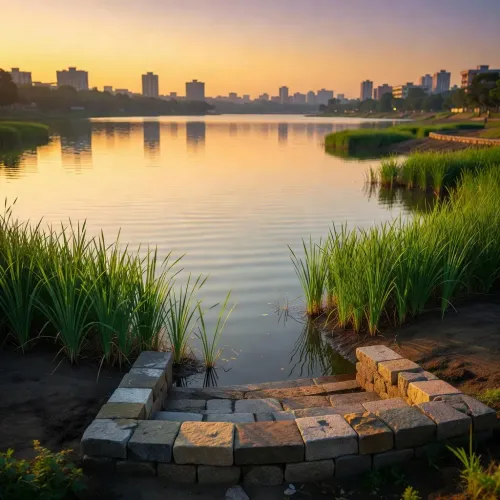
Hyderabad once sat amid hundreds of interconnected tanks and lakes built over centuries by the Kakatiya and later Qutb Shahi rulers. Rapid urbanisation since the 1990s has eaten into this network — encroachments, sewage inflow, and siltation have degraded dozens of water bodies that once recharged the city's groundwater and buffered seasonal floods. Thammidikunta, cited specifically in the CM's post, is part of this fragile inheritance now under conservation focus.
Mission Kakatiya's legacy and what comes next
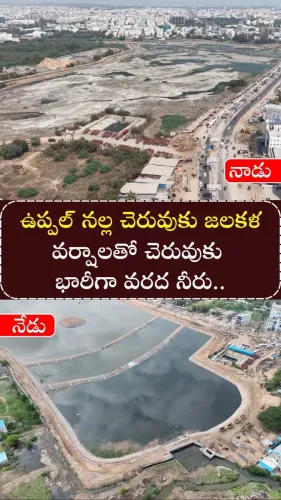
The state's most ambitious water-body restoration effort, Mission Kakatiya, was launched in 2014 with a mandate to rejuvenate over 46,000 minor irrigation tanks across Telangana — desilting them, repairing bunds, and restoring traditional inflow channels. Urban lakes in the Hyderabad metropolitan region have been periodically brought under similar drives through the GHMC and state irrigation departments. The current emphasis on Thammidikunta fits squarely within that continuum, even as the specific scope and funding of any new works there remain to be formally announced.
The broader pattern is consistent: successive Telangana governments have treated tank and lake revival not merely as an environmental gesture but as a drought-mitigation and urban-resilience strategy. For a city whose population has crossed ten million and whose water demand strains every monsoon, keeping traditional water bodies alive is infrastructure policy — not sentimentality.
Progress and preservation as one agenda
The CM's choice of words — 'ప్రకృతిని పరిరక్షిస్తూ… ప్రగతి పథంలో సాగుతున్నాం' ('protecting nature… we move forward on the path of progress') — signals an attempt to reconcile Hyderabad's relentless economic expansion with ecological stewardship. That tension defines modern city-building across India, and Revanth Reddy is positioning Telangana's response at a local lake as a marker of that balance.
The question now is whether the poetry translates into project timelines, budget allocations, and measurable water-storage targets at Thammidikunta — the metrics that will tell residents whether the lake truly lives again.
Point of View
Revanth Reddy is doing something politically calculated: converting an environmental issue into a governance narrative ahead of municipal budget cycles. The invocation of Mission Kakatiya's legacy — a programme associated with the previous BRS administration — also signals continuity of a popular programme while rebranding its momentum under Congress stewardship. For a Chief Minister who wears both the CM and TPCC hats, projecting competence on urban ecology matters as Hyderabad's infrastructure debates intensify. The real test, however, will be whether announcements of physical works and financing follow — without that, the poetry risks remaining just that.
NationPress
12 Nov 2026
Frequently Asked Questions
What is Thammidikunta and where is it located?
Thammidikunta is a lake in Hyderabad, Telangana, that forms part of the city's historical network of urban water bodies and has become a focal point in lake conservation discussions.
What is Mission Kakatiya in Telangana?
Mission Kakatiya is a state programme launched in 2014 aimed at rejuvenating over 46,000 minor irrigation tanks and water bodies across Telangana through desilting, bund repair, and restoration of traditional inflow channels.
Why are Hyderabad's lakes under threat?
Rapid urbanisation since the 1990s has led to encroachments, sewage inflow, and heavy siltation across Hyderabad's lake network, degrading dozens of water bodies that once recharged groundwater and managed seasonal flooding.
What did CM Revanth Reddy say about Thammidikunta?
In a Telugu post on 12 November 2026, CM Revanth Reddy said the goal is for 'the lake to live, drought to end, every drop of water to be captured, and future generations to have assurance,' framing lake conservation as inseparable from progress.
What is the Telangana government doing to protect Hyderabad lakes?
The Telangana government has periodically conducted lake restoration drives in Hyderabad through GHMC and irrigation departments, building on the Mission Kakatiya framework to desilt and revive urban water bodies.