Abhinav Bindra demands IOA answer on SOM electoral rules inconsistency
Synopsis
Olympic champion Abhinav Bindra has gone public with an unresolved constitutional question he posed to the IOA before its SOM elections — and is yet to receive a substantive answer. With PT Usha having missed a seat, Ashwini Nachappa alleging candidate pressure, and Executive Council elections due on 5 December, Bindra's intervention puts Indian sport's governance credibility squarely in the spotlight.
Key Takeaways
Abhinav Bindra publicly released his 31 October 2026 letter to the IOA citing an unresolved inconsistency between the IOA Constitution (Article 3.7) and SOM electoral rules.
Bindra said he received no substantive clarification from the Electoral Officer , IOA president PT Usha , or CEO Raghuram Iyer before or after the elections.
The SOM elections (9 November 2026) saw Anju Bobby George , Rani Rampal , Dola Banerjee , and Saina Nehwal secure the four women's seats; PT Usha finished fifth.
Former sprinter Ashwini Nachappa alleged external pressure led to candidate withdrawals; Usha has sought an independent review by the IOC .
Bindra clarified he had independently decided not to contest and his concern was not linked to any candidate's prospects.
The IOA Executive Council elections are scheduled for 5 December 2026 .
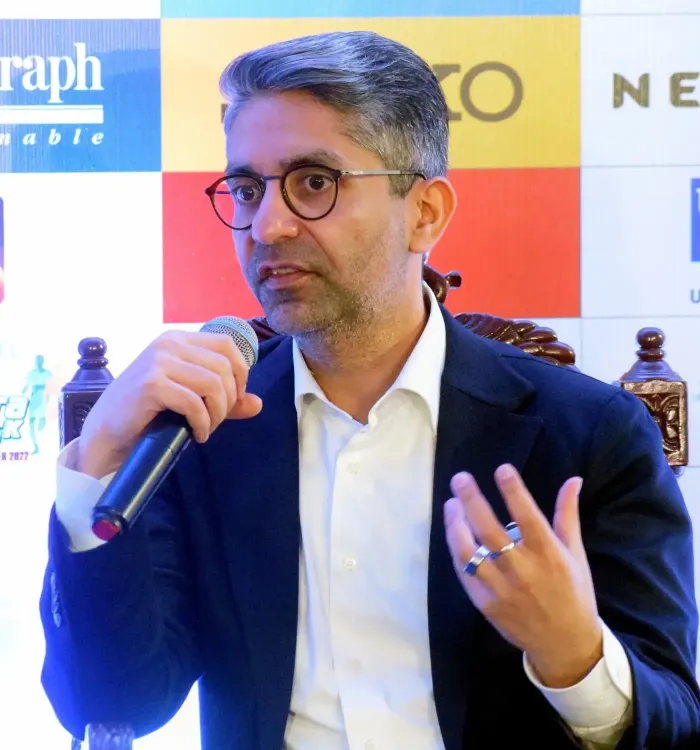
Olympic champion Abhinav Bindra has gone public with his letter to the Indian Olympic Association (IOA), pressing the body for a substantive response to what he describes as an apparent inconsistency between the IOA's constitution and the electoral rules governing the Sportspersons of Outstanding Merit (SOM) elections. The disclosure, made on Thursday, 12 November 2026, came after Bindra's private correspondence entered the public domain and was cited in media reports.
Why Bindra Made the Letter Public
Bindra said he had approached IOA president PT Usha and CEO Raghuram Iyer before the elections to raise his concern, but received no substantive clarification from either the Electoral Officer or the IOA leadership. 'Unfortunately, my private correspondence with the Indian Olympic Association has found its way into the public domain. Given the references to it in recent media reports, I thought it appropriate to share my letter of 31 October 2026 in its entirety, so that its intent and context are clear,' Bindra wrote in a post on X.
He emphasised that the letter predated the elections and was written in what he called 'a spirit of constructive engagement and with the larger interests of Indian sport at heart.' While he received an indication of which rules were being applied, he said the underlying constitutional question was never answered.
The Constitutional Question at Issue
The dispute centres on Article 3.7 of the IOA Constitution and its relationship with the recently notified rules for the SOM election. Under the current framework, an 80-member roster is compiled by the Electoral Officer through a 10-tier eligibility system, with eight representatives — four men and four women — elected to the IOA General Assembly. Bindra argued that the constitutional question regarding this framework remains unresolved.
He was clear that his concern carried no personal stake: 'My intention was never to question individuals or influence an electoral outcome. It was, and remains, to encourage greater clarity, transparency and confidence in our institutions.'
A Turbulent SOM Election Backdrop
The SOM elections, held on 9 November 2026, have drawn considerable scrutiny. PT Usha finished fifth in the women's contest, missing out on a seat; the four positions were secured by Anju Bobby George, Rani Rampal, Dola Banerjee, and Saina Nehwal. Former sprinter Ashwini Nachappa has alleged that external pressure led to candidate withdrawals, while Usha herself has raised concerns about alleged campaigning violations and sought an independent review from the International Olympic Committee (IOC).
This is the latest in a series of governance disputes to have surfaced within the IOA in recent years, adding to calls from sports administrators and athletes for structural reform of Indian sporting bodies.
Bindra's Broader Argument on Governance
Bindra connected the issue to India's growing ambitions on the global sporting stage, arguing that institutional credibility must keep pace with athletic achievement. 'As India looks towards an increasingly ambitious future in world sport, the credibility of our institutions will be just as important as the achievements of our athletes. Strong governance is not merely an administrative necessity; it is the foundation upon which lasting sporting progress is built,' he stated.
He called for processes to be guided by principles that remain consistent regardless of individuals or outcomes: 'Indian sport deserves nothing less,' he wrote.
What Comes Next
The IOA Executive Council elections are scheduled for 5 December 2026. With governance questions now openly raised by one of India's most respected sports figures, pressure is mounting on the IOA to offer a formal, transparent response to Bindra's constitutional concerns before those elections take place.
Point of View
The IOA faces an integrity problem that is no longer contained within its own corridors. The December 5 Executive Council elections will now unfold under a cloud of unresolved process questions — the worst possible environment for institutional credibility.
NationPress
12 Nov 2026
Frequently Asked Questions
What is Abhinav Bindra's concern about the IOA's SOM elections?
Bindra has raised an apparent inconsistency between Article 3.7 of the IOA Constitution and the electoral rules notified for the Sportspersons of Outstanding Merit (SOM) elections. He wrote to IOA president PT Usha and CEO Raghuram Iyer on 31 October 2026 seeking clarification, but says the constitutional question has not been substantively addressed by either the Electoral Officer or the IOA leadership.
What are the SOM elections and how do they work?
The SOM elections determine which former athletes represent sportspersons in the IOA General Assembly. An 80-member roster is compiled by the Electoral Officer through a 10-tier eligibility system, and eight representatives — four men and four women — are elected from that roster.
What happened at the SOM elections on 9 November 2026?
The four women's seats were won by Anju Bobby George, Rani Rampal, Dola Banerjee, and Saina Nehwal. IOA president PT Usha finished fifth and missed a seat. The elections have since attracted allegations of external pressure on candidates and campaigning violations.
Why did Bindra make his private letter public?
Bindra said the correspondence had already entered the public domain and was being referenced in media reports. He chose to release the full letter of 31 October 2026 to ensure its intent and context were accurately understood.
What are the next key dates for the IOA?
The IOA Executive Council elections are scheduled for 5 December 2026. With governance questions now publicly raised, the IOA is under pressure to address Bindra's constitutional concerns before those elections take place.