IOA kicks off 2026 elections, appoints ex-Delhi poll chief as returning officer
Synopsis
The IOA has formally launched its 2026 electoral cycle under a new governance law, with a former election commissioner appointed to independently oversee the process. With India vying alongside six other nations to host the 2036 Olympics in Ahmedabad, clean institutional governance is no longer just internal housekeeping — it is a geopolitical credential.
Key Takeaways
The Indian Olympic Association (IOA) has launched its 2026 electoral process under the National Sports Governance Act, 2025 .
Former Election Commissioner Sanjay Kumar Srivastava appointed as Electoral Officer and Returning Officer .
Athletes' Commission election (2026–2030 term) is set for 3 November ; Executive Council polls on 5 December .
The Athletes' Commission will have 10 elected members — five men and five women — from Olympic-category sports.
SOM roster applications accepted until 18 October ; NSF athlete nominations due by 11 October at 2 pm .
India is one of seven nations in dialogue with the IOC for hosting the 2036 Olympic Games in Ahmedabad .
The Indian Olympic Association (IOA) has formally launched its 2026 electoral process under the National Sports Governance Act, 2025, with the Athletes' Commission election scheduled for 3 November and the Executive Council polls set for 5 December. The move signals a structured push toward institutional reform as India's Olympic movement prepares for a pivotal period ahead of the country's bid to host the 2036 Olympic Games.
Returning Officer Appointment
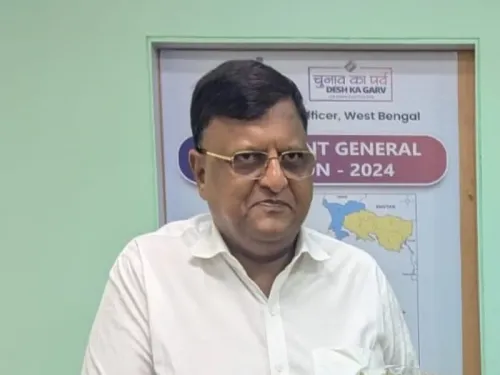
The IOA has appointed Sanjay Kumar Srivastava, former Election Commissioner of Delhi and Chandigarh, as the Electoral Officer and Returning Officer for the entire electoral cycle. Srivastava will oversee elections for the Athletes' Commission, the roster of Sportspersons of Outstanding Merit (SOMs), and the Executive Council. His responsibilities include preparation of electoral rolls, scrutiny of nominations, conduct of polling, counting of votes, declaration of results, and all related official notifications.
Key Dates and Election Timeline
The first stage began on 18 September with the publication of the application form for inclusion in the SOM roster. Eligible applicants have been asked to submit their forms along with supporting documents by 18 October.
For the Athletes' Commission election covering the 2026–2030 term, eligible National Sports Federations have been asked to nominate two athlete representatives each through their duly constituted Athletes' Commissions by 2 pm on 11 October. Polling, counting, and declaration of results for this election are scheduled for 3 November.
The IOA Executive Council election follows on 5 December, timed to precede the current council's term expiry on 10 December.
Athletes' Commission Composition
The Athletes' Commission will comprise 10 elected members — five men and five women. The rules provide for representation of athletes from Olympic-category sports and those who have demonstrated success at major international competitions, ensuring the body reflects competitive excellence rather than administrative lineage.
What IOA President P.T. Usha Said
IOA president P.T. Usha described the elections as a critical step in reforming Indian sport's governance architecture. 'The 2026 elections mark an important milestone in strengthening good governance, transparency and accountability within the Indian Olympic Movement. Our objective is to build strong, credible and athlete-centric institutions, fully aligned with the Olympic Charter and the national sports governance framework. The appointment of an experienced former election commissioner as electoral officer/returning officer underlines our commitment to an independent, transparent and credible electoral process,' she said.
Usha also linked the reforms directly to India's 2036 Olympic Games hosting bid: 'As India continues its continuous dialogue with the IOC as one of seven nations for hosting the 2036 Olympic Games in Ahmedabad, strong governance and an athlete-centric approach will remain fundamental to our Olympic journey.'
India's 2036 Olympic Bid Context
India is among seven interested parties in the International Olympic Committee (IOC)'s Continuous Dialogue process for the 2036 Games, alongside Germany, Hungary, Qatar, the Republic of Korea, South Africa, and Turkiye. Ahmedabad has been identified as India's proposed host city. Credible internal governance is widely regarded as a prerequisite for a successful Olympic bid — making the IOA's electoral reforms not merely procedural but strategically significant. The IOA has faced scrutiny from international bodies in the past over governance concerns, making a clean, independently supervised electoral process all the more consequential at this juncture.
Point of View
Credentialled election official is a meaningful departure from the self-administered electoral practices that previously drew international criticism. But the real test is whether the process produces leadership that is genuinely athlete-driven rather than federation-managed by proxy — a distinction the new Athletes' Commission structure attempts to enforce through gender parity and competitive merit criteria. Timing is everything here: with India's 2036 Olympic bid in an active dialogue phase, any governance controversy would hand rivals a ready-made argument. The IOA is, in effect, running two simultaneous campaigns — one for internal reform, one for global credibility.
NationPress
10 Oct 2026
Frequently Asked Questions
What is the IOA 2026 election process?
The Indian Olympic Association has launched a structured electoral cycle under the National Sports Governance Act, 2025, covering three bodies: the Sportspersons of Outstanding Merit roster, the Athletes' Commission, and the Executive Council. An independent returning officer has been appointed to oversee all three stages.
Who is Sanjay Kumar Srivastava and why was he appointed?
Sanjay Kumar Srivastava is a former Election Commissioner of Delhi and Chandigarh appointed by the IOA as its Electoral Officer and Returning Officer for the 2026 elections. His appointment is intended to ensure an independent and credible electoral process, free from internal influence.
When are the IOA Athletes' Commission and Executive Council elections?
The Athletes' Commission election is scheduled for 3 November 2026, while the Executive Council election is set for 5 December 2026 — before the current council's term expires on 10 December 2026.
How is the IOA Athletes' Commission structured?
The Athletes' Commission will consist of 10 elected members — five men and five women — representing athletes from Olympic-category sports who have achieved success at major international competitions.
How does the IOA election relate to India's 2036 Olympic Games bid?
India is one of seven nations in the IOC's Continuous Dialogue process for hosting the 2036 Olympics, with Ahmedabad as the proposed host city. IOA president P.T. Usha has explicitly linked strong governance and athlete representation to India's Olympic bid credibility.