PT Usha loses IOA electoral college poll; Anju, Rani, Dola, Saina elected
Synopsis
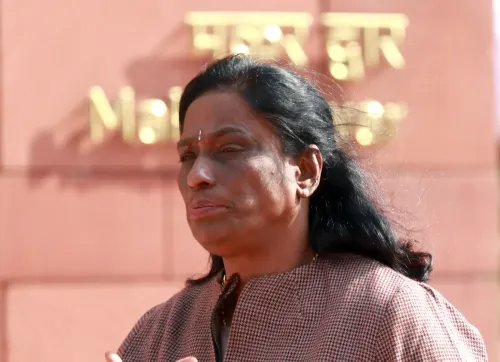
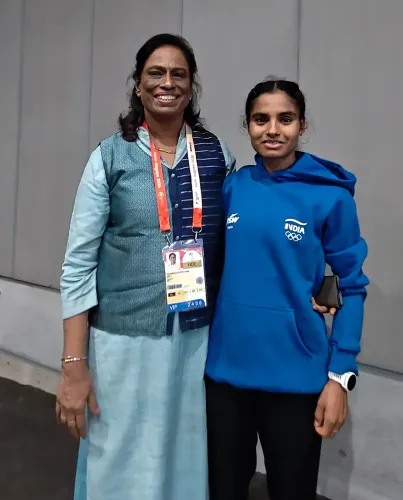
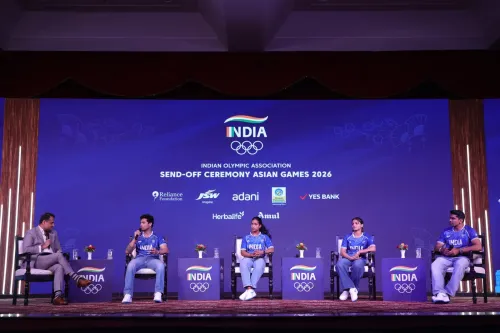
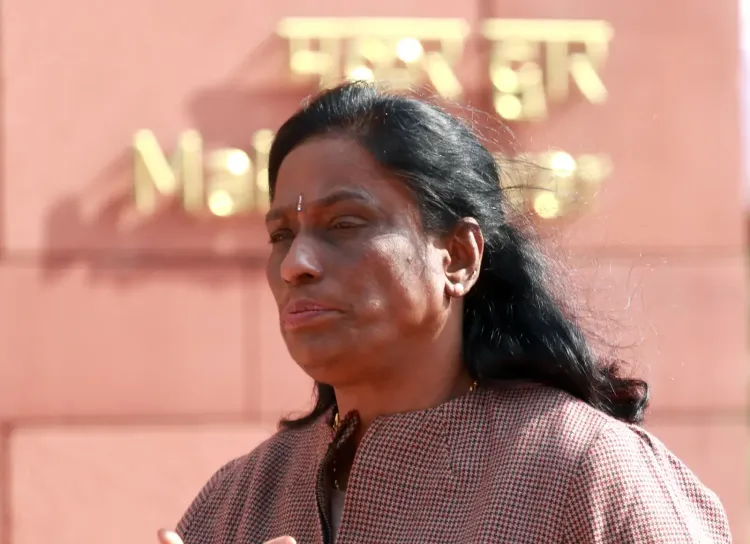
PT Usha, the sitting IOA president, has been voted out of the electoral college in a fiercely contested SOM poll — finishing fifth behind Anju Bobby George, Rani Rampal, Dola Banerjee and Saina Nehwal. Unless an NSF nomination rescues her candidacy, she cannot contest the December 5 IOA presidential election, leaving Gagan Narang as the clear front-runner.
Key Takeaways
PT Usha finished fifth in the IOA Sportsperson of Outstanding Merit — Female poll on 9 November 2026 , receiving 40 votes out of 80 cast.
The four elected women SOMs are Anju Bobby George (53 votes), Rani Rampal (50), Dola Banerjee (45), and Saina Nehwal (43).
Usha's failure to secure a SOM seat means she is currently ineligible to contest the IOA presidency on 5 December 2026 .
NSF nominations remain her only remaining route back into the presidential race.
Gagan Narang — elected unopposed as male SOM — has emerged as the IOA presidential front-runner, reportedly backed by the Gujarat lobby.
The male SOM positions went to Narang , Yogeshwar Dutt , Vijender Singh , and Kamlesh Mehta , all elected unopposed on Saturday.
Indian Olympic Association (IOA) president and celebrated athlete PT Usha suffered a significant setback on Monday, 9 November 2026, failing to secure a spot in the IOA electoral college after finishing fifth in the Sportsperson of Outstanding Merit (SOM) — Female poll. The result directly endangers her bid for re-election as IOA chief when presidential elections are held on 5 December 2026.
How the Vote Played Out
According to results declared by the IOA Electoral Officer, only 80 votes were cast in the contentious poll, with Anju Bobby George topping the count at 53 votes. Rani Rampal finished second with 50 votes, Dola Banerjee third with 45 votes, and Saina Nehwal fourth with 43 votes — all four securing the available SOM seats. Usha, with just 40 votes, was edged out in fifth place. Six outstanding sportswomen were in contention for four positions, and the vote was described as acrimonious, with allegations of interference circulating through the process.
What This Means for Usha's Presidential Bid
As matters stand, Usha is no longer eligible to contest the IOA presidency. However, her path is not entirely closed: the National Sports Federations (NSFs) are yet to nominate their representatives to the electoral college, and Usha could potentially be picked by one of them. Without such a nomination, she will be shut out of the 5 December presidential election entirely. The outcome has injected fresh uncertainty into the succession dynamics at India's apex sports body.
Male SOM Elections and the Political Undercurrent
On Saturday, the male SOM positions were resolved without contest. Olympic medallist Gagan Narang, Yogeshwar Dutt, Vijender Singh, and table tennis stalwart Kamlesh Mehta were all elected unopposed. Notably, Yogeshwar and Vijender are members of the Bharatiya Janata Party (BJP), and Nehwal is also a BJP member, while Usha holds a Rajya Sabha seat elected with BJP support. The fact that Nehwal polled ahead of Usha is seen as significant in the internal political calculus surrounding the elections.
Narang Emerges as Front-Runner
The collective outcome of the SOM elections — both male and female — is widely seen as a boost for incumbent IOA Vice-President Gagan Narang, who has reportedly emerged as the leading candidate for the IOA presidency. Narang has recently shifted his base from Hyderabad to Ahmedabad, reportedly consolidating support from the Gujarat lobby within BJP-aligned sporting circles. With the electoral college composition now largely shaped, Narang's prospects appear considerably strengthened ahead of 5 December.
What Happens Next
All eyes now turn to the NSF nominations, which remain the last viable route for Usha to re-enter the electoral race. Whether she can leverage her standing as the sitting IOA president to secure one of those spots will determine if her presidential campaign continues. The IOA elections on 5 December will mark a defining moment for Indian sports governance — one that could either extend Usha's tenure or usher in a new leadership era.
Point of View
Who holds a BJP-backed Rajya Sabha seat, the vote signals that party affiliation alone does not guarantee bloc support in IOA's internal power games. The swift consolidation around Narang, who has relocated to Ahmedabad and appears to have tapped Gujarat's sporting infrastructure networks, points to a well-coordinated campaign rather than a spontaneous outcome. What is striking is that Usha, despite her presidential incumbency, could not translate institutional advantage into electoral college votes. If NSFs do not rescue her candidacy, Indian sports governance faces a consequential transfer of power with limited public scrutiny — which is precisely the kind of opacity that has drawn criticism of IOA in the past.
NationPress
9 Nov 2026
Frequently Asked Questions
Why did PT Usha lose the IOA SOM election?
PT Usha received only 40 votes in the Sportsperson of Outstanding Merit — Female poll on 9 November, finishing fifth in a field of six when only four seats were available. The election was described as acrimonious, with allegations of interference, and Usha was narrowly edged out by Saina Nehwal, who secured the fourth and final seat with 43 votes.
Can PT Usha still contest the IOA presidential election on 5 December?
As of now, Usha is not eligible to contest the IOA presidential election scheduled for 5 December 2026, having failed to enter the electoral college via the SOM route. Her only remaining path is a nomination by one of the National Sports Federations, which are yet to submit their representatives.
Who are the four women elected as Sportspersons of Outstanding Merit in the IOA?
The four women elected to the IOA electoral college as Sportspersons of Outstanding Merit are Anju Bobby George (53 votes), Rani Rampal (50), Dola Banerjee (45), and Saina Nehwal (43). Anju topped the poll among the six candidates who contested.
Who is the front-runner for the IOA presidency after the SOM elections?
Incumbent IOA Vice-President Gagan Narang has emerged as the front-runner for the IOA presidency following the SOM elections. Narang was elected unopposed as a male SOM and reportedly has the backing of the Gujarat lobby, having recently shifted his base from Hyderabad to Ahmedabad.
What is a Sportsperson of Outstanding Merit (SOM) in the IOA?
A Sportsperson of Outstanding Merit is a distinguished former athlete who holds a reserved seat on the IOA Athletes Commission, which forms part of the electoral college for IOA presidential and executive elections. The Athletes Commission has eight SOM positions — four male and four female.