PT Usha at Asian Games: 'Cannot compare my days and now,' says IOA chief
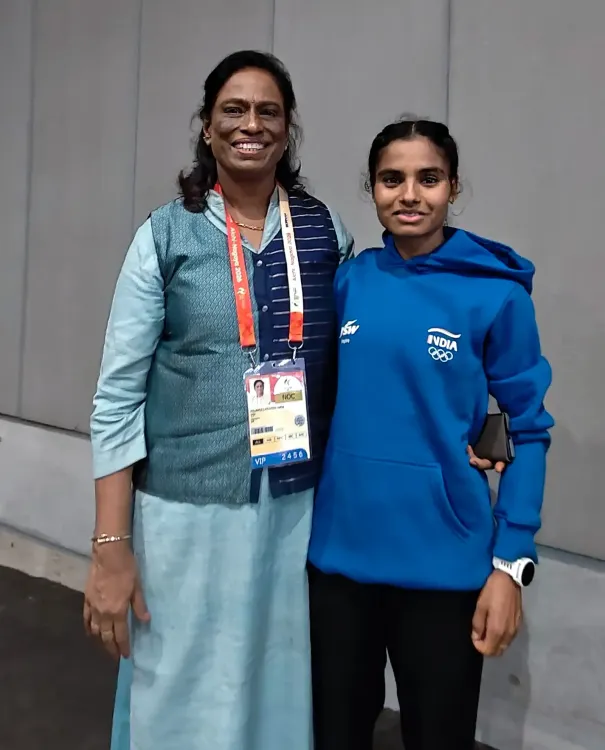
Synopsis
Standing at the Asian Games as IOA president, PT Usha drew a sharp line between her era of zero facilities and today's government-backed sporting infrastructure — while celebrating four Indian gold medals in a single day that lifted the country from 15th to fifth in the Nagoya medal tally.
Key Takeaways
PT Usha , IOA president , spoke on the sidelines of the Asian Games in Nagoya on 2 October about the contrast between her era and today's sporting infrastructure.
Usha competed at three Olympics — Moscow 1980 , Los Angeles 1984 , and Seoul 1988 — finishing fourth in the 400m hurdles final at Los Angeles, the closest any Indian woman had come to an Olympic athletics medal.
She won four gold medals at the 1986 Asian Games in Seoul , one of the greatest individual hauls in Indian athletics history.
Usha became the first woman elected as IOA president in December 2022 .
India won 4 gold medals on Friday at Nagoya — 3 in boxing , 1 in wrestling — moving from 15th to 5th in the medal standings.
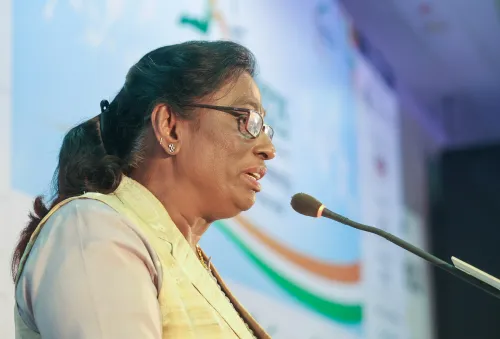
Indian Olympic Association (IOA) president PT Usha reflected on her storied journey from the athletics track to sports administration on the sidelines of the ongoing Asian Games in Nagoya on 2 October, saying it is impossible to compare her era with the present generation given how dramatically the sporting ecosystem has changed.
A Career Built on Passion, Not Infrastructure
Widely celebrated as the 'Payyoli Express', Usha competed at three consecutive Olympic Games — Moscow 1980, Los Angeles 1984, and Seoul 1988. Her most iconic moment came at the 1984 Los Angeles Olympics, where she became the first Indian woman to reach an Olympic athletics final, finishing fourth in the 400m hurdles — missing a bronze medal by a fraction of a second.
'I actually cannot compare at all. See my winning performance and record, all those things with my passion and hard work,' Usha said, speaking on the sidelines of the Asian Games. She was emphatic that her records and results must be judged against the constraints of her time, not the benchmarks available to athletes today.
The Facilities Gap: Then and Now
Usha was candid about the near-total absence of infrastructure during her competitive years. 'No facilities at all, even for running 10 hurdles, the third hurdle, the third time I did it in Los Angeles. That is, the record stayed. In the sense that now there are so many facilities the government is supporting,' she said.
This comes amid a broader transformation of India's sporting infrastructure, with the government channelling significant resources into training facilities, coaching, and athlete support programmes over the past decade. Usha welcomed the shift, expressing hope that the current generation would capitalise on the support available. 'It's good that the government and everyone are together for sports people, and in the coming future, I think that will do well; players will do well, hopefully,' she said.
Legacy Beyond Records
Usha, who secured India's first athletics medal at the 1982 Asian Games, reached her peak at the 1986 Asian Games in Seoul, where she claimed four gold medals in a single edition — a feat that remains one of the greatest individual performances in Indian athletics history.
Her legacy, she argued, is measured not by how long her records stand but by the inspiration they continue to offer. 'I was wondering, see, the great legacy of the record is not just how long it stands or how to inspire the new generation. That I have done. It's with my passion and hard work that I have done in Los Angeles,' she said.
After retiring from competition, Usha channelled her experience into athlete development, founding the Usha School of Athletics in Kozhikode, Kerala. In December 2022, she was elected unopposed as IOA president, becoming the first woman to head India's apex Olympic body.
India's Strong Showing in Nagoya
Usha also celebrated India's performance at the ongoing Asian Games, where the country won four gold medals on Friday — three in boxing and one in wrestling. 'So happy to hear Jana Gana Mana. A lot of flags have gone up for silver and bronze, but today we have won four gold medals, with three in boxing, and one is in the wrestling area, Jana Gana Mana. It's so great, and it's a good day for us,' she said.
She added that the gold rush had lifted India in the medal standings: 'Yeah, in the medal tally list, we came from 15th to fifth. Hope that we will overtake Uzbekistan by tomorrow.'
As the Asian Games continue, Usha's dual role — as a living symbol of Indian athletics' past and as the administrator shaping its future — frames her presence in Nagoya as more than ceremonial.
Point of View
Facility access, athlete welfare — are translating into the medals her generation was denied. India climbing from 15th to fifth in Nagoya in a single day is a data point; whether it signals structural depth or a one-day spike in boxing and wrestling remains to be seen. Usha is right that comparisons across eras are unfair — but her dual legacy will ultimately be judged on whether the next generation closes the Olympic medal gap that her fourth-place finish in 1984 left open.
NationPress
2 Oct 2026
Frequently Asked Questions
What did PT Usha say at the Asian Games in Nagoya?
PT Usha, speaking on the sidelines of the Asian Games in Nagoya on 2 October, said it is impossible to compare her era with today's athletes because the facilities and government support available now did not exist during her competitive career. She credited her achievements entirely to passion and hard work under severely limited conditions.
What is PT Usha's role in Indian sports today?
PT Usha is the president of the Indian Olympic Association (IOA), a position she has held since December 2022 when she was elected unopposed — becoming the first woman to lead the organisation. She also founded the Usha School of Athletics in Kozhikode, Kerala.
What were PT Usha's biggest sporting achievements?
Usha reached the final of the 400m hurdles at the 1984 Los Angeles Olympics, finishing fourth — the closest any Indian woman had come to an Olympic athletics medal at that time. She also won four gold medals at the 1986 Asian Games in Seoul and secured India's first athletics medal at the 1982 Asian Games.
How is India performing at the Asian Games in Nagoya?
India won four gold medals on Friday at the Nagoya Asian Games — three in boxing and one in wrestling — lifting the country from 15th to fifth in the overall medal standings. PT Usha expressed hope that India would overtake Uzbekistan in the tally the following day.
Why did PT Usha say her era cannot be compared to today?
Usha said that during her competitive career there were virtually no facilities, recalling that she achieved her landmark fourth-place Olympic finish and long-standing records entirely through personal drive. She contrasted that with the current environment where the government actively funds and supports athletes across disciplines.