CM Revanth Reddy Pays Tribute to Alluri Sitarama Raju
Synopsis
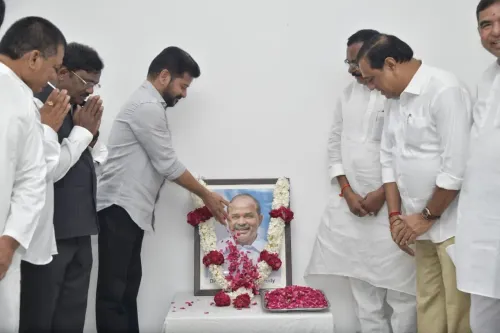
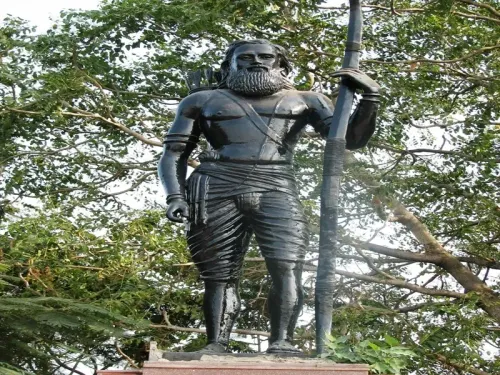
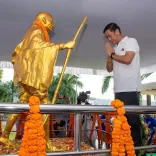
Telangana Chief Minister A. Revanth Reddy paid tribute to revolutionary freedom fighter Alluri Sitarama Raju on his birth anniversary on 4 July 2026, calling his sacrifice, patriotism, and courage an enduring inspiration for the present generation.
Key Takeaways
Revanth Reddy paid tribute to Alluri Sitarama Raju on his birth anniversary on 4 July 2026 .
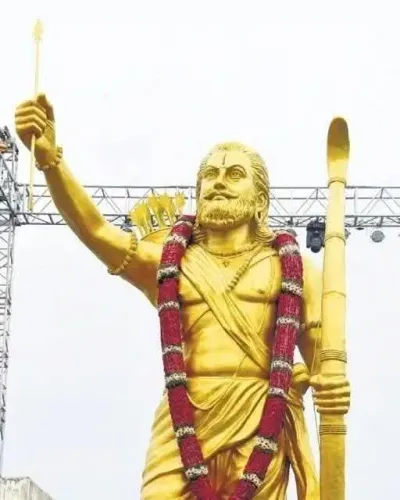
Alluri Sitarama Raju (1897–1924) led the Rampa Rebellion , an armed tribal uprising against British colonial rule in the Manyam region .
The CM described Alluri's sacrifice, patriotism, and courage as an enduring inspiration for today's generation.
Telangana governments have observed this annual tribute every 4 July since the state's formation in 2014 .
The tribute highlights cross-border Telugu cultural ties between Telangana and Andhra Pradesh following the 2014 bifurcation .
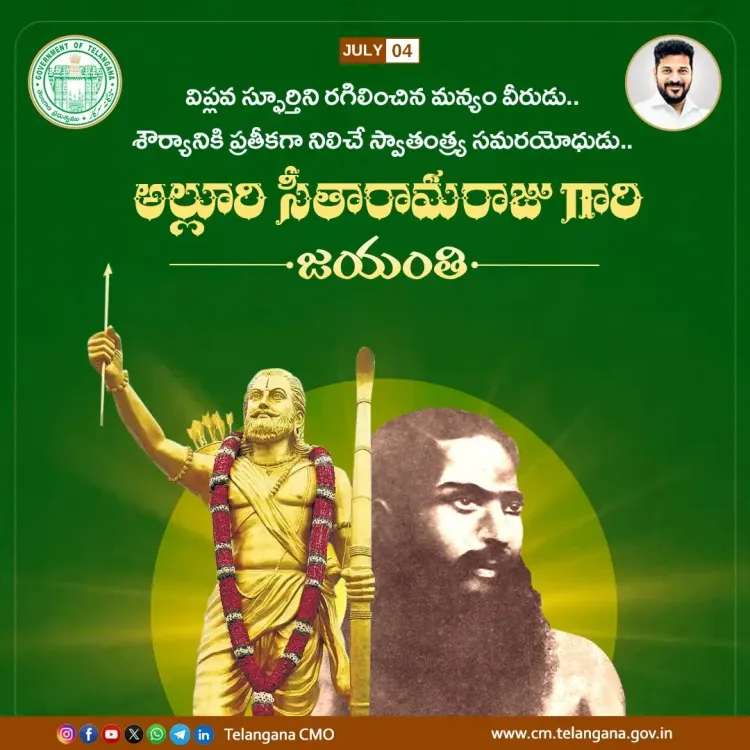
The Chief Minister's Office of Telangana announced on Saturday, 4 July 2026 that Chief Minister A. Revanth Reddy paid solemn tribute to freedom fighter Alluri Sitarama Raju on his birth anniversary, honouring the revolutionary leader's legacy of armed resistance against British colonial rule.
Context
The CMO's post, written in Telugu, described Alluri Sitarama Raju as 'స్వాతంత్య్ర సంగ్రామ విప్లవ జ్యోతి, మన్యం వీరుడు, సాయుధ పోరాట యోధుడు' — 'the revolutionary flame of the freedom struggle, the hero of Manyam, the warrior of armed resistance.' Chief Minister Revanth Reddy stated that Alluri's sacrifice, patriotism, courage, and resolve to fight for justice continue to inspire the present generation.
Alluri Sitarama Raju (1897–1924) led the Rampa Rebellion, a sustained armed uprising from 1922 to 1924 by tribal communities in the Manyam region of the Eastern Ghats against British restrictions on traditional forest practices and the exploitation of tribal livelihoods.
Policy Backdrop
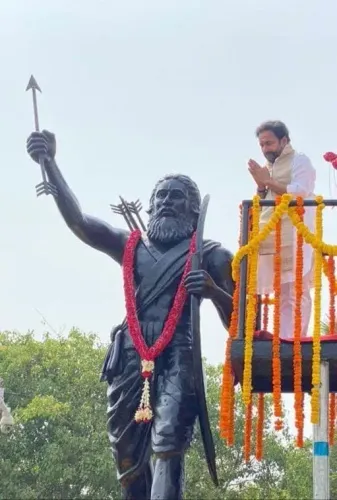
Telangana state governments have observed annual tributes to Alluri Sitarama Raju on 4 July since the state's formation in 2014, reflecting the shared Telugu cultural heritage between Telangana and Andhra Pradesh. The practice underscores the cross-border cultural ties that persisted after the bifurcation of the erstwhile united Andhra Pradesh.
Although the Rampa Rebellion took place in areas that now fall within Andhra Pradesh, Telangana leaders consistently claim Alluri as a symbol of Telugu pride and anti-colonial resistance, reinforcing a regional identity that transcends the administrative boundary drawn in 2014.
Stakeholders and Impact
The tribute carries significance for tribal communities across Telangana, for whom Alluri remains a symbol of resistance against the dispossession of forest rights — a concern that remains live in policy debates around the Forest Rights Act and tribal land protections. Annual commemorations by state governments serve to keep this history visible in public discourse.
For the broader Telugu-speaking population, the tribute reinforces a shared cultural memory that bridges the two Telugu states. Such gestures also carry political resonance, signalling the ruling Congress government's commitment to regional identity and historical consciousness.
What's Next
Observers will watch for any follow-up programmes in Telangana schools or tribal areas referencing Alluri's legacy in the coming weeks. Future 4 July anniversaries may also provide an occasion for joint cultural events between Telangana and Andhra Pradesh, deepening institutional recognition of the Rampa Rebellion's place in India's freedom struggle.
As India approaches the centenary of Alluri Sitarama Raju's death — he was killed by British forces in 1924 — state-level commemorations are likely to grow in scale, potentially drawing national attention to the tribal dimensions of the independence movement.
Point of View
The Telangana government signals that cultural heritage cannot be partitioned by administrative boundaries. For the Congress-led government under Revanth Reddy, honouring anti-colonial tribal heroes also aligns with the party's broader national narrative on social justice and subaltern history. As India nears the centenary of Alluri's death, such commemorations will likely intensify, potentially elevating the Rampa Rebellion to a more prominent place in the national freedom-struggle canon.
NationPress
2 Oct 2026
Frequently Asked Questions
Who was Alluri Sitarama Raju?
Alluri Sitarama Raju (1897–1924) was a revolutionary freedom fighter who led the Rampa Rebellion, an armed tribal uprising from 1922 to 1924 against British colonial forest laws in the Manyam region of the Eastern Ghats in present-day Andhra Pradesh.
Why is Alluri Sitarama Raju's birthday celebrated on 4 July?
4 July is observed as Alluri Sitarama Raju's birth anniversary, and state governments across Telugu-speaking states mark the occasion with official tributes to honour his role in India's freedom struggle.
What was the Rampa Rebellion?
The Rampa Rebellion (1922–1924) was an armed uprising led by Alluri Sitarama Raju in which tribal communities of the Manyam region fought against British restrictions on podu (shifting) cultivation and the exploitation of forest resources.
Why does Telangana pay tribute to Alluri Sitarama Raju when the rebellion was in Andhra Pradesh?
Telangana and Andhra Pradesh share a common Telugu cultural heritage, and Telangana governments have honoured Alluri since the state's formation in 2014, reflecting cross-border cultural ties that persist after the bifurcation of the erstwhile united Andhra Pradesh.
What did Telangana CM Revanth Reddy say about Alluri Sitarama Raju?
Chief Minister Revanth Reddy said that Alluri's sacrifice, patriotism, courage, and resolve to fight for justice continue to inspire the present generation, describing him as the revolutionary flame of the freedom struggle and the hero of Manyam.