CM Revanth Reddy Pays Tribute to Maulana Abul Kalam Azad
Synopsis
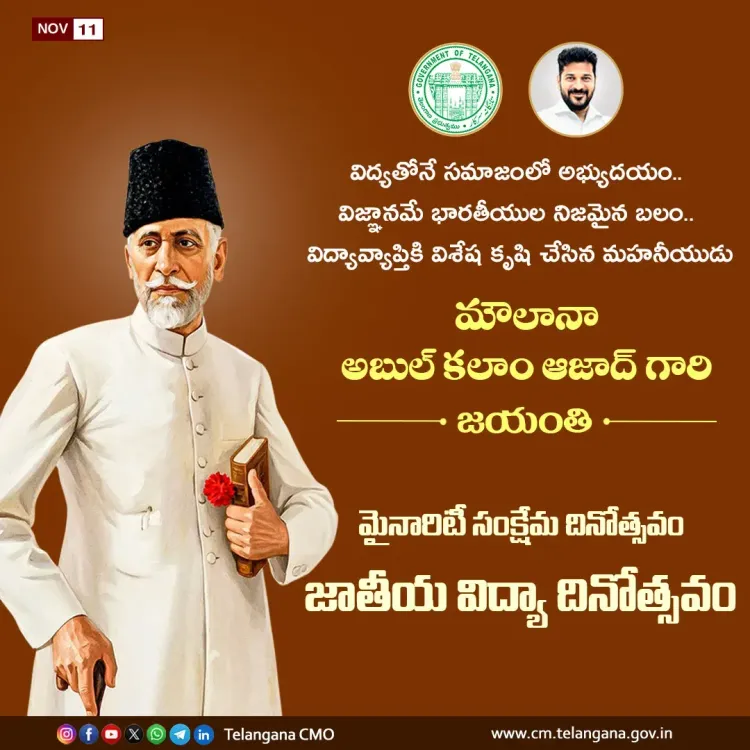
Telangana Chief Minister A. Revanth Reddy honoured Maulana Abul Kalam Azad on his birth anniversary, National Education Day and Minorities Welfare Day, urging all citizens to uphold Azad's vision of equal, inclusive education and social justice.
Key Takeaways
Maulana Abul Kalam Azad's birth anniversary falls on 11 November , observed nationally as National Education Day since 2008.
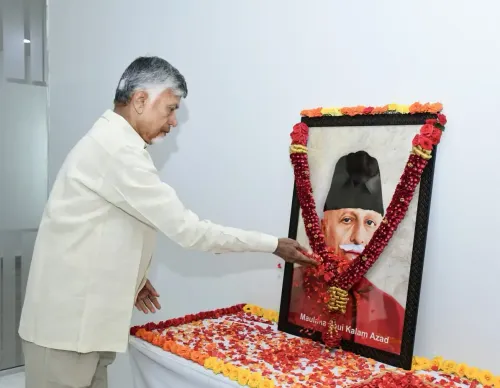
Revanth Reddy paid a formal tribute on behalf of Telangana, citing Azad's legacy of equal education, social justice, and communal harmony.
The day is also marked as Minorities Welfare Day , reflecting Azad's significance to India's minority communities.
Azad served as India's first Education Minister from 1947 to 1958, shaping the country's post-independence education framework.
Revanth Reddy framed quality education and social equality as a collective responsibility for all citizens, not just the government.
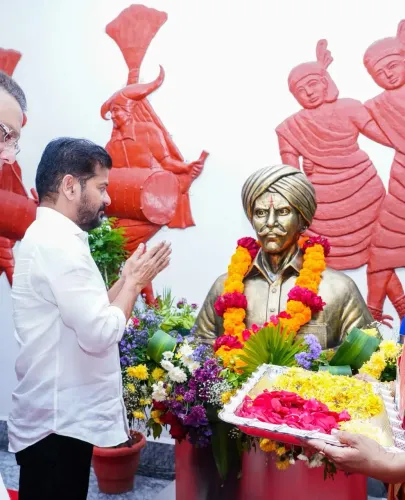
On the 111th birth anniversary of Maulana Abul Kalam Azad — India's first Education Minister, freedom fighter, and champion of communal harmony — Telangana Chief Minister A. Revanth Reddy offered a formal tribute on behalf of the state, calling on all citizens to carry forward Azad's mission of equal access to education and social justice.
The Chief Minister's Office of Telangana posted the tribute on Wednesday, 11 November 2026, marking both National Education Day and Minorities Welfare Day — two annual observances that share the date of Azad's birth. Revanth Reddy's statement credited Azad with an unwavering belief that societal progress is only possible through education, and highlighted his lifelong work toward equal opportunity, social harmony, and minority rights.
Who Maulana Azad Was — and Why This Day Exists
Maulana Abul Kalam Azad served as India's first Minister of Education from 1947 until his death in 1958, laying the institutional foundations for what would become modern Indian higher education. A towering figure in the independence movement and a close associate of Mahatma Gandhi and Jawaharlal Nehru, he believed education was the single most powerful instrument of national liberation — not just from colonial rule, but from poverty and prejudice.
The Government of India declared 11 November as National Education Day in 2008 to honour his legacy. State governments across the country observe the day alongside Minorities Welfare Day, reinforcing Azad's dual identity as an educationist and a voice for India's minority communities. Telangana's annual observance follows this established national pattern.
Revanth Reddy's Call to Action on Equal Education
The Chief Minister's statement was more than a ceremonial salute. Revanth Reddy framed the anniversary as a collective obligation — describing quality education, equal opportunity, social equality, and comprehensive development as responsibilities that belong to 'all of us.' The phrasing echoes a recurring policy priority of the Telangana government, which has emphasised minority welfare schemes and access-to-education programmes since taking office.
Azad's core conviction — that no child's future should be limited by religion, caste, or economic standing — remains as urgent today as it was at independence. With India's gross enrolment ratios at secondary and higher levels still uneven across communities, the tribute lands not just as history, but as a live policy challenge.
Seventy-eight years after Azad first walked into the Education Ministry, the question he planted at the heart of Indian democracy is still being answered.
Point of View
Emphasising Azad's legacy of minority welfare and equal opportunity reinforces a core political identity distinguishing it from its predecessor. The framing of education as a 'collective responsibility' also subtly shifts accountability beyond the state — a rhetorical move that invites civil society and families into the policy conversation. Whether the tribute translates into measurable progress on minority enrolment and welfare schemes will be the more consequential test.
NationPress
11 Nov 2026
Frequently Asked Questions
Why is 11 November celebrated as National Education Day in India?
11 November is celebrated as National Education Day because it marks the birth anniversary of Maulana Abul Kalam Azad , India's first Education Minister. The Government of India declared this observance in 2008 to honour his contributions to Indian education.
Who was Maulana Abul Kalam Azad?
Maulana Abul Kalam Azad was a prominent freedom fighter, scholar, and India's first Minister of Education after independence in 1947. He championed universal education, communal harmony, and equal rights, serving in the ministry until his death in 1958.
What did Telangana CM Revanth Reddy say on National Education Day 2026?
CM A. Revanth Reddy paid tribute to Maulana Azad on his birth anniversary, stating that bringing quality education to all, ensuring equal opportunity, and achieving social equality and comprehensive development are the responsibilities of every citizen.
What is Minorities Welfare Day and when is it observed?
Minorities Welfare Day is observed on 11 November , coinciding with Maulana Azad's birth anniversary and National Education Day. It recognises Azad's role as a champion of minority rights and welfare in India.
What is Telangana's stance on minority education and welfare?
The Telangana government under CM Revanth Reddy has prioritised minority welfare and education access as policy goals. The annual National Education Day tribute is used to reaffirm commitments to equal educational opportunity and social justice for minority communities.