CM Manik Saha highlights Tripura's medical education leap since 2018
Synopsis
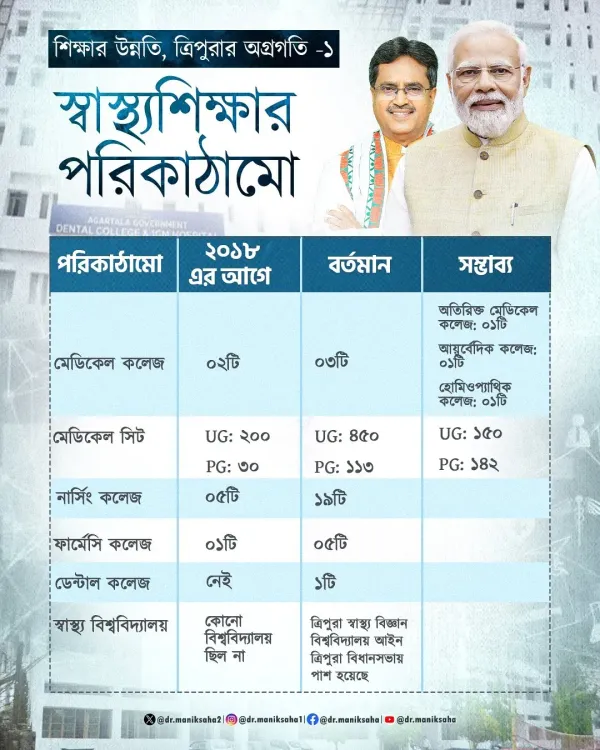
Tripura Chief Minister Dr. Manik Saha says the state has transformed its health education landscape since 2018, growing from two medical colleges to a broad network of institutions including a new Health Sciences University, crediting PM Modi's leadership for the shift.
Key Takeaways
Before 2018 , Tripura had only two medical colleges with limited seats and infrastructure.
Since 2018, the state has added institutions for medical, nursing, pharmacy, and dental education .
A Health Sciences University has been established to serve as an apex body for health education in the state.
Manik Saha credited Prime Minister Narendra Modi's leadership for the expansion.
Nationally, India's medical college count grew from roughly 380 in 2014 to over 700 by the mid-2020s, with northeastern states among the priority regions.
Tripura Chief Minister Dr. Manik Saha on Monday, 1 June 2026, highlighted what he described as a historic expansion in health education infrastructure across the state, crediting the growth to the vision of Prime Minister Narendra Modi. The post, shared on X, contrasted the state's position before 2018 — when it had just two medical colleges with limited seats — against the current landscape of new institutions spanning medical, nursing, pharmacy, and dental education, along with the establishment of a Health Sciences University.
Context
Writing in Bengali, Dr. Saha declared: 'A historic advancement in health education infrastructure — Tripura is moving forward.' He noted that before 2018, the state had only two medical colleges with limited seats and infrastructure. Since then, he said, a new horizon of advanced health education has taken shape, with the creation of institutions for medical, nursing, pharmacy, and dental studies, as well as a Health Sciences University to build a stronger foundation for future generations.
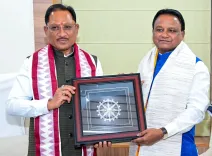
The Chief Minister attributed this progress to the 'visionary leadership' of Prime Minister @narendramodi, stating that Tripura has reached a new height in health education under his guidance. The post was accompanied by one image, likely a graphic or infographic summarising the expansion.
Policy Backdrop
The BJP came to power in Tripura in 2018, ending a decades-long Left Front rule, and subsequently prioritised health and education infrastructure development as part of its governance agenda. At the national level, the Union government has pursued an aggressive expansion of medical colleges since 2014, increasing the number of institutions across India from roughly 380 to over 700 by the mid-2020s, with special emphasis on underserved and northeastern states.
The Northeast has been a particular focus of this push, with central approvals for new medical seats and allied health programmes channelled to states that historically lacked adequate healthcare training capacity. Tripura, as a small landlocked state bordering Bangladesh, had long faced constraints in producing locally trained medical professionals.
Stakeholders and Impact
The primary beneficiaries of this expansion are medical and allied health students from Tripura and the wider northeastern region, who previously had to travel to larger cities for professional health education. A larger local pool of trained nurses, pharmacists, dentists, and doctors is expected to gradually strengthen the state's public health delivery system.
The establishment of a Health Sciences University is particularly significant, as it provides an institutional apex body to regulate, affiliate, and standardise health education across the state's growing number of institutions. Healthcare workforce planners and state health administrators are among the key stakeholders watching the rollout of these institutions.
What's Next
Attention will now turn to the operational status and first admissions cycles of the new Health Sciences University and allied institutions, as well as any further central approvals for additional medical seats or specialist postgraduate courses in Tripura. Whether the pace of institutional expansion translates into measurable improvements in healthcare access across the state's rural and tribal areas will be the longer-term test of this policy push.
The BJP government in Agartala is expected to continue foregrounding these milestones as it builds its narrative ahead of future electoral cycles in the state.
Point of View
Framing health education expansion as a BJP-era achievement anchored to the pre-2018 baseline — a recurring rhetorical device used by the party to contrast its tenure with the preceding Left Front government. The attribution to PM Modi's 'visionary leadership' situates a state-level development within the broader national narrative of health infrastructure growth, reinforcing vertical alignment between Agartala and New Delhi. This pattern of crediting central leadership for state outcomes is consistent with how BJP chief ministers across India have communicated development milestones, particularly in states where the party is consolidating its hold. The real test will be whether institutional creation translates into improved healthcare outcomes in Tripura's underserved rural and tribal belts.
NationPress
20 Sept 2026
Frequently Asked Questions
How many medical colleges does Tripura have now?
Tripura had only two medical colleges before 2018. Since then, the state has expanded its health education infrastructure to include institutions for medical, nursing, pharmacy, and dental education, along with a new Health Sciences University, though exact current numbers have not been officially confirmed in this announcement.
What is the Tripura Health Sciences University?
The Tripura Health Sciences University is a newly established apex institution in the state designed to regulate, affiliate, and standardise health and medical education across Tripura's growing number of health education institutions.
What did CM Manik Saha say about health education in Tripura?
Chief Minister Dr. Manik Saha said Tripura has achieved a 'historic advancement' in health education infrastructure since 2018, expanding from two medical colleges to a network covering medical, nursing, pharmacy, and dental education, and credited Prime Minister Narendra Modi's leadership for this growth.
How has medical education expanded in Northeast India under Modi government?
Under the central government's push since 2014, India's medical college count grew from around 380 to over 700 by the mid-2020s, with northeastern and underserved states receiving particular focus for new approvals and seat allocations.
When did BJP come to power in Tripura?
The BJP came to power in Tripura in 2018, ending decades of Left Front rule, and has since highlighted health and education infrastructure expansion as a key governance achievement.