CM Manik Saha lays foundation for Tripura's new eye hospital
Synopsis
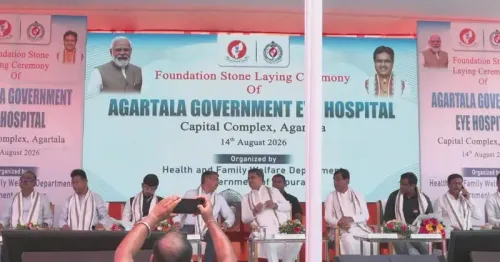
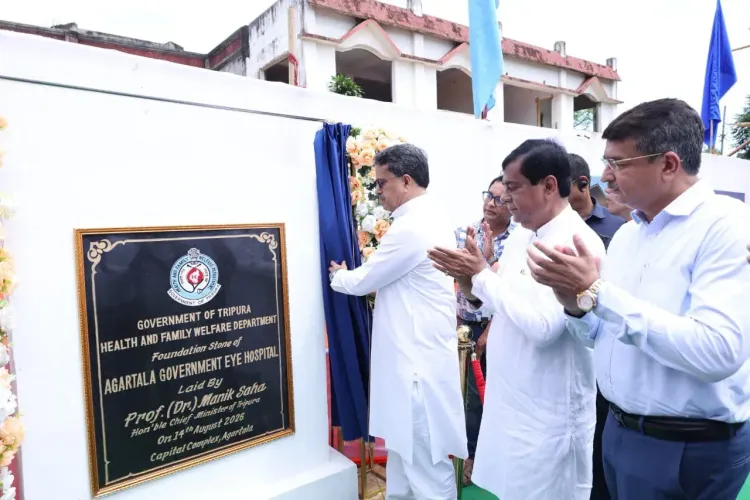
Tripura Chief Minister Dr. Manik Saha laid the foundation stone for the Agartala Government Eye Hospital on August 14, 2026. The planned G+4 facility at Capital Complex aims to become a Centre of Excellence for eye care across Northeast India within two years.
Key Takeaways
Manik Saha laid the foundation stone for the Agartala Government Eye Hospital on August 14, 2026 .
The hospital will be a G+4 building at the Capital Complex area in Agartala, Tripura's capital.
Construction is targeted for completion within two years .
The facility is designed as a tertiary eye care centre with modern infrastructure and advanced equipment.
Saha aims for it to become the best eye care institution in Northeast India and a recognised Centre of Excellence.
The project aligns with the national Programme for Control of Blindness and Visual Impairment , active since 1976.
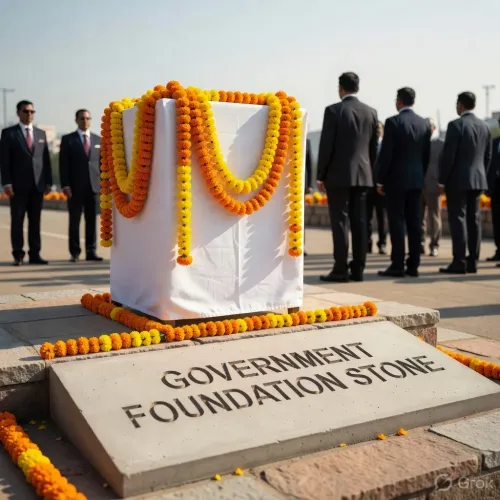
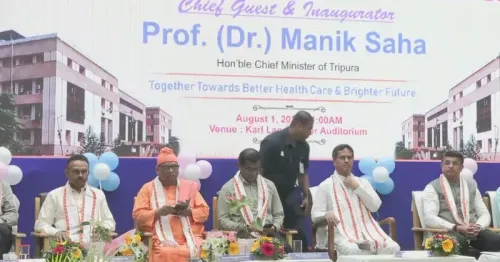
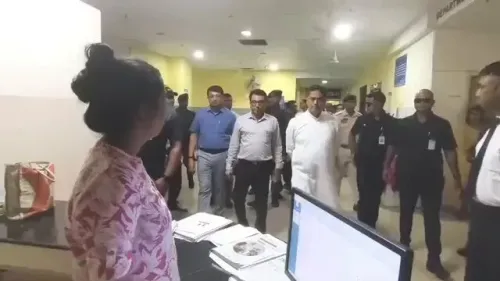
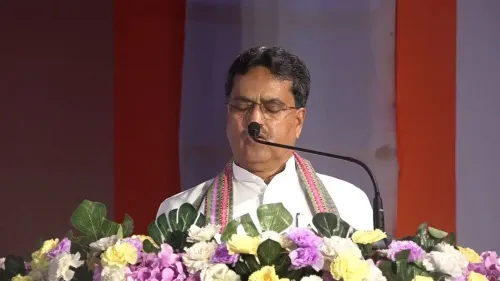
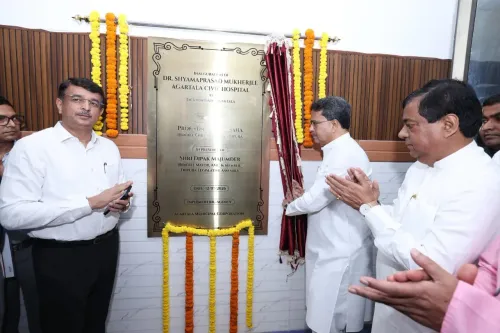
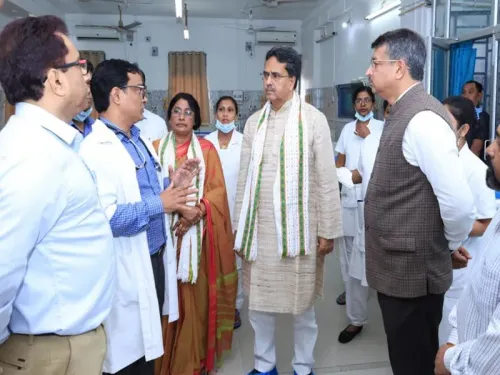
A new chapter in Tripura's public health story began on Friday, August 14, 2026, as Tripura Chief Minister Dr. Manik Saha laid the foundation stone for the Agartala Government Eye Hospital at the Capital Complex area — a project he described as a long-held dream for the state's healthcare future.
A G+4 hospital rising in the heart of Agartala
The planned facility is a G+4 building — five floors of dedicated eye care infrastructure — to be completed within two years. Dr. Saha stated it will be equipped with 'modern infrastructure and advanced facilities for comprehensive eye care,' positioning it as a tertiary-level institution capable of handling complex ophthalmic cases that currently force patients to travel outside the state or region.
Tripura has steadily expanded its public health footprint under the current administration, but a dedicated, full-scale government eye hospital at the state capital marks a qualitative step up from incremental upgrades to existing district facilities.
The Northeast's eye-care gap — and why this matters
Across Northeast India, the shortage of specialised tertiary care has long pushed patients toward distant metros, straining both household finances and the public health system. State governments across the region have moved, at varying speeds, to plug these gaps — building on the framework of the National Programme for Control of Blindness and Visual Impairment, which has been operational since 1976 and provides the policy backbone for state-level eye care infrastructure investment.
The Agartala hospital is explicitly aimed at reversing that outflow. Dr. Saha expressed confidence that the institution will 'emerge as the best eye care institution in the Northeast and a Centre of Excellence' — a benchmark that, if met, would serve not just Tripura's roughly 4 million residents but potentially draw patients from neighbouring states.
What the next two years will reveal
The foundation stone is the starting gun, not the finish line. The real test will come in the construction milestones over the stated two-year window, and in subsequent announcements on specialist staffing, surgical equipment, and operational capacity. A building without trained ophthalmologists and modern diagnostic tools is infrastructure on paper — the Centre of Excellence ambition demands both.
For now, the groundbreaking signals political will and a concrete timeline. Northeast India's eye patients — and the healthcare professionals who serve them — will be watching closely to see whether the foundation laid today holds up to the promise built on it.
Point of View
A gap that has persisted for decades. For Dr. Manik Saha, the project is also a visible governance dividend ahead of future electoral cycles — a physical, datable milestone that is harder to dispute than policy claims. The 'Centre of Excellence' framing signals ambition beyond Tripura's borders, potentially drawing patients and medical talent from neighbouring states. Whether the two-year construction timeline holds, and whether specialist staffing matches the building's scale, will determine if this becomes a genuine regional health asset or another well-intentioned announcement that underdelivers on execution.
NationPress
29 Sept 2026
Frequently Asked Questions
What is the Agartala Government Eye Hospital?
The Agartala Government Eye Hospital is a planned G+4 tertiary eye care facility at the Capital Complex area in Agartala, Tripura. Its foundation stone was laid by Chief Minister Dr. Manik Saha on August 14, 2026, with a two-year construction target.
When will the Agartala eye hospital be ready?
Chief Minister Dr. Manik Saha stated the hospital building will be developed within two years of the foundation stone laying on August 14, 2026, placing the expected completion around 2028.
Why is Tripura building a dedicated eye hospital?
Northeast India has long lacked sufficient tertiary specialised care, forcing patients to travel to distant cities for complex eye treatments. The new hospital aims to address this gap and serve as a regional Centre of Excellence.
What is the National Programme for Control of Blindness?
The National Programme for Control of Blindness and Visual Impairment is a Government of India initiative operational since 1976 that provides the policy and funding framework for states to develop eye care infrastructure, including tertiary facilities like the one planned in Agartala.
Who laid the foundation stone of the Agartala Government Eye Hospital?
Tripura Chief Minister Dr. Manik Saha laid the foundation stone of the Agartala Government Eye Hospital on August 14, 2026, at the Capital Complex area in Agartala.