CM Manik Saha Meets Union Education Minister on Tripura Schools
Synopsis
Tripura Chief Minister Dr. Manik Saha held a productive meeting with Union Education Minister Dharmendra Pradhan on 27 May 2026, covering school quality, digital learning, modern infrastructure, and student facilities, with both governments pledging continued coordinated efforts.
Key Takeaways
Manik Saha met Union Education Minister Dharmendra Pradhan on 27 May 2026 to discuss Tripura's education priorities.
Key agenda items included quality enhancement, modern infrastructure, digital education expansion, and improved student facilities.
The Chief Minister described the talks as 'fruitful' and confirmed that centre-state coordination will continue.
NEP 2020 and Samagra Shiksha Abhiyan form the central policy framework underpinning these discussions.
Students in Tripura 's government and aided schools, particularly in rural areas, are the primary intended beneficiaries.
No specific decisions or new scheme announcements have been confirmed from the meeting.
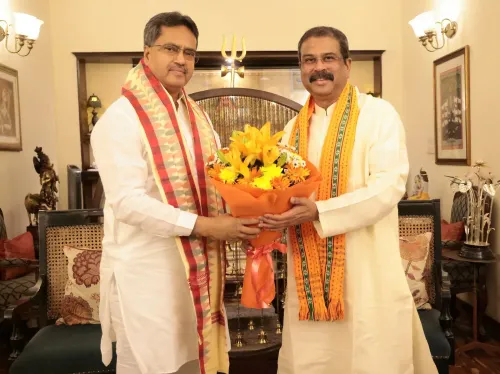
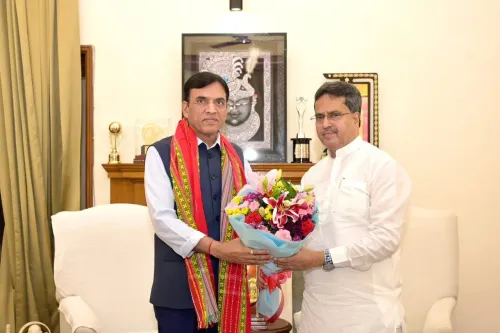
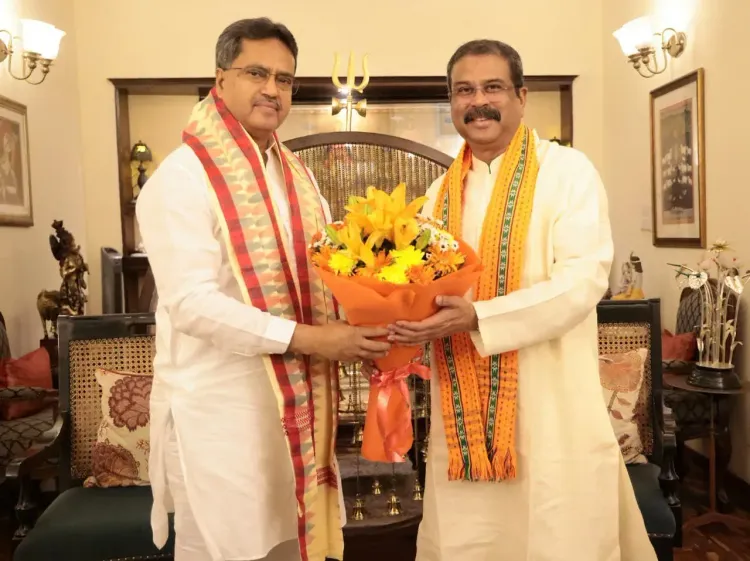
Tripura Chief Minister Dr. Manik Saha met Union Education Minister Dharmendra Pradhan on Wednesday, 27 May 2026, for a wide-ranging discussion on key priorities of the state's education department, including quality improvement, modern infrastructure, digital learning expansion, and better facilities for students.
Posting on X in Bengali, Dr. Saha described the meeting as productive (ফলপ্রসূ আলোচনা — 'fruitful discussion'), stating that detailed deliberations covered 'quality enhancement of education, development of modern infrastructure, expansion of digital education, and ensuring better opportunities and facilities for students.' He added that coordinated efforts between the Centre and the state government would continue in the days ahead to make Tripura's education sector 'stronger and more contemporary.'
Context
Tripura is one of several northeastern states that has been working to align its school education system with centrally-driven reform frameworks. The state's education department has been a recurring subject of centre-state consultations, particularly as Tripura seeks to bridge infrastructure and quality gaps relative to larger states. Dr. Saha, who has served as Chief Minister since 2022, has consistently positioned education as a pillar of the state's development agenda.
Policy Backdrop
The discussion sits against the backdrop of the National Education Policy (NEP) 2020, the Union Cabinet-approved framework that restructures school and higher education with a strong emphasis on digital tools, mother-tongue instruction, and infrastructure modernisation. Complementing it is Samagra Shiksha Abhiyan, the integrated school education scheme operational since 2018-19 that combines support for infrastructure, equity measures, and teacher training across all states, including Tripura.
The PM eVIDYA initiative, launched in 2020, further expanded digital education platforms and e-learning resources nationwide, providing a framework within which states can seek central support for digital classroom rollouts. These three pillars — NEP 2020, Samagra Shiksha, and PM eVIDYA — form the policy architecture underpinning the kind of agenda items Dr. Saha and Pradhan are reported to have discussed.
Stakeholders and Impact
The primary beneficiaries of any outcomes from this meeting would be students enrolled in Tripura's government and aided schools, along with the state's teaching community. Improved infrastructure and digital learning resources would be particularly significant in Tripura's rural and remote areas, where access to quality schooling has historically been uneven.
The state's school education department, which administers the implementation of centrally-sponsored schemes, would be the key institutional actor in translating any agreed priorities into on-ground projects. Teachers would also stand to benefit from enhanced training components embedded within schemes like Samagra Shiksha.
What's Next
While no specific decisions or new scheme announcements from the meeting have been confirmed, the Chief Minister's statement signals that follow-up action is expected. Observers will watch for state-level budget allocations or project announcements related to digital classrooms and school infrastructure in upcoming Tripura assembly sessions.
Possible follow-up visits by central officials to review the progress of NEP 2020-aligned projects in the state would be a further indicator of the meeting's outcomes. The emphasis on sustained centre-state coordination suggests that Tripura's education reform agenda is entering a more active implementation phase.
Point of View
Which has historically lagged in school infrastructure relative to larger states, securing central attention and resources through such meetings is a tangible political and administrative priority. The Chief Minister's public communication of the meeting in Bengali signals a domestic audience play as much as a policy update, reinforcing his government's development narrative ahead of future electoral cycles. The emphasis on digital education is also consistent with a broader national push to reduce regional learning gaps through technology rather than solely through physical infrastructure spending.
NationPress
22 Sept 2026
Frequently Asked Questions
Why did Tripura CM Manik Saha meet Dharmendra Pradhan?
Tripura Chief Minister Dr. Manik Saha met Union Education Minister Dharmendra Pradhan on 27 May 2026 to discuss key priorities of the state's education department, including quality improvement, modern infrastructure, digital learning, and better facilities for students.
What is Samagra Shiksha Abhiyan and how does it affect Tripura?
Samagra Shiksha Abhiyan is an integrated school education scheme launched in 2018-19 that combines infrastructure support, equity measures, and teacher training. Tripura receives funding and technical support under this scheme to upgrade its school system.
What is NEP 2020 and what does it mean for northeastern states?
The National Education Policy 2020 is a Union Cabinet-approved framework to modernise school and higher education with emphasis on digital tools, mother-tongue instruction, and infrastructure. Northeastern states including Tripura are working to align their systems with its provisions.
What will happen next after the Manik Saha and Dharmendra Pradhan meeting?
No specific decisions have been confirmed, but observers expect possible state-level budget allocations for digital classrooms and school infrastructure in Tripura, along with potential follow-up visits by central officials to review NEP-aligned projects.
What is PM eVIDYA and is it being implemented in Tripura?
PM eVIDYA is a 2020 initiative to expand digital education platforms and e-learning resources nationwide. It provides the framework within which states like Tripura can seek central support for digital classroom infrastructure.