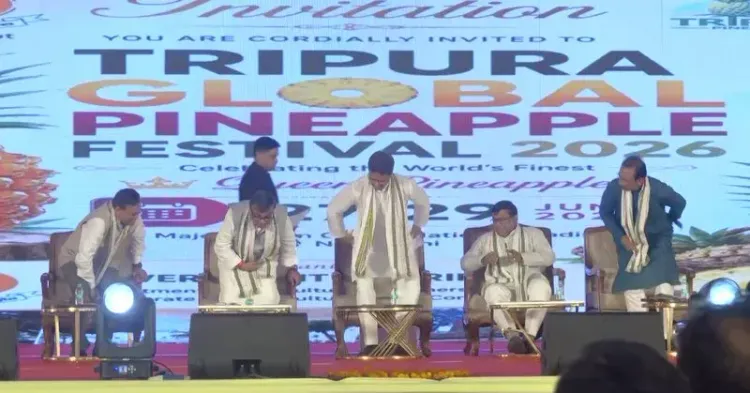
CM Saha attends Tripura Global Pineapple Festival 2026 in Delhi
Synopsis
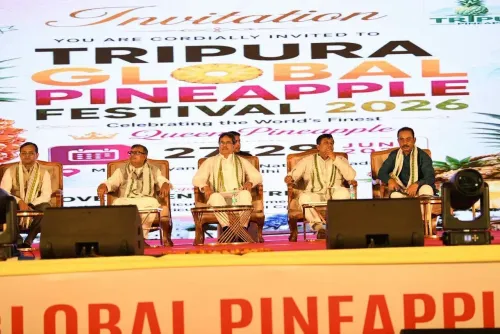
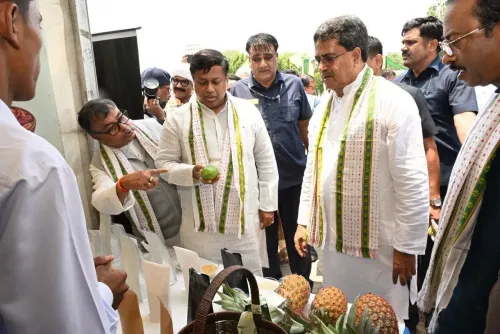
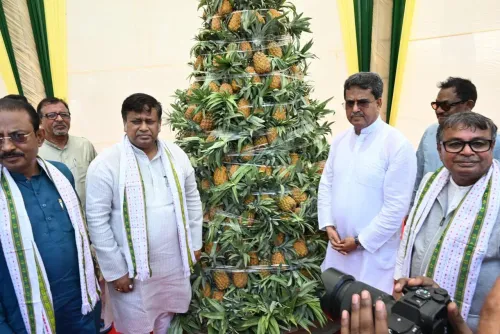
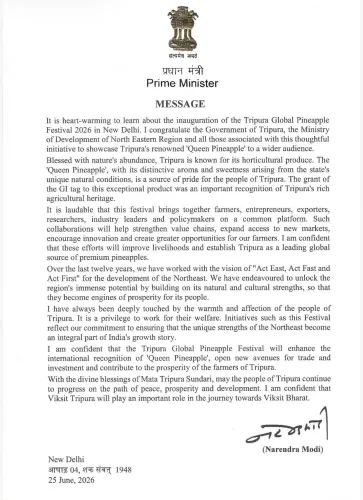
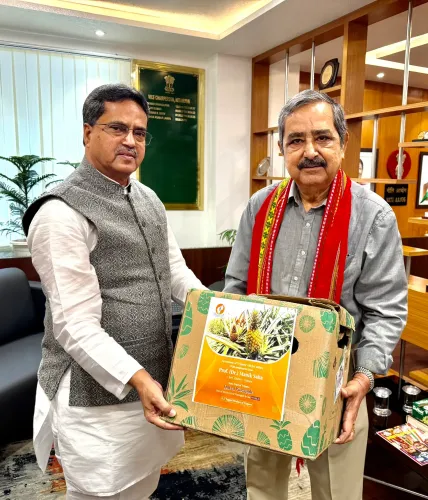
Chief Minister Manik Saha is attending the Tripura Global Pineapple Festival 2026 at Major Dhyan Chand National Stadium in New Delhi on 27 June, showcasing the state's GI-tagged Queen pineapple to national buyers and export agencies in a bid to deepen market linkages for Tripura's farming communities.
Key Takeaways
Chief Minister Manik Saha is attending the Tripura Global Pineapple Festival 2026 in person on 27 June 2026 .
The event is being held at Major Dhyan Chand National Stadium, New Delhi , giving it a high-visibility national platform.
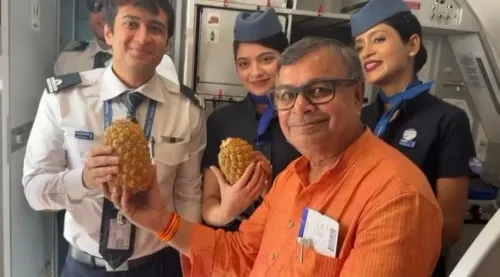
Tripura's Queen variety pineapple holds a Geographical Indications tag awarded in 2015 , underpinning its branding in domestic and export markets.
The festival targets pineapple growers, horticulture exporters, and retail buyers to forge direct trade linkages.
Any memoranda of understanding signed at the event could directly influence Tripura's pineapple procurement and processing capacity.
The initiative fits a broader northeastern-states strategy of using Delhi-based product festivals to attract private agri-value-chain investment.
The Chief Minister's Office of Tripura announced on Saturday, 27 June 2026 that Chief Minister Manik Saha is attending the Tripura Global Pineapple Festival 2026 at the Major Dhyan Chand National Stadium, New Delhi, a flagship event designed to connect the state's prized pineapple growers with national and international buyers.
Context
The festival brings Tripura's signature agricultural produce to the national capital, offering a direct platform for farmers, horticulture exporters, and retail chains to engage in trade discussions. Major Dhyan Chand National Stadium in New Delhi — a prominent venue for national-level exhibitions — provides high visibility for the event, placing Tripura's produce before a metropolitan audience of buyers and policymakers alike.
Tripura is one of India's foremost pineapple-producing states, particularly known for its Queen variety, which earned a Geographical Indications (GI) tag in 2015. The GI certification has been central to branding efforts that distinguish Tripura's pineapples in domestic and export markets.
Policy Backdrop
Northeastern states have increasingly used product-specific festivals held in New Delhi to widen market access and attract private investment into agricultural value chains. These events complement central government schemes aimed at building infrastructure and market linkages for perishable produce originating from the region.
The pineapple sector in Tripura sits at the intersection of horticulture promotion, farmer income support, and export diversification — policy priorities that Chief Minister Saha has championed since taking office in 2022. Festivals of this kind serve as a conduit between farm-gate production and organised retail or export channels, reducing intermediary dependence for growers.
Stakeholders and Impact
The primary beneficiaries of the festival are Tripura's pineapple farming communities, who stand to gain from direct exposure to bulk buyers, exporters, and processing companies gathered at the event. For horticulture exporters, the festival offers a curated opportunity to source GI-certified produce and explore supply-chain arrangements.
Consumers and retail chains in the national capital are also stakeholders, as the event spotlights a premium regional variety that competes with imports in quality-conscious urban markets. Any memoranda of understanding signed with retailers or export agencies during the festival could have a tangible downstream effect on procurement volumes and processing capacity within the state.
What's Next
Attention will now turn to the outcomes of the festival — specifically, whether formal trade agreements or buyer-seller linkages are formalised during the event. Observers will watch for announcements on expanded cold-chain infrastructure or post-harvest processing investments that could sustain the momentum generated at New Delhi.
If the festival succeeds in securing durable market commitments, it could serve as a template for other northeastern states seeking to elevate niche agricultural products onto the national and global stage — reinforcing the broader 'Act East' economic philosophy that frames the region's development strategy.
Frequently Asked Questions
What is the Tripura Global Pineapple Festival 2026?
The Tripura Global Pineapple Festival 2026 is an event organised to showcase Tripura's pineapples — particularly the GI-tagged Queen variety — to buyers, exporters, and consumers, being held at Major Dhyan Chand National Stadium in New Delhi on 27 June 2026.
Who is attending the Tripura Global Pineapple Festival 2026?
Chief Minister Manik Saha of Tripura is attending the festival, as announced by the Chief Minister's Office of Tripura on 27 June 2026.
Where is the Tripura Pineapple Festival being held?
The festival is being held at Major Dhyan Chand National Stadium in New Delhi, a prominent multi-purpose venue regularly used for national-level exhibitions.
Does Tripura pineapple have a GI tag?
Yes, the Tripura Queen pineapple received a Geographical Indications tag in 2015, which protects the variety's distinct identity and supports its branding in domestic and export markets.
Why does Tripura hold pineapple festivals in Delhi?
Northeastern states use product-specific festivals in the national capital to expand market reach, attract private investment in agricultural value chains, and connect farmers directly with bulk buyers and export agencies.