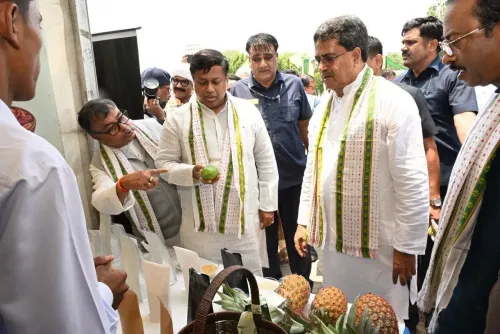
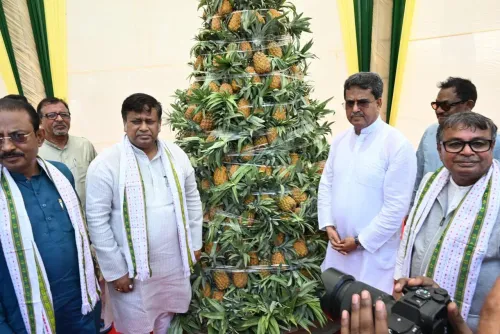
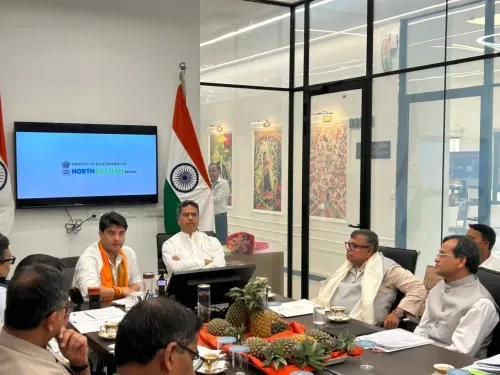
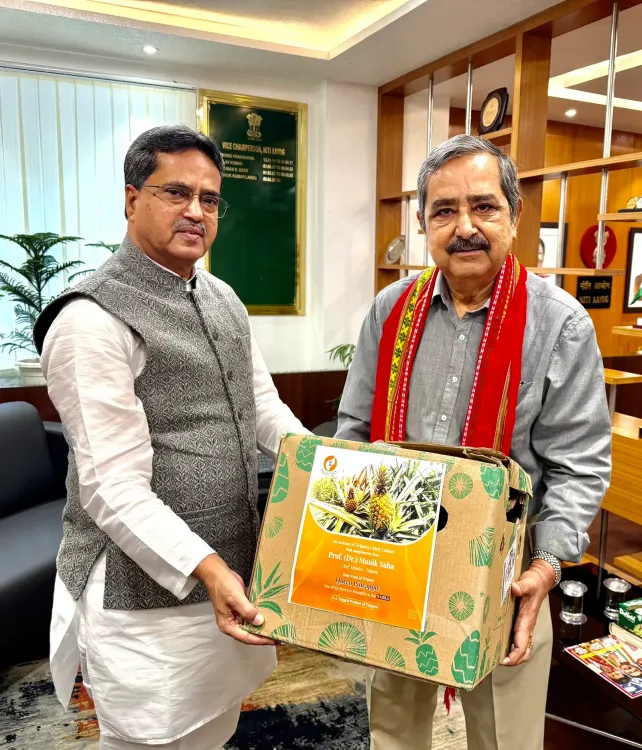
CM Manik Saha presents Tripura's Queen Pineapple to NITI Aayog
Synopsis
Tripura Chief Minister Dr. Manik Saha presented the GI-tagged Queen Pineapple — the state fruit — to NITI Aayog Vice-Chairman Ashok Kumar Lahiri in New Delhi on 12 June 2026, highlighting the state's agricultural strengths and seeking greater central support for horticulture promotion and exports.
Key Takeaways
Manik Saha presented Tripura's Queen Pineapple to NITI Aayog Vice-Chairman Ashok Kumar Lahiri in New Delhi on 12 June 2026 .
The Queen Pineapple is the state fruit of Tripura and received a Geographical Indication tag in 2016 .
The gesture signals Tripura's push for greater central support in horticulture marketing, exports, and value addition .
NITI Aayog was established in 2015 under the cooperative federalism model to align state and national development priorities.
Tripura's pineapple farmers and the broader horticulture sector are the primary stakeholders who stand to gain from this high-level advocacy.
Tripura Chief Minister Dr. Manik Saha presented the Queen Pineapple — the state fruit of Tripura — to NITI Aayog Vice-Chairman Shri Ashok Kumar Lahiri in New Delhi on Friday, 12 June 2026, spotlighting the northeastern state's horticulture credentials at the national policy level.
Context
Sharing the gesture on X, Dr. Saha described the Queen Pineapple as 'a symbol of our state's agricultural excellence.' The presentation took place at the NITI Aayog office in New Delhi, underscoring the Chief Minister's outreach to central policy institutions on behalf of Tripura's farming community.
The Queen Pineapple is a distinct variety native to Tripura, celebrated for its sweetness, low acidity, and compact crown. It received a Geographical Indication (GI) tag in 2016, formally recognising its unique regional identity and protecting it from imitation in domestic and export markets.
Policy Backdrop
NITI Aayog, established in 2015 to replace the Planning Commission, serves as India's premier policy think tank and a platform for cooperative federalism between the Centre and states. Its leadership regularly meets with Chief Ministers to align state-level priorities — including agriculture and horticulture — with national development goals.
Tripura's economy leans heavily on horticulture, with pineapple cultivation spread across the state's hill districts and providing livelihoods to thousands of smallholder farmers. The GI tag has been central to state efforts to boost export value and brand recognition for the Queen variety in national and overseas markets.
Stakeholders and Impact
Tripura's pineapple farmers and horticulture sector stand to benefit most directly from high-visibility advocacy at the national level. When a Chief Minister personally presents a GI-tagged produce to a senior policy figure, it signals to central planners that the state is actively seeking support for marketing infrastructure, cold-chain logistics, and export facilitation.
This pattern of state leaders pitching regional specialities during policy consultations has accelerated since 2015, as the cooperative federalism model encourages states to proactively make the case for their agricultural strengths rather than waiting passively for central scheme allocations.
What's Next
Attention will now turn to whether the meeting translates into tangible support — such as inclusion of Tripura's Queen Pineapple in central export promotion programmes or enhanced GI marketing guidelines from NITI Aayog. The think tank's next Governing Council meeting and any fresh horticulture export guidelines will be closely watched by the state government and farming stakeholders alike.
For Dr. Manik Saha, the New Delhi visit reinforces a broader strategy of positioning Tripura as an agriculture-led growth story within India's northeastern development narrative.
Point of View
High-visibility gestures to keep regional agricultural products on the central policy radar. With the GI tag already secured in 2016, the next logical push is for export facilitation and cold-chain investment, and direct engagement with NITI Aayog is a calculated step in that direction. For a landlocked northeastern state like Tripura, national-level visibility for its horticulture sector is not ceremonial — it directly influences budgetary allocations and scheme coverage. The move also fits a broader BJP-ruled-state pattern of projecting agricultural achievements as governance wins ahead of electoral cycles.
NationPress
26 Oct 2026
Frequently Asked Questions
What is Tripura's Queen Pineapple?
The Queen Pineapple is the state fruit of Tripura, a distinct variety known for its sweetness and low acidity. It received a Geographical Indication tag in 2016, recognising its unique regional origin.
Why did CM Manik Saha present the Queen Pineapple to NITI Aayog?
Dr. Manik Saha presented the Queen Pineapple to NITI Aayog Vice-Chairman Ashok Kumar Lahiri to highlight Tripura's agricultural strengths and seek greater central support for horticulture marketing, exports, and value addition.
What is NITI Aayog's role in state agriculture policy?
NITI Aayog, established in 2015, is India's premier policy think tank that facilitates cooperative federalism. It works with state governments to align agricultural priorities with national development goals and advises on scheme design and resource allocation.
Does the Tripura Queen Pineapple have a GI tag?
Yes. The Queen Pineapple of Tripura was granted a Geographical Indication tag in 2016, protecting its distinct identity and helping promote it in domestic and international markets.
How does presenting regional produce to NITI Aayog help farmers?
Such presentations raise the profile of GI-tagged produce with central policymakers, which can lead to inclusion in export promotion programmes, improved cold-chain infrastructure funding, and greater marketing support — all of which benefit smallholder farmers directly.