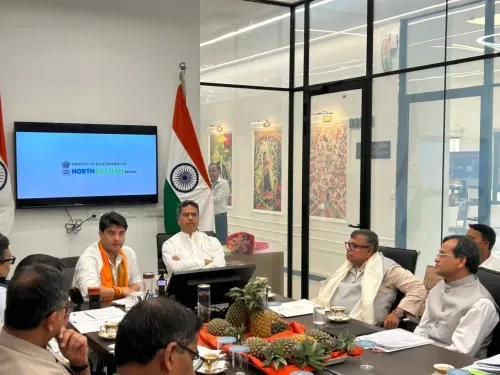
CM Manik Saha Launches ₹236 Cr Mission Queen Pineapple

Synopsis
Tripura Chief Minister Dr. Manik Saha launched 'Mission Queen Pineapple', a ₹236 crore, three-year MDoNER project on 27 May 2026. The initiative targets processing infrastructure, market linkages and global exports for the state's GI-tagged Queen Pineapple, aiming to boost rural incomes under India's Act East Policy framework.
Key Takeaways
Mission Queen Pineapple, Tripura was formally launched on 27 May 2026 by Chief Minister Dr.
The project is funded at ₹236 crore over three years through MDoNER .
The launch was held virtually from Sanchar Bhawan, New Delhi , with Union Minister Jyotiraditya Scindia and Agriculture Minister Ratan Lal Nath in attendance.
Tripura's Queen Pineapple holds a GI tag , forming the branding anchor for the mission's export push.
Key objectives include strengthening processing infrastructure , building market linkages , minimising yield gaps, and expanding export opportunities .
The initiative is aligned with Prime Minister Modi's Act East Policy , which has guided northeastern development since 2014 .
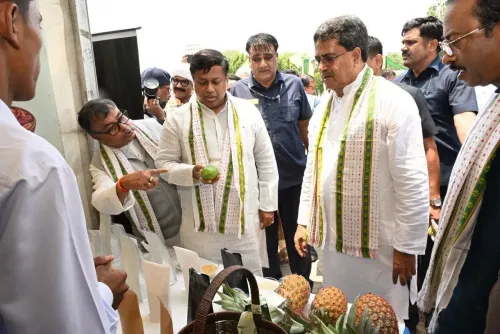
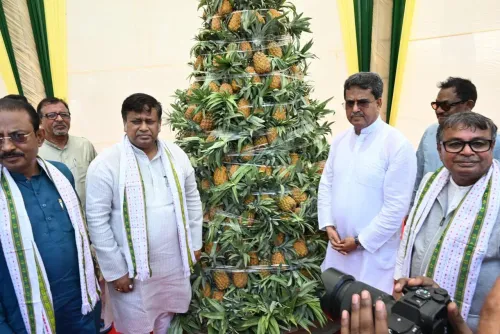
Tripura Chief Minister Dr. Manik Saha on Wednesday, 27 May 2026 formally launched 'Mission Queen Pineapple, Tripura', a three-year project worth ₹236 crore funded through the Ministry of Development of North Eastern Region (MDoNER), aimed at transforming the state's GI-tagged Queen Pineapple into a globally recognised export brand.
Context
The virtual launch was held from Sanchar Bhawan, New Delhi, and was attended by Union Minister Shri Jyotiraditya Scindia and Tripura Agriculture Minister Shri Ratan Lal Nath. Dr. Saha described the mission as a 'transformative' initiative that will 'strengthen processing infrastructure, build robust market linkages, and elevate Tripura's state fruit into a global brand.'
The Queen Pineapple holds a Geographical Indication (GI) tag, recognising it as a product unique to Tripura. The GI designation provides a legal framework for branding and premium pricing in domestic and international markets.
Policy Backdrop
MDoNER, established in 2001, has consistently channelled funds into value-addition and agri-processing schemes across the eight northeastern states. Mission Queen Pineapple is the latest in a series of such interventions designed to reduce post-harvest losses and build export-oriented supply chains in the region.
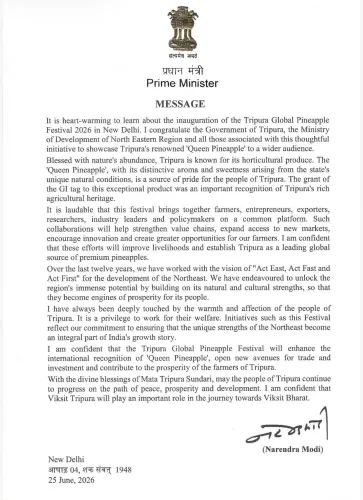
The project sits squarely within India's Act East Policy, formally unveiled in 2014, which seeks to deepen economic integration between the northeastern states and Southeast Asia. Dr. Saha specifically credited Prime Minister Narendra Modi's 'unwavering support and visionary leadership through the Act East Policy' for 'unlocking new avenues of growth and prosperity for the Northeast.' Comparable horticultural missions have been rolled out in other northeastern states to connect the region with ASEAN markets.
Stakeholders and Impact
The primary beneficiaries are Tripura's pineapple farmers and rural households dependent on horticulture. The mission's stated goals include minimising yield gaps, expanding export opportunities, and accelerating rural economic growth.
By investing in processing infrastructure, the project addresses a chronic challenge in northeastern agriculture — the absence of cold-chain and value-addition facilities that forces farmers to sell at low prices immediately after harvest. Stronger market linkages are expected to give growers access to both domestic premium retail and overseas buyers.
What's Next
Over the three-year project period, the key metrics to watch will be the rollout timelines for new processing units and the trajectory of Tripura's pineapple export volumes. Success in building a supply chain around the GI-tagged variety could serve as a replicable model for other niche agricultural products across the Northeast.
If the mission delivers on its targets, it would mark a significant step in Tripura's transition from subsistence horticulture to an export-oriented agri-economy, with implications for farmer income levels and the state's broader rural development indicators.
Point of View
A shift that could meaningfully raise farmer incomes if processing capacity is actually built and sustained. For Dr. Manik Saha, the launch also serves a political purpose: demonstrating tangible central investment in Tripura's rural economy ahead of any future electoral cycle. The broader test will be whether the mission avoids the implementation gaps — stalled processing units, thin market linkages — that have historically blunted similar northeastern agri-schemes.
NationPress
10 Oct 2026
Frequently Asked Questions
What is Mission Queen Pineapple Tripura?
'Mission Queen Pineapple, Tripura' is a ₹236 crore, three-year project funded by MDoNER, launched on 27 May 2026, to build processing infrastructure, strengthen market linkages, and promote the export of Tripura's GI-tagged Queen Pineapple.
Who launched Mission Queen Pineapple?
Tripura Chief Minister Dr. Manik Saha formally launched the mission on 27 May 2026 from Sanchar Bhawan, New Delhi, joined virtually by Union Minister Jyotiraditya Scindia and Tripura Agriculture Minister Ratan Lal Nath.
What is the Queen Pineapple of Tripura?
The Queen Pineapple is a variety of pineapple native to Tripura that holds a Geographical Indication (GI) tag, recognising its unique regional origin and enabling premium branding in domestic and international markets.
What is the budget for Mission Queen Pineapple?
The project has a total outlay of ₹236 crore to be spent over three years, financed through the Ministry of Development of North Eastern Region (MDoNER).
How does the Act East Policy relate to the pineapple mission?
India's Act East Policy, launched in 2014, aims to integrate the northeastern states economically with Southeast Asia. Mission Queen Pineapple aligns with this framework by targeting ASEAN export markets for Tripura's GI-tagged pineapple.