Mission Queen Pineapple: Tripura's ₹236 crore push to double farmer income
Synopsis
Tripura's GI-tagged Queen Pineapple fetches ₹6–10 per kg at the farm gate but commands up to ₹150 per kg in export markets. A new ₹236 crore mission backed by six central ministries aims to close that gap — and even turn discarded pineapple leaves, valued at ₹1,483 crore, into a new income stream for tribal farmers.
Key Takeaways
Mission Queen Pineapple, Tripura was launched in New Delhi on 27 May 2025 with a ₹236 crore outlay.
Smallholder farmers currently earn just ₹6–10 per kg ; export-grade Queen Pineapple fetches ₹80–150 per kg .
The Ministry of DoNER contributes the largest share at ₹145 crore ; six central ministries and agencies are co-funding the project.
The three-year roadmap runs from FY 2026 to FY 2028 , covering cultivation, post-harvest processing, and branding.
Discarded pineapple leaves are estimated to hold a commercial value of nearly ₹1,483 crore , targeted under a waste-to-wealth component.
Tripura's Queen Pineapple holds a GI tag and has been exported to Dubai, Qatar, Oman, Bangladesh, Germany , and Russia since 2018 .
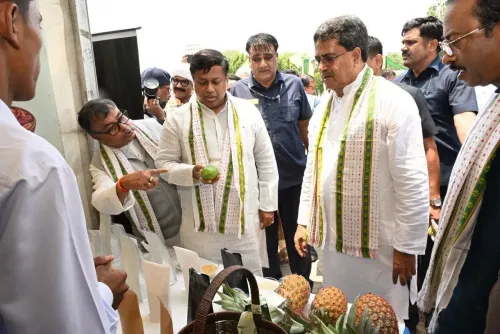
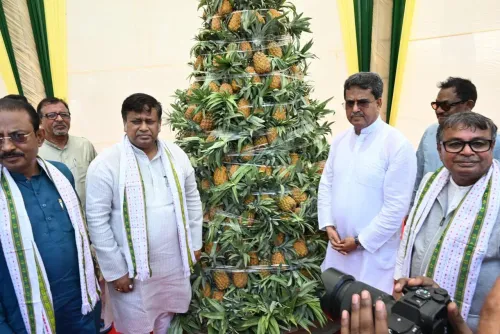
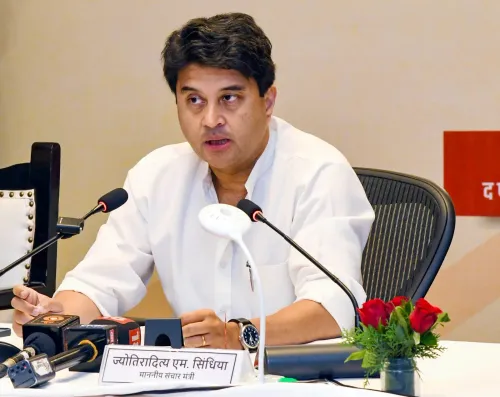
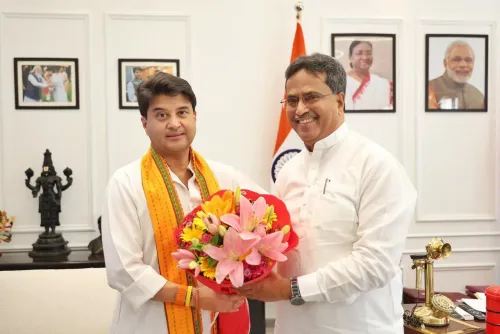
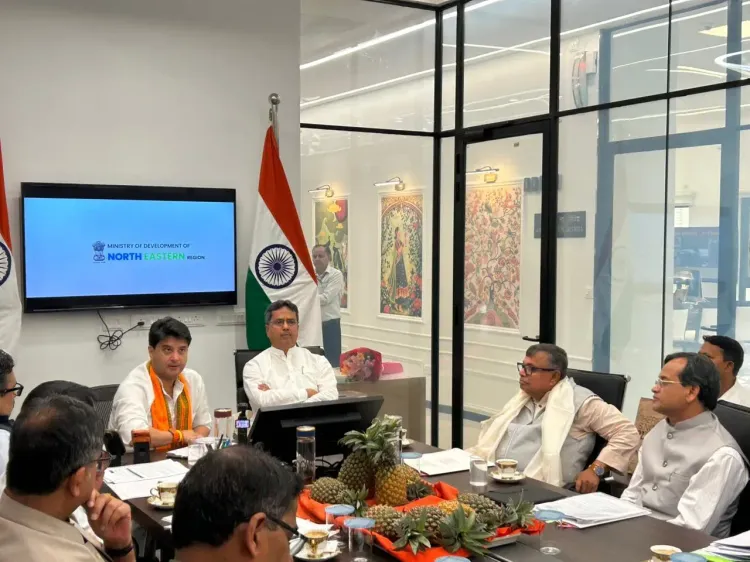
A ₹236 crore initiative titled 'Mission Queen Pineapple, Tripura' was launched in New Delhi on 27 May 2025, aiming to transform the production, processing, and export of the state's prized GI-tagged Queen Pineapple and help smallholder farmers double their income over a three-year period. The project was jointly unveiled by Union Minister for Development of North Eastern Region (DoNER) Jyotiraditya Scindia, Tripura Chief Minister Manik Saha, and Tripura Agriculture and Farmers' Welfare Minister Ratan Lal Nath.
The Income Gap Driving the Mission
At the heart of the initiative is a stark price disparity. According to Agriculture Minister Nath, smallholder pineapple growers in Tripura currently receive farm gate prices of just ₹6 to ₹10 per kg, while processed or export-grade Queen Pineapple commands ₹80 to ₹150 per kg in domestic and international markets. The mission seeks to close this gap by addressing every structural bottleneck in the value chain — from cultivation to branding.
Notably, Tripura's Queen Pineapple already holds a Geographical Indication (GI) tag and is recognised for its aromatic intensity, golden-yellow colour, low fibre content, and a sweetness level ranging from 13 to 17.2 degrees Brix. The fruit is rich in vitamins A, B, and C, as well as minerals including calcium, magnesium, potassium, and iron — attributes that position it as a premium product in global markets.
Funding Structure and Key Stakeholders
The ₹236 crore outlay is spread across multiple central ministries and agencies. The Ministry of DoNER contributes the largest share at ₹145 crore, followed by the Tripura state government at ₹20 crore, the Ministry of Agriculture at ₹30 crore, and the Ministry of Food Processing Industries at ₹25 crore. The Agricultural and Processed Food Products Export Development Authority (APEDA) provides ₹4 crore, while the Ministries of Industry and Commerce, MSME, and the Indian Council of Agricultural Research (ICAR) each contribute ₹2 crore.
This multi-ministerial coordination model is being described as one of the mission's defining structural features, designed to prevent the siloed implementation that has historically hampered agricultural schemes in the Northeast.
Three-Year Implementation Roadmap
The Detailed Project Report (DPR), titled 'Pineapple Cultivation and Value Chain Development', lays out a three-year roadmap spanning FY 2026 to FY 2028. It is structured around three broad components: Cultivation Management, Post-Harvest Management and Processing, and Branding and Marketing. The goal is to systematically plug every gap that has prevented the Queen Pineapple from realising its premium market potential.
Tripura's pineapple export journey began on 3 June 2018 with shipments to Dubai, subsequently expanding to Qatar, Oman, and Bangladesh. Canned pineapple from the state has also reached Germany and Russia. The mission aims to scale these export corridors significantly over the project period.
Waste-to-Wealth: The Hidden Opportunity
Minister Nath highlighted an often-overlooked economic angle: pineapple leaves, currently discarded as agricultural waste by farmers, have an estimated value of nearly ₹1,483 crore. The mission includes provisions to convert this biomass into commercial products, enabling farmers to extract additional revenue from the same land, the same crop, and the same cultivation cycle.
With nearly 70 per cent of Tripura's geographical area comprising hills and hillocks — locally called 'Tilla' — and the bulk of cultivation carried out by tribal growers, the mission carries significant social equity dimensions alongside its economic targets. Whether the multi-ministry framework can deliver on its ambitious timelines will be closely watched by farming communities across the Northeast.
Point of View
But the more telling detail is the farm gate price: ₹6–10 per kg for a fruit that sells at up to ₹150 per kg in export markets. That fifteen-fold gap is not a production problem — it is a value chain failure, and no amount of cultivation support fixes it without cold storage, processing infrastructure, and credible market linkages actually materialising on the ground. The multi-ministry coordination model is structurally sound on paper, but India's Northeast has seen ambitious inter-ministerial schemes dissolve into jurisdictional ambiguity before. The waste-to-wealth angle — ₹1,483 crore locked in discarded leaves — is the genuinely underreported story here, and whether ICAR and MSME can operationalise that potential for tribal growers will be a sharper test of the mission's real intent than the headline outlay.
NationPress
10 Oct 2026
Frequently Asked Questions
What is Mission Queen Pineapple, Tripura?
Mission Queen Pineapple, Tripura is a ₹236 crore, three-year government initiative launched on 27 May 2025 to boost cultivation, post-harvest processing, branding, and export of Tripura's GI-tagged Queen Pineapple variety. It is co-funded by six central ministries and aims to help smallholder farmers double their income by bridging the gap between farm gate prices and export market prices.
Who launched Mission Queen Pineapple?
The mission was jointly launched by Union Minister for DoNER Jyotiraditya Scindia, Tripura Chief Minister Manik Saha, and Tripura Agriculture Minister Ratan Lal Nath at a ceremony in New Delhi on 27 May 2025.
How is the ₹236 crore funding distributed?
The Ministry of DoNER contributes ₹145 crore, the Tripura state government ₹20 crore, the Ministry of Agriculture ₹30 crore, the Ministry of Food Processing Industries ₹25 crore, APEDA ₹4 crore, and the Ministries of Industry and Commerce, MSME, and ICAR ₹2 crore each.
Why is the Queen Pineapple significant for Tripura?
The Queen Pineapple is Tripura's state fruit, holds a GI tag, and is prized for its aroma, low fibre, and sweetness of 13–17.2 degrees Brix. Despite its premium quality, farmers earn only ₹6–10 per kg at the farm gate, far below the ₹80–150 per kg it commands in export markets — making value chain development critical.
What is the waste-to-wealth component of the mission?
Pineapple leaves currently discarded as agricultural waste by Tripura's farmers are estimated to hold a commercial value of nearly ₹1,483 crore. The mission includes provisions to convert this biomass into sellable products, allowing farmers to generate additional income from the same crop without extra land or cultivation costs.