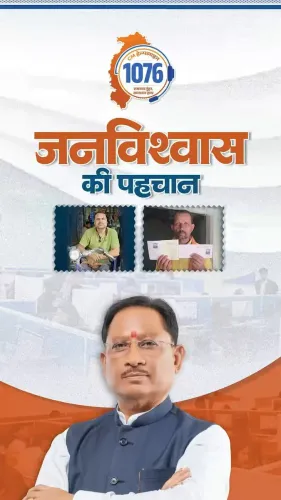
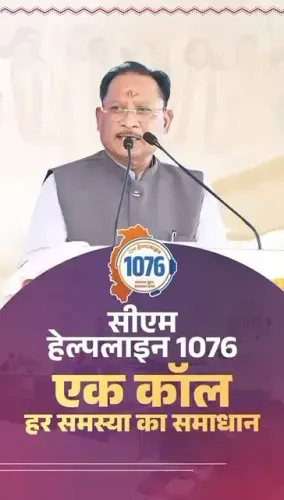
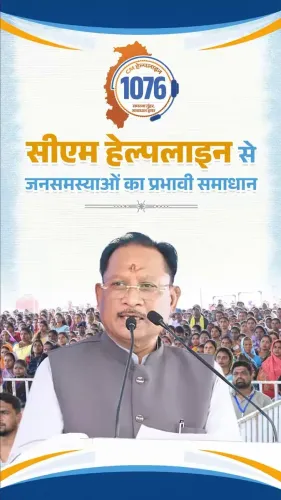
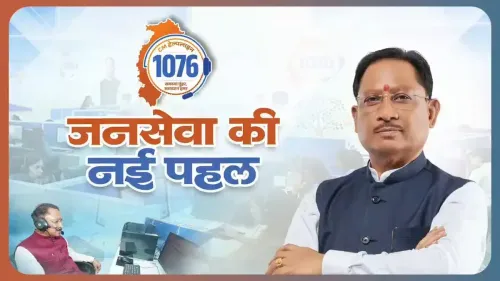
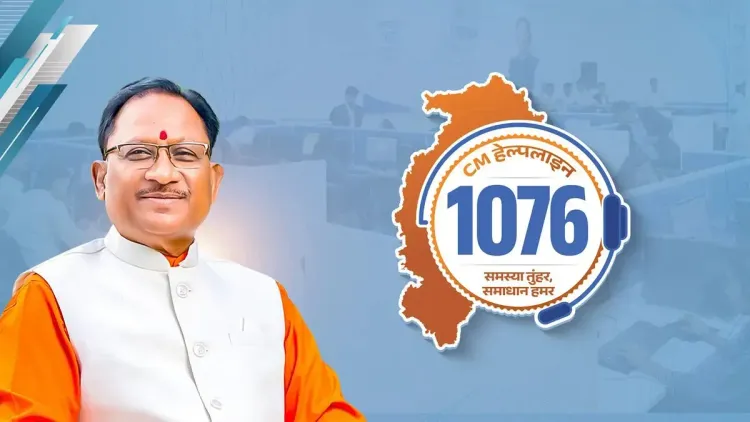
CM Sai Promotes Chhattisgarh's 1076 Helpline for Citizen Grievances
Synopsis
Chhattisgarh Chief Minister Vishnu Deo Sai highlighted CM Helpline 1076 on 16 June 2026, calling it a direct phone-based grievance channel that eliminates the need for office visits, and reaffirmed his government's 'sushasan' commitment to hear every citizen and resolve every complaint.
Key Takeaways
Chhattisgarh Chief Minister Vishnu Deo Sai publicly promoted CM Helpline 1076 on 16 June 2026 via X.
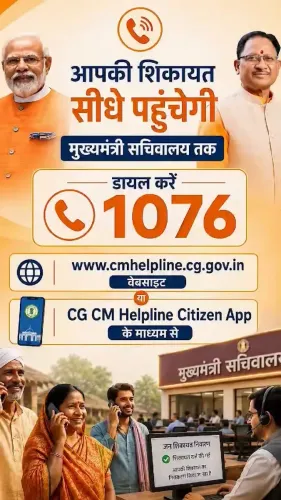
The helpline enables citizens to register complaints over a single phone call without visiting government offices.
The service is designed to reach residents across both urban centres and remote villages in Chhattisgarh .
The BJP government, in office since December 2023 , frames the helpline as a core pillar of its 'sushasan' (good governance) agenda.
The initiative mirrors similar CM helpline models adopted across multiple Indian states since the mid-2010s.
Future scrutiny will focus on publicly released data on complaint resolution rates and any digital expansion of the platform.
Chhattisgarh Chief Minister Vishnu Deo Sai on Tuesday, 16 June 2026, took to X to spotlight the state government's CM Helpline 1076, positioning it as the primary channel for citizens to register complaints and receive time-bound resolutions — without visiting government offices or enduring lengthy waits.
Writing in Hindi, Chief Minister Sai declared: 'न दफ्तरों के चक्कर, न अनावश्यक इंतजार' ('No rounds of offices, no unnecessary waiting') — framing the helpline as a direct, single-call solution to public grievances. He added that the platform serves as 'a powerful medium of direct dialogue between the residents of the state and the administration,' accessible to citizens in both urban centres and remote villages.
Context
The CM Helpline 1076 is a state-run citizen grievance redressal service that allows any resident of Chhattisgarh to register a complaint over the phone and track its resolution. The Vishnu Deo Sai-led BJP government, which took office in December 2023, has consistently promoted the helpline as a flagship instrument of its 'sushasan' (good governance) agenda. The post's hashtag #CMHelpline1076 reinforces the administration's effort to build public awareness around the service.
Chief Minister Sai articulated the government's stated commitment as: 'सुशासन का हमारा संकल्प है — हर नागरिक की बात सुनी जाए, हर समस्या का समाधान हो' ('Our resolve for good governance is — every citizen must be heard, every problem must be resolved').
Policy Backdrop
Dedicated CM helplines have become a common administrative tool across Indian states since the mid-2010s, designed to bypass traditional bureaucratic channels and create direct accountability between elected governments and citizens. BJP-governed states have been particularly active in branding such platforms under the 'sushasan' label, mirroring the emphasis on accessible, time-bound grievance resolution seen in national-level frameworks. The Central Public Grievance Redress and Monitoring System (CPGRAMS), operated at the Union level, represents a parallel effort to digitise and standardise citizen-administration interaction across the country.
Chhattisgarh presents a specific governance challenge: the state spans densely populated urban centres alongside remote tribal and forested regions where physical access to government offices can be difficult. A phone-based grievance channel carries particular significance in such a geography, where last-mile connectivity to administration has historically been limited.
Stakeholders and Impact
The primary beneficiaries of CM Helpline 1076 are Chhattisgarh's rural and tribal populations, for whom travelling to district or block-level offices can involve significant time and cost. Urban residents stand to gain from reduced procedural friction in lodging civic complaints. The helpline also places accountability pressure on district and departmental officials, who are expected to resolve registered grievances within defined timeframes.
For the BJP administration, consistent promotion of the helpline serves a dual purpose: improving actual service delivery while reinforcing the 'sushasan' brand ahead of future electoral cycles. The government's repeated public communication around the platform signals an intent to make citizen responsiveness a measurable political commitment.
What's Next
Analysts and civil society groups tracking administrative reform in Chhattisgarh will look for periodic data releases on complaint volumes, resolution rates, and average turnaround times for CM Helpline 1076. Potential future developments include integration of the helpline with district-level portals or a dedicated mobile application to widen access further. The government's ability to demonstrate verifiable outcomes — rather than promotional communication alone — will determine how effectively the 'sushasan' narrative translates into measurable public trust.
Point of View
Which positions administrative accessibility as a political differentiator in states with large rural and tribal constituencies. By anchoring the message in the elimination of bureaucratic friction — 'no office rounds, no unnecessary waiting' — the government is attempting to make responsiveness tangible and personal for ordinary citizens. The move also reflects a national pattern where ruling parties increasingly use direct-to-citizen digital communication to reinforce governance credentials outside the traditional media cycle. The real test, however, lies in whether resolution-rate data eventually substantiates the helpline's promise or exposes a gap between promotional intent and administrative delivery.
NationPress
16 Sept 2026
Frequently Asked Questions
What is CM Helpline 1076 in Chhattisgarh?
CM Helpline 1076 is a state government grievance redressal service in Chhattisgarh that allows any citizen to register a complaint over a single phone call and receive a time-bound resolution, without needing to visit a government office.
Who launched CM Helpline 1076 in Chhattisgarh?
The helpline is operated by the Chhattisgarh state government under Chief Minister Vishnu Deo Sai, whose BJP administration took office in December 2023 with a stated focus on 'sushasan' or good governance.
How can I register a complaint on CM Helpline 1076?
Citizens can register a complaint by calling the number 1076. The helpline is accessible to residents across urban areas as well as remote and tribal villages in Chhattisgarh.
What does 'sushasan' mean in the context of Chhattisgarh politics?
'Sushasan' translates to 'good governance' in English and has been the central administrative slogan of the Chhattisgarh BJP government since it came to power in December 2023, encompassing initiatives aimed at improving public service delivery and citizen-administration responsiveness.
Are CM helplines common across Indian states?
Yes, several Indian states have introduced dedicated CM helplines and single-window grievance systems since the mid-2010s to reduce bureaucratic delays. At the national level, a similar framework called CPGRAMS exists to handle citizen grievances directed at central government departments.