CM Sai Backs New Rural Jobs Scheme Promising 125-Day Work Guarantee
Synopsis
Chhattisgarh Chief Minister Vishnu Deo Sai endorsed a new central rural employment scheme on 2 July 2026, saying it will guarantee 125 days of work to rural households nationwide. He credited PM Modi and reaffirmed the 'double-engine government' commitment to worker welfare and village development.
Key Takeaways
CM Vishnu Deo Sai welcomed the nationwide rollout of the 'VB - G Ram Ji' scheme on 2 July 2026 .
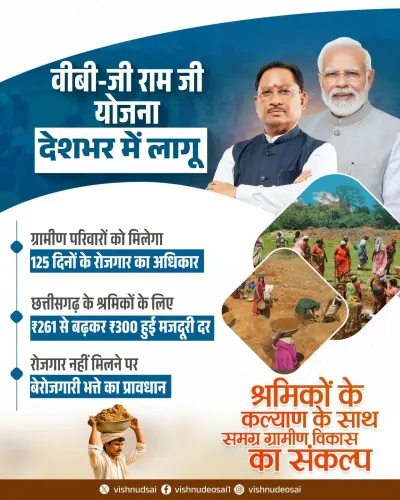
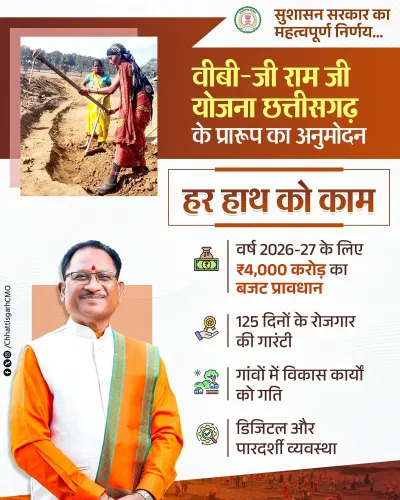
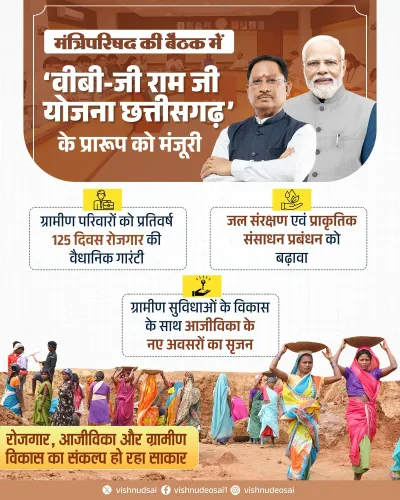
The scheme is stated to provide 125 days of guaranteed employment to rural families — 25 days more than the existing MGNREGA ceiling of 100 days.
PM Narendra Modi has been credited with the scheme's design and national launch.
The post invokes the 'double-engine government' framework, emphasising coordinated central and state action in BJP -ruled states.
Gram panchayats and rural labourers are the primary implementation stakeholders and intended beneficiaries.
State-level operational guidelines and budget allocations are expected to be the next critical steps for rollout in Chhattisgarh .
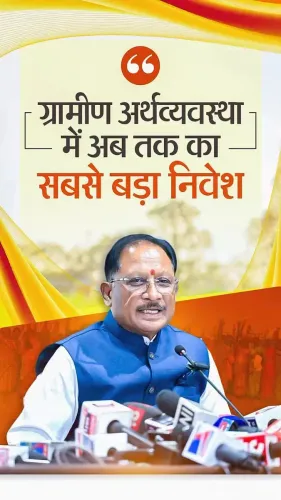
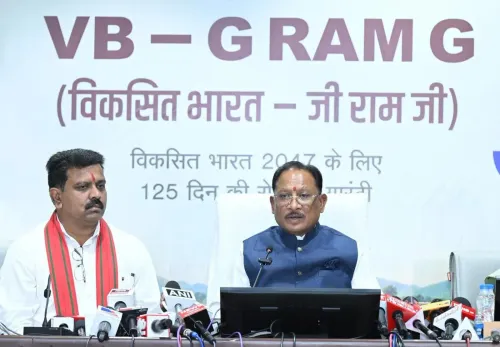
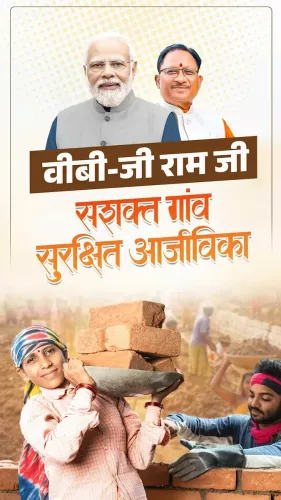
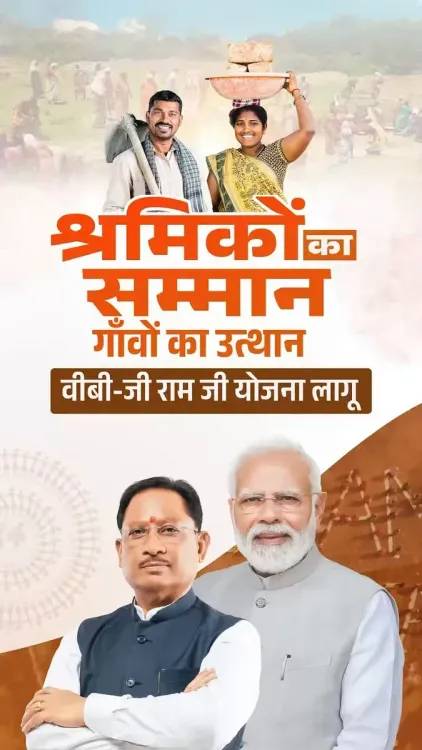
Chhattisgarh Chief Minister Vishnu Deo Sai on Thursday, 2 July 2026 welcomed the nationwide rollout of a new rural employment scheme — referred to as the 'VB - G Ram Ji' (Welfare of Labourers – Gram Ram Ji) scheme — crediting Prime Minister Narendra Modi for its launch and asserting it will provide rural families with a guaranteed 125 days of employment annually.
Context
Posting on X in Hindi, CM Sai wrote: 'Shramikon ka kalyan, gaanvon ka utthan' ('Welfare of workers, upliftment of villages'), framing the scheme as a new pillar of rural livelihood under PM Modi's leadership. He described the initiative as providing 125 days of employment guarantee to rural households, and reaffirmed the 'double-engine government' commitment to worker welfare and holistic rural development.
The post tags @narendramodi directly, signalling both political alignment and the scheme's framing as a central government initiative being embraced at the state level.
Policy Backdrop
The announcement builds on the long-standing architecture of the Mahatma Gandhi National Rural Employment Guarantee Act (MGNREGA), enacted in 2005, which guarantees up to 100 days of wage employment per year to rural households. The new scheme, as described by CM Sai, would extend that floor by 25 additional days, representing a meaningful enhancement of the existing social safety net.
The BJP's 'double-engine government' formulation — where a BJP-ruled state and a BJP-led Centre are said to work in tandem — has been a recurring framework for announcing and accelerating centrally sponsored rural schemes. Chhattisgarh, which returned a BJP government under CM Sai in late 2023, has positioned itself as a frontline state for implementing such schemes, particularly those targeting tribal and agrarian communities.
Stakeholders and Impact
The primary beneficiaries, as stated in the post, are rural families — particularly daily-wage labourers who depend on guaranteed employment during lean agricultural seasons. Gram panchayats are expected to serve as the implementation backbone, as they do under MGNREGA.
For Chhattisgarh, a state with a large rural and tribal population, an extended employment guarantee could translate into significant additional wage income for households in districts where off-season agricultural work is scarce. The monsoon period — when this scheme takes effect — is precisely when rural labour demand from private sources typically dips.
What's Next
Attention will now shift to state-level implementation guidelines, revised labour budget allocations, and the operational mechanics of how the additional 25 days will be administered alongside existing MGNREGA entitlements. Parliamentary scrutiny during the upcoming monsoon session is likely, with opposition parties expected to seek details on funding, eligibility criteria, and convergence with existing welfare frameworks.
The rollout's success in Chhattisgarh will be closely watched as a benchmark for how BJP-governed states translate central rural welfare announcements into measurable ground-level outcomes.
Point of View
The party attempts to own and upgrade a legacy Congress-era programme. For Chhattisgarh, with its large tribal and agrarian base, welfare optics in the pre-monsoon lean season carry direct electoral resonance. The real test, as with all employment guarantee expansions, will be whether implementation infrastructure — panchayat capacity, timely wage payments, and work availability — matches the announced entitlement.
NationPress
1 Oct 2026
Frequently Asked Questions
What is the VB - G Ram Ji scheme announced in India?
The 'VB - G Ram Ji' scheme is a rural employment initiative described by Chhattisgarh CM Vishnu Deo Sai as guaranteeing 125 days of wage employment to rural households nationwide, launched on 2 July 2026 under PM Narendra Modi's leadership.
How is the new rural scheme different from MGNREGA?
The existing MGNREGA guarantees up to 100 days of rural employment per year. The new scheme, as stated by CM Sai , offers 125 days — an increase of 25 days — providing a more robust livelihood safety net for rural families.
What did Chhattisgarh CM Vishnu Deo Sai say about the rural employment scheme?
CM Sai posted on X calling the scheme a new foundation for 'empowered livelihoods,' saying it reflects the 'double-engine government's' full commitment to worker welfare and comprehensive rural development under PM Modi .
Who benefits from the VB - G Ram Ji rural employment scheme?
The scheme targets rural households across India, particularly daily-wage labourers who depend on guaranteed work during lean agricultural seasons. Gram panchayats are expected to be the primary implementation bodies.
What is the 'double-engine government' mentioned by CM Sai?
The 'double-engine government' is a BJP political formulation describing the alignment between a BJP -led central government and BJP -ruled state governments, implying faster and more coordinated delivery of schemes like rural employment programmes.