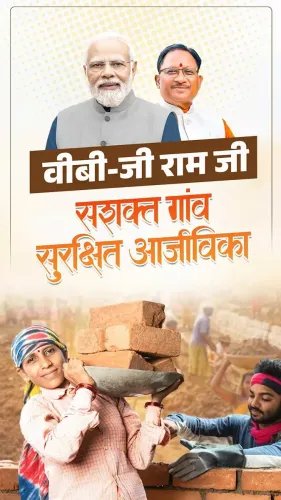
CM Sai Unveils VB-GRAMG Scheme: 125 Days Work, ₹300/Day
Synopsis
Chhattisgarh CM Vishnu Deo Sai announced the VB-GRAMG scheme at Nava Raipur on 6 August 2026, promising rural workers 125 days of employment at ₹300 per day from July 2026, alongside a drive to build toilets in 6,671 schools for girl students.
Key Takeaways
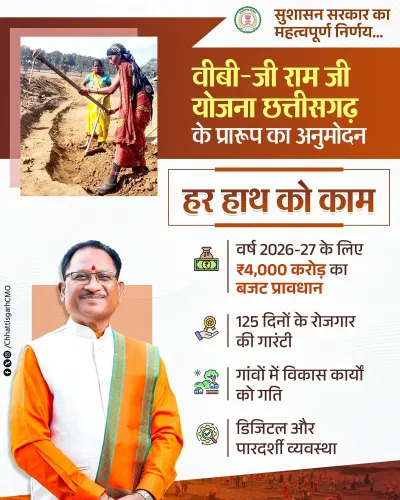
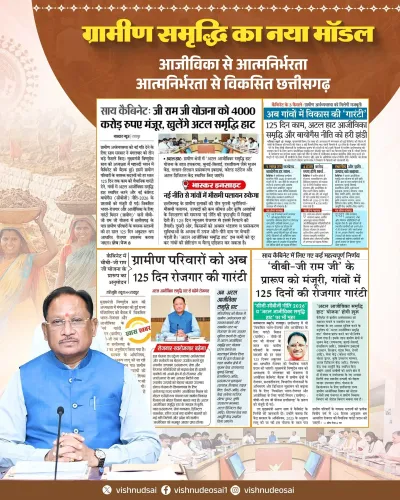
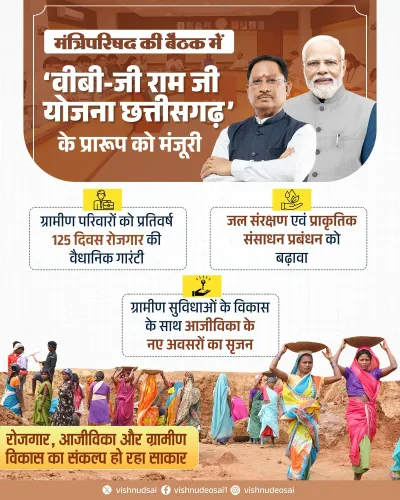
VB-GRAMG scheme launches on 1 July 2026 , guaranteeing 125 days of employment to rural workers in Chhattisgarh.
Daily wage set at ₹300 , exceeding the floor provided under the central MGNREGA framework.
Work spans 318 categories including water conservation, rural infrastructure, livelihood, and disaster management.
The 'Meri Beti, Mera Abhimaan' campaign will build toilets for girl students in 6,671 schools between 15 August and 26 January .
CM Sai credited PM Narendra Modi's guidance and framed the scheme under the BJP's 'double engine government' model.
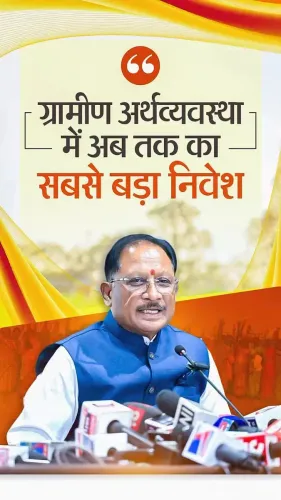
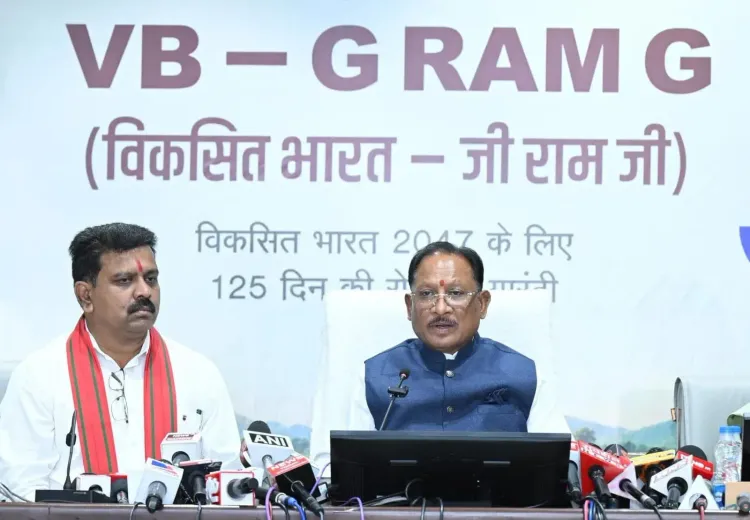
A new rural employment promise is taking shape in Chhattisgarh — and it comes with a bigger wage, more working days, and a deadline that is already on the calendar. Chhattisgarh Chief Minister Vishnu Deo Sai on Thursday, 6 August 2026 used a press briefing at Mahanadi Bhawan, Nava Raipur to formally introduce the Viksit Bharat-GRAMG (VB-GRAMG) scheme, framing it as the state's contribution to the national vision of a developed India.
What VB-GRAMG promises rural workers
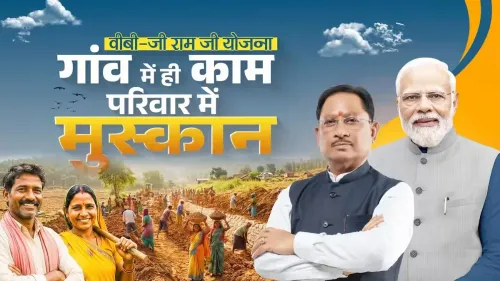
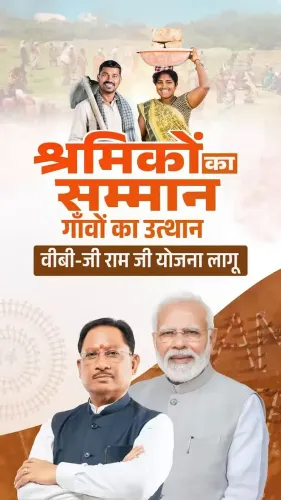
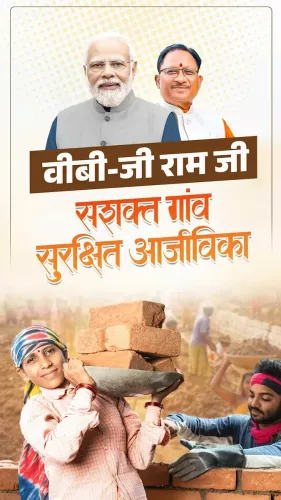
The scheme, set to take effect from 1 July 2026, guarantees rural labourers 125 days of employment at a daily wage of ₹300. That is a notable step up from the 100-day, lower-wage floor that the central Mahatma Gandhi National Rural Employment Guarantee Act (MGNREGA) — enacted in 2005 — has long provided. The Chhattisgarh government is positioning VB-GRAMG as a state-level amplification of that national framework, not a replacement.
The work itself spans 318 categories of activity, covering water conservation, rural infrastructure, livelihood development, and disaster management. The breadth of that list signals an intent to move beyond road-digging and into climate-resilient rural planning — a shift that mirrors the language coming out of the central government's rural development push.
The 'Meri Beti, Mera Abhimaan' toilet drive
Announced alongside the employment scheme is a girls' sanitation campaign titled 'Meri Beti, Mera Abhimaan' — 'My Daughter, My Pride'. Between 15 August and 26 January, the state plans to construct toilets for girl students in 6,671 schools across Chhattisgarh. The timeline — Independence Day to Republic Day — is a deliberate patriotic frame, and the target figure underscores the scale of the infrastructure gap the government says it is closing. The initiative echoes the decade-old Swachh Bharat Mission's school sanitation strand, now being driven with state-level urgency.
The 'double engine' political argument
CM Sai invoked Prime Minister Narendra Modi explicitly, attributing the scheme's direction to his guidance and repeating the BJP's signature 'double engine government' formulation — the idea that a BJP state and a BJP Centre pull in the same direction for faster development. The framing is as much political as it is administrative: Chhattisgarh, a state with a large rural and tribal population, is fertile ground for welfare-linked governance messaging ahead of future electoral cycles.
Whether the scheme's specifics — the wage figure, the day count, the school numbers — translate into ground-level delivery is the question that will define VB-GRAMG's legacy. The start date is set. The clock is running.
Point of View
Extending MGNREGA's reach by 25 more days and a higher daily wage. For Chhattisgarh, a state where tribal and rural voters are decisive, the scheme serves both a developmental and an electoral purpose. The 'Meri Beti, Mera Abhimaan' toilet drive ties school infrastructure to a patriotic calendar, amplifying visibility. The real test will be whether the July 2026 rollout date holds and whether the ₹300 wage reaches workers without the leakage that has historically plagued rural employment guarantees.
NationPress
21 Sept 2026
Frequently Asked Questions
What is the VB-GRAMG scheme in Chhattisgarh?
VB-GRAMG, or Viksit Bharat-GRAMG, is a Chhattisgarh state scheme announced by CM Vishnu Deo Sai that will provide rural workers with 125 days of guaranteed employment at a daily wage of ₹300, effective from 1 July 2026.
How is VB-GRAMG different from MGNREGA?
While MGNREGA guarantees 100 days of employment at the central-determined wage rate, VB-GRAMG extends this to 125 days and sets the daily wage at ₹300, making it a state-level enhancement of the national framework.
What is the 'Meri Beti, Mera Abhimaan' campaign?
'Meri Beti, Mera Abhimaan' (My Daughter, My Pride) is a Chhattisgarh government initiative to build toilets for girl students in 6,671 schools across the state, running from 15 August to 26 January.
When does the VB-GRAMG scheme start?
The VB-GRAMG scheme is set to be implemented from 1 July 2026, as announced by Chhattisgarh Chief Minister Vishnu Deo Sai at a press briefing in Nava Raipur on 6 August 2026.
What types of work are covered under VB-GRAMG?
The scheme covers 318 categories of work, including water conservation, rural infrastructure development, livelihood activities, and disaster management projects.