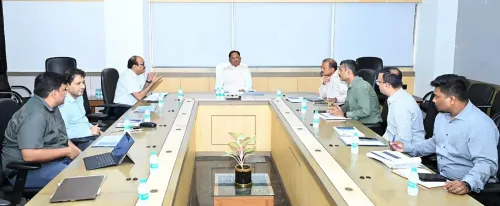
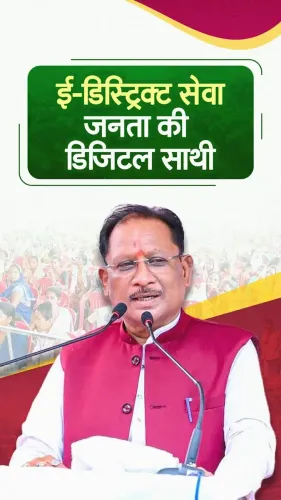
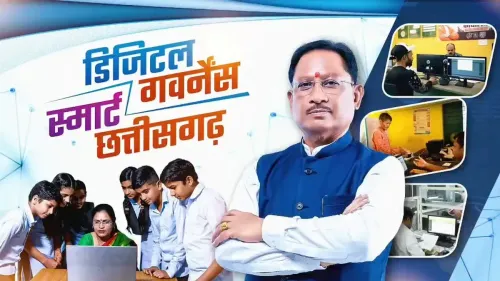
CM Sai Flags e-Office as Cornerstone of Chhattisgarh Governance
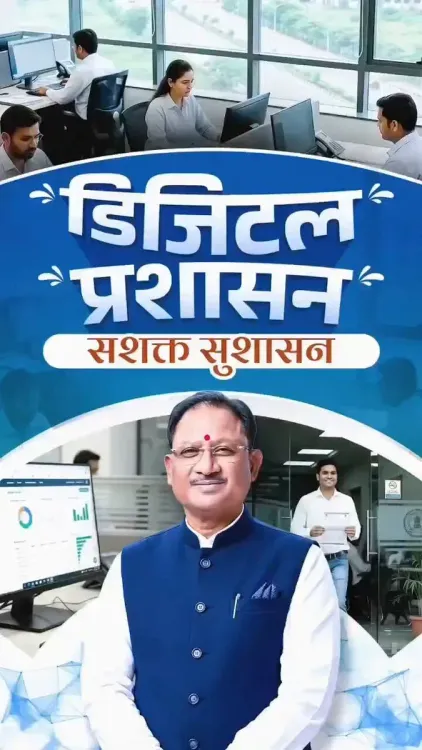
Synopsis
Chhattisgarh Chief Minister Vishnu Deo Sai highlighted the state's e-Office system on 19 October 2026, calling digital file management central to faster decisions, reduced paperwork, and a more accountable administration.
Key Takeaways
CM Vishnu Deo Sai on 19 October 2026 publicly backed the e-Office platform as a governance priority for Chhattisgarh.
The e-Office system , built by the National Informatics Centre , digitises file workflows — replacing physical noting-and-drafting with a tracked, time-stamped digital process.
Sai cited three specific outcomes: simpler processes, faster decision-making, and reduced paperwork.
Chhattisgarh's adoption reflects the national Digital India initiative, rooted in the National e-Governance Plan approved in 2006 .
The expansion of e-Office to remaining departments and official data on file-disposal rates will be the next indicators to watch.
Paper files are moving to pixels in Chhattisgarh — and Chief Minister Vishnu Deo Sai wants the state to know it. On Monday, 19 October 2026, the BJP leader took to X to champion the e-Office system as proof that technology-driven governance is no longer an aspiration in the state — it is operational policy.
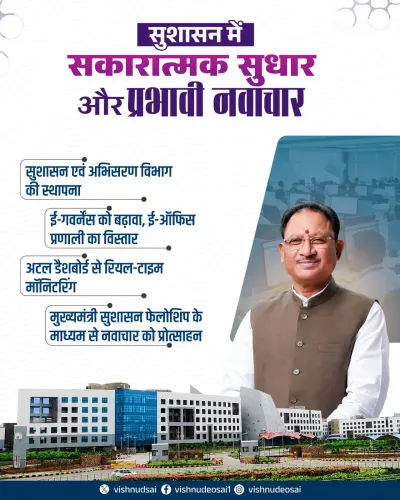
In the post, written in Hindi, CM Sai stated: 'The effective use of technology in good governance is our priority. The e-Office system in Chhattisgarh has made the government's working style simpler, faster, and more transparent. Digital file management has accelerated the decision-making process, reduced paperwork, and is ensuring the time-bound disposal of files. Our government is committed to making administration more efficient, accountable, and people-friendly through modern technology.'
What the e-Office System Actually Does
The e-Office platform is a digital file management system developed by the National Informatics Centre (NIC) and adopted by central and state government bodies across India. At its core, it replaces the traditional 'noting and drafting' on physical files with a fully digital workflow — officials receive, review, annotate, and approve files on screen, with every action time-stamped and tracked. The result: a live audit trail, faster escalation, and a measurable reduction in the physical movement of paper between departments.
Chhattisgarh's adoption of the platform sits within a much larger national arc. The National e-Governance Plan, approved in 2006, first laid the policy foundation for digitising government processes across India. Two decades on, multiple states have rolled out e-Office under the broader Digital India initiative — but the pace and depth of adoption have varied significantly from state to state.
Chhattisgarh's Push Inside the Digital India Framework
CM Sai, who took charge in December 2023, has consistently positioned administrative modernisation as a BJP governance deliverable in the state. His emphasis on e-Office aligns with the party's national narrative of 'minimum government, maximum governance' — pushing accountability down to verifiable digital records rather than discretionary physical processes. For a state like Chhattisgarh, where governance reaches into remote districts with historically limited connectivity, digital file management also carries a practical equity argument: decisions no longer need to travel with couriers.
The broader pattern is clear across India — states that have moved file disposal online report faster inter-departmental clearances and a reduction in procedural bottlenecks. What Chhattisgarh chooses to measure and report next — adoption rates across departments, average file-disposal timelines, citizen-facing outcomes — will be the real test of whether the system's promise matches its performance on the ground.
The pipeline has been built. Now the state's bureaucracy has to run through it.
Point of View
Centrally-available platform lets the state signal alignment with the national Digital India agenda while claiming a visible local delivery win. The real political weight, however, will depend on whether Chhattisgarh moves from announcement to verifiable data — published disposal timelines and departmental adoption figures — which would transform this from a social-media talking point into an accountability anchor. States that have used e-Office transparency to demonstrate clean administration have found it a durable political asset; those that have not followed through have found the same claims used against them.
NationPress
20 Oct 2026
Frequently Asked Questions
What is the e-Office system used in Chhattisgarh?
The e-Office system is a digital file management platform developed by the National Informatics Centre that replaces physical paperwork with tracked, time-stamped digital workflows, enabling faster and more transparent government decision-making.
When did Vishnu Deo Sai become Chief Minister of Chhattisgarh?
Vishnu Deo Sai became Chief Minister of Chhattisgarh in December 2023 after the BJP's victory in the state assembly elections.
What is the National e-Governance Plan?
The National e-Governance Plan was approved by the Government of India in 2006 to promote the digitisation of government processes and services across central and state bodies, forming the policy foundation for initiatives like e-Office.
How does e-Office reduce paperwork in government offices?
e-Office digitises the entire file movement process — officials create, annotate, approve, and forward files electronically — eliminating the need for physical files, reducing manual handling, and ensuring every action is logged with a time-stamp.
Which other Indian states use the e-Office system?
Multiple Indian states have adopted the e-Office platform as part of the broader Digital India initiative, though the pace and depth of implementation vary across states and departments.