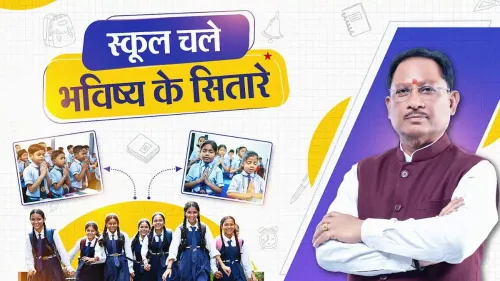
CM Sai Bets on Smart Classes and Vocational Ed for Chhattisgarh
Synopsis
Chhattisgarh Chief Minister Vishnu Deo Sai on October 26 outlined his government's dual push on smart classrooms and vocational education, framing today's children as the foundation of a prosperous state — in direct alignment with NEP 2020's skill-first mandate.
Key Takeaways
CM Vishnu Deo Sai on October 26, 2026 called children 'the foundation of tomorrow's prosperous and empowered Chhattisgarh.' The government is linking students to smart classrooms and vocational education as twin pillars of school modernisation.
The approach aligns with NEP 2020 , which mandated vocational education from Class 6 and promoted digital classroom infrastructure.
Chhattisgarh is a predominantly rural and tribal state where the gap between schooling and market-ready skills has historically been significant.
Upcoming state budget allocations and assembly-session data on school rollouts will be the key test of how far the vision has translated into delivery.
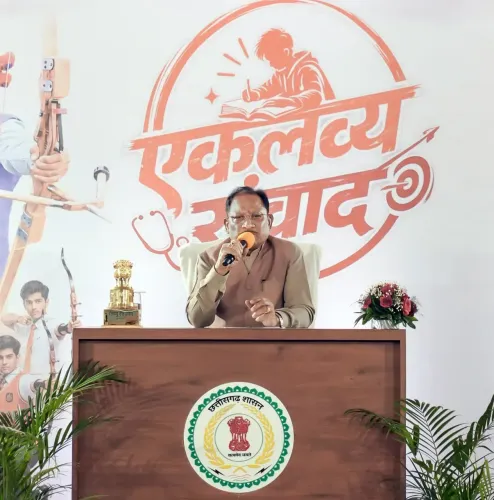
Today's confident, capable child is tomorrow's prosperous Chhattisgarh — that is the compact Chhattisgarh Chief Minister Vishnu Deo Sai laid out on Monday, October 26, 2026, in a post that frames education reform not as a welfare measure but as the state's core infrastructure investment.
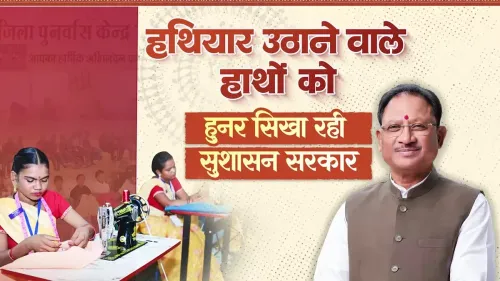
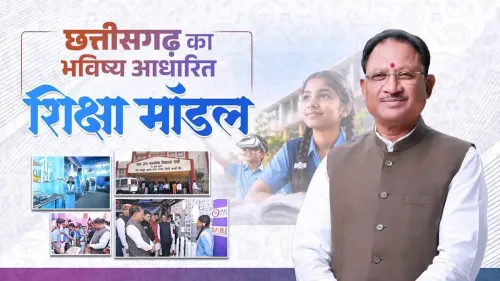
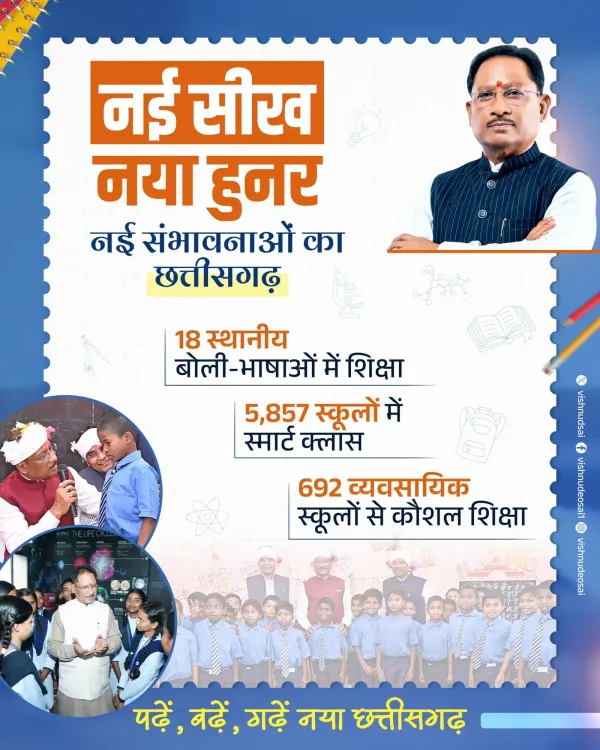
Writing in Hindi, CM Sai declared: 'Aaj ke saksham aur aatmavishwasi bachche hi kal ke samridh aur sashakt Chhattisgarh ki neenv hain' — 'Today's able and self-confident children are the very foundation of tomorrow's prosperous and empowered Chhattisgarh.' He pointed specifically to smart classrooms and vocational education as the twin levers his government is pulling to connect children with 'modern education, skills and new opportunities.'
From Smart Boards to Skill Labs: What the Push Actually Means
The twin emphasis on digital infrastructure and vocational training is not incidental — it maps directly onto the National Education Policy 2020 (NEP 2020), which mandated the introduction of vocational education from Class 6 onwards and pushed states to build out smart-classroom networks in government schools. Chhattisgarh, a predominantly rural and tribal state, has historically faced acute challenges in learning outcomes, making the pivot toward skill-linked schooling a pointed policy choice rather than a cosmetic one.
BJP-ruled states have broadly used school modernisation — smart boards, coding labs, and trade-linked curricula — as a visible marker of governance delivery since NEP 2020 came into force. For CM Sai, who took charge in December 2023 after the BJP's return to power in the state assembly elections, education has emerged as one of the clearest arenas in which to demonstrate a development dividend.
Chhattisgarh's Human-Capital Bet in a Tribal Heartland
The stakes are higher here than in more urbanised states. A significant share of Chhattisgarh's school-going population sits in remote districts where the gap between a government-school education and market-ready skills has historically been wide. Threading vocational modules — carpentry, electrical work, computing, agriculture-tech — through the school curriculum is the state's wager that employability can be seeded early, before dropout rates bite.
CM Sai framed the goal in aspirational terms: that every child should get 'a full opportunity to hone their talent, realise their dreams and play their role in the bright future of the state.' The language is deliberate — it positions the government as an enabler of individual potential, not merely a provider of infrastructure.
Analysts tracking the state will watch the upcoming assembly session's budget allocations for education closely, and specifically for rollout data on how many government schools have received functional smart-class setups and how many vocational training modules are actually running versus merely approved on paper. The vision is clearly articulated. The numbers will tell the fuller story.
Point of View
Not just policy text. For a state that is resource-rich but human-capital-lagged, the bet on vocational schooling carries real strategic logic. The sharper political question is whether delivery on the ground — functional smart boards, running trade labs — matches the aspirational language, and whether that gap closes before the next electoral cycle tests the claim.
NationPress
26 Oct 2026
Frequently Asked Questions
What did Chhattisgarh CM Vishnu Deo Sai say about education on October 26 2026?
CM Sai said that today's capable and self-confident children are the foundation of tomorrow's prosperous Chhattisgarh, and highlighted his government's push to connect students with smart classrooms, vocational education, and new skill opportunities.
What is vocational education in Chhattisgarh government schools?
Under the National Education Policy 2020, vocational education — covering trades like computing, electrical work, and agriculture-tech — is to be introduced from Class 6 in government schools, and Chhattisgarh has been aligning its school curriculum with this framework.
What are smart classrooms in Chhattisgarh schools?
Smart classrooms in Chhattisgarh government schools refer to digital infrastructure including smart boards and internet-enabled learning tools being rolled out to modernise teaching and improve learning outcomes, as part of the state's NEP 2020 implementation.
When did Vishnu Deo Sai become Chief Minister of Chhattisgarh?
Vishnu Deo Sai became Chief Minister of Chhattisgarh in December 2023 after the BJP won the state assembly elections.
How does NEP 2020 relate to Chhattisgarh's education push?
The National Education Policy 2020 mandated vocational education from Class 6 and promoted smart-classroom infrastructure across Indian states; Chhattisgarh's current education drive directly mirrors these NEP 2020 priorities.