CM Sai draws renewed resolve from Mann Ki Baat's 139th episode
Synopsis
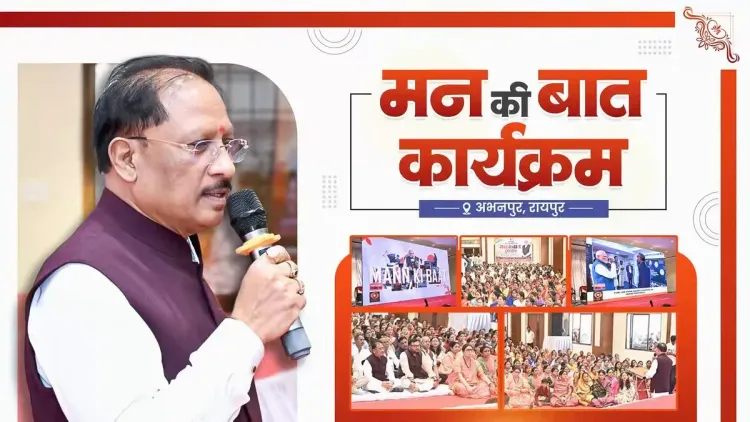
Chhattisgarh Chief Minister Vishnu Deo Sai said the 139th episode of PM Narendra Modi's Mann Ki Baat programme renewed his government's resolve to build a Viksit Chhattisgarh as a contribution to the broader Viksit Bharat vision.
Key Takeaways
CM Vishnu Deo Sai responded to the 139th episode of Mann Ki Baat broadcast on 25 October 2026 .
Mann Ki Baat was launched by PM Narendra Modi in October 2014 and has run uninterrupted since.
Sai highlighted that Chhattisgarh's tribal traditions and cultural innovations have received multiple mentions in the programme.
The Chief Minister reaffirmed the state's commitment to the Viksit Bharat 2047 vision through building a Viksit Chhattisgarh .
Chhattisgarh has a tribal population exceeding 30 per cent , giving national recognition of its culture particular significance.
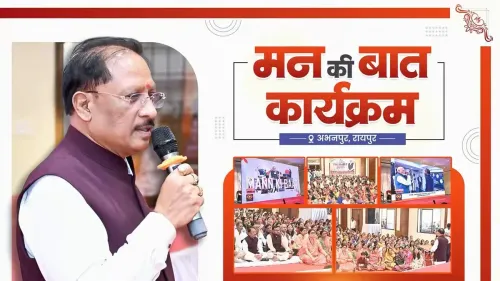
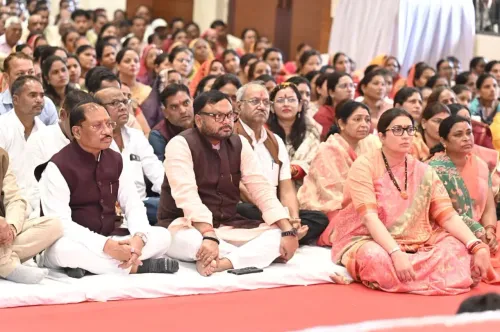
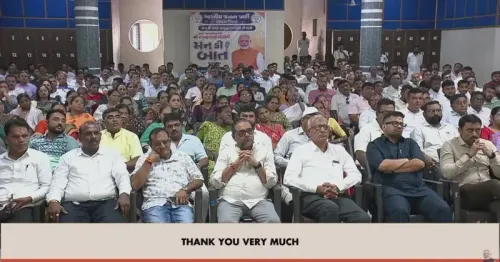
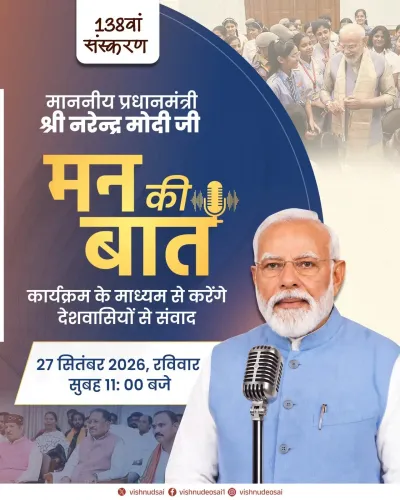
Every last Sunday of the month, a radio address resets the national conversation — and on Sunday, 25 October 2026, Chhattisgarh Chief Minister Vishnu Deo Sai made clear that the 139th episode of Mann Ki Baat landed with particular force for him and his state.
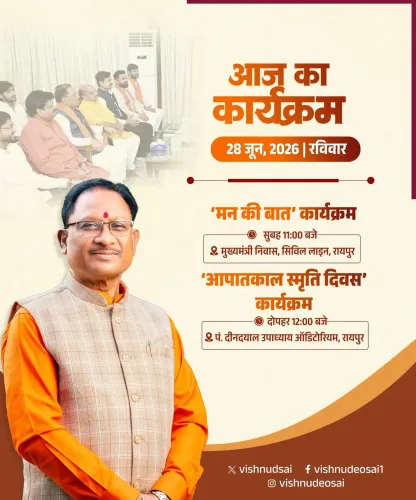
In a post on X, CM Sai wrote that Prime Minister Narendra Modi's Mann Ki Baat programme 'brings to the fore the people-power, innovation, and positive efforts of the country, inspiring all of us for nation-building.' He added that Chhattisgarh's 'rich culture, tribal traditions, and innovations' have received 'special mention' in the programme on multiple occasions — a point of pride for the state.
Twelve years of Mann Ki Baat, and what it means for Chhattisgarh
Launched in October 2014, Mann Ki Baat began as an experiment in direct outreach — the Prime Minister speaking to citizens, not at them, through citizen stories, grassroots innovations, and quiet acts of national service. 139 episodes later, it is one of the longest-running uninterrupted heads-of-government addresses in modern Indian democratic history.
For Chhattisgarh — a state where more than 30 per cent of the population belongs to scheduled tribes — mentions in the programme carry specific weight. They validate the state's distinct cultural identity on the national stage and reinforce the developmental narrative the BJP government in Raipur has been building since CM Sai took office.
Viksit Chhattisgarh as the state's lane toward Viksit Bharat
CM Sai framed the episode's impact in explicitly programmatic terms: 'Under the guidance of the Prime Minister, we are committed to realising the resolve of a Viksit Bharat (Developed India) through the construction of a Viksit Chhattisgarh (Developed Chhattisgarh).' The formulation is deliberate. Viksit Bharat — Prime Minister Modi's headline national vision for 2047 — asks each state to articulate its own development road map as a building block of the larger whole. Chhattisgarh's leadership has consistently adopted this federal framing.
The pattern is a familiar one: BJP-governed states use Mann Ki Baat episodes as a recurring alignment signal, tethering state-level governance messaging to the Prime Minister's own communication calendar. What makes today's post notable is the specificity — the Chief Minister citing the episode number, acknowledging the programme's energy as a 'new resolve' for public service, rather than a generic endorsement.
As Mann Ki Baat moves deeper into its second decade, the states that see themselves reflected in its stories are also the states most visibly racing to deliver the data points that might earn that next mention.
Point of View
Sai moves beyond routine praise into a soft accountability signal — 'we have been seen, and we will deliver.' The broader pattern suggests that for BJP-governed states, Mann Ki Baat has evolved from a radio programme into a recurring governance legitimacy marker. For Chhattisgarh specifically, with assembly elections still in recent memory and tribal welfare a politically sensitive axis, the emphasis on tribal culture and innovation is as strategic as it is sentimental.
NationPress
25 Oct 2026
Frequently Asked Questions
What is Mann Ki Baat and how many episodes have aired?
Mann Ki Baat is Prime Minister Narendra Modi's monthly radio address, launched in October 2014, in which he highlights citizen stories, grassroots innovations, and positive national initiatives. The 139th episode aired on 25 October 2026.
Why did CM Vishnu Deo Sai comment on Mann Ki Baat?
CM Sai said the 139th episode gave his government renewed energy for public service and noted that Chhattisgarh's tribal traditions and cultural innovations have received special mention in the programme multiple times.
What is Viksit Chhattisgarh and how does it relate to Viksit Bharat?
Viksit Chhattisgarh is the Chhattisgarh government's development road map framed as the state's contribution to PM Modi's Viksit Bharat vision — a national goal of becoming a developed nation by 2047.
How significant are tribal communities in Chhattisgarh?
Chhattisgarh has one of India's largest tribal populations, exceeding 30 per cent of the state's total population, making tribal welfare and cultural recognition a central political and policy concern.
Has Chhattisgarh been featured in Mann Ki Baat before?
According to CM Sai's post, Chhattisgarh's rich culture, tribal traditions, and innovations have received special mention in Mann Ki Baat on multiple occasions, though the specific episodes were not detailed.