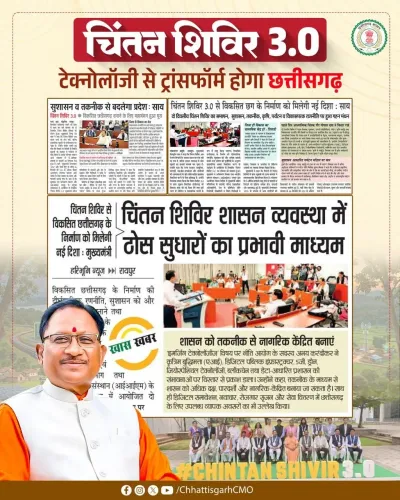
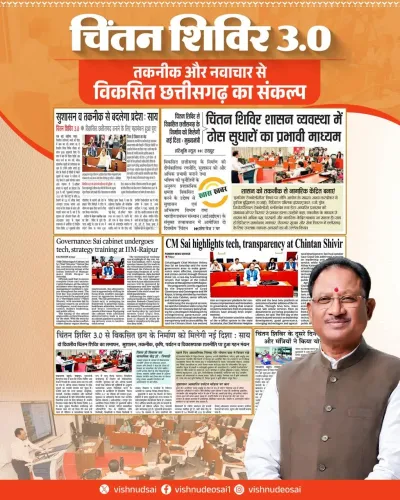
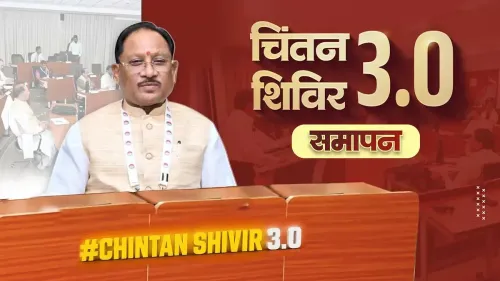
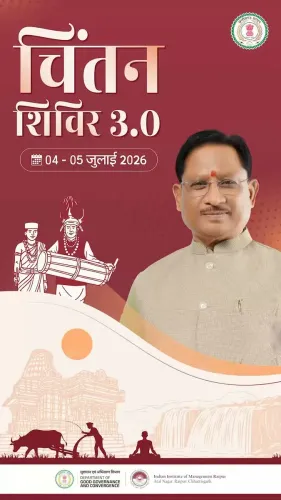
CM Sai Holds Chintan Shivir 3.0 to Shape Viksit Chhattisgarh
Synopsis
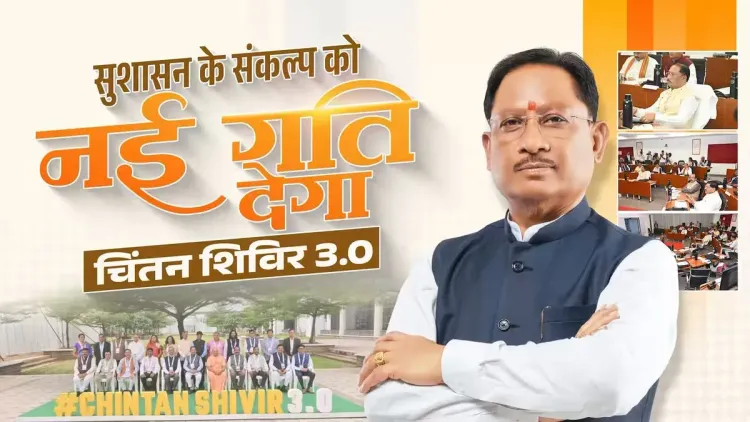
Chhattisgarh Chief Minister Vishnu Deo Sai on 6 July 2026 concluded Chintan Shivir 3.0, a multi-expert brainstorming conclave covering governance, agriculture, tourism, and emerging technology, aimed at building a developed Chhattisgarh aligned with the national Viksit Bharat 2047 vision.
Key Takeaways
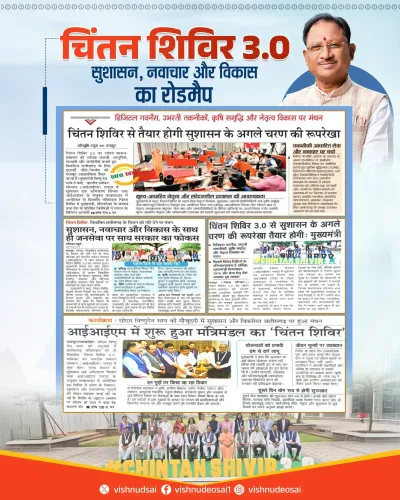
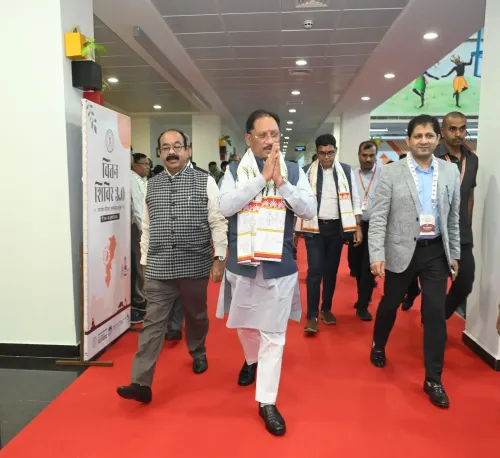
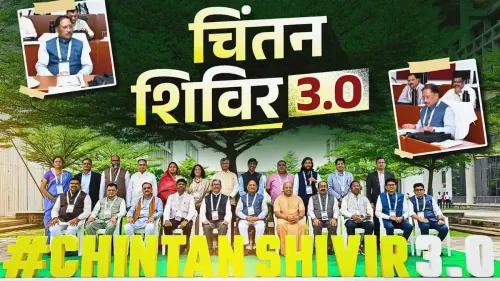
Chintan Shivir 3.0 was convened by CM Vishnu Deo Sai on 6 July 2026 as a structured policy brainstorming conclave for Chhattisgarh .
The session covered six thematic areas: good governance, agriculture, tourism, emerging technology, leadership development, and effective policy execution.
CM Sai stated the recommendations will make governance 'more effective, transparent, accountable, and people-centric.' The conclave is explicitly linked to the national Viksit Bharat 2047 framework, reflecting state-level alignment with central development goals.
The 'Chintan Shivir' format is part of a broader pattern among BJP -governed states of post-election governance recalibration sessions.
Concrete follow-up — including possible formal action plans or budget-level commitments — is the key indicator to watch.
Chhattisgarh Chief Minister Vishnu Deo Sai on Monday, 6 July 2026, announced the conclusion of Chintan Shivir 3.0, a state-level brainstorming conclave convened to deliberate on governance, agriculture, tourism, emerging technology, leadership development, and effective policy execution. The session, held with domain experts, is aimed at accelerating the state's progress in line with the national Viksit Bharat 2047 vision.
Context
Posting on X, CM Sai wrote: 'विकसित छत्तीसगढ़ का निर्माण दूरदर्शी सोच, प्रभावी नेतृत्व और निरंतर नवाचार से ही संभव है' ('Building a developed Chhattisgarh is possible only through visionary thinking, effective leadership, and continuous innovation'). He expressed confidence that the recommendations emerging from the conclave would make governance 'more effective, transparent, accountable, and people-centric.'
The Chief Minister added that the deliberations would 'give new momentum to building a developed Chhattisgarh in line with the resolve of Viksit Bharat 2047.' The post accompanied a video, suggesting a formal event setting for the shivir.
Policy Backdrop
The Viksit Bharat 2047 framework was articulated by the Government of India in 2023 as a long-term national development roadmap targeting a fully developed economy by the centenary of independence. States across the country have been encouraged to align their sectoral priorities — from agriculture to digital governance — with this overarching vision.
Several BJP-governed states have organised internal brainstorming conclaves since the 2023 assembly elections to recalibrate governance strategies. Chhattisgarh, which returned a BJP government in December 2023 under CM Sai, is following a similar post-election governance consolidation pattern. The 'Chintan Shivir' format — a structured policy retreat with subject-matter experts — has become a recurring instrument for state-level course corrections.
Stakeholders and Impact
Chhattisgarh's agricultural sector, which supports a large share of the state's predominantly tribal and rural population, was among the key themes of the conclave. Tourism and emerging technology were also on the agenda, reflecting an intent to diversify the state's economic base beyond its mineral wealth.
State administrators and district-level officials are the primary implementers of any recommendations that emerge. A more transparent and accountable administration, as envisioned by CM Sai, would directly affect service delivery for the state's roughly 3.3 crore residents. The inclusion of 'leadership development' as a theme signals attention to mid-level bureaucratic capacity alongside top-down policy design.
What's Next
The immediate question is whether the recommendations from Chintan Shivir 3.0 will be formalised into a public action plan or reflected in upcoming state budget allocations and legislative assembly sessions. Past editions of such conclaves in BJP-governed states have occasionally produced white papers or departmental directives, though timelines for implementation vary.
Observers will watch for concrete follow-through — particularly on agriculture and technology adoption — as a measure of whether the shivir translates into policy change or remains a consultative exercise. The alignment with Viksit Bharat 2047 also means the Centre's periodic review mechanisms could serve as an additional accountability checkpoint for the state government.
Point of View
Mirroring a BJP-wide playbook visible across multiple state governments since 2023. By publicly anchoring the conclave to Viksit Bharat 2047, the Chief Minister is simultaneously demonstrating ideological alignment with the Centre and creating a performance benchmark against which his administration will eventually be measured. The breadth of themes — from agriculture to emerging technology — suggests an ambition to present Chhattisgarh as a comprehensive reform story rather than a single-sector narrative. Whether the shivir produces durable policy change or functions primarily as a communication exercise will depend on the specificity and timelines of any action plan that follows.
NationPress
7 Jul 2026
Frequently Asked Questions
What is Chintan Shivir 3.0 in Chhattisgarh?
Chintan Shivir 3.0 is a state-level brainstorming conclave organised by the Chhattisgarh government under Chief Minister Vishnu Deo Sai, where domain experts deliberated on governance, agriculture, tourism, emerging technology, leadership development, and policy execution to shape the state's development roadmap.
What is Viksit Bharat 2047?
Viksit Bharat 2047 is a national development vision articulated by the Government of India in 2023, aiming to transform India into a fully developed economy by the centenary of independence in 2047. State governments, including Chhattisgarh, are aligning their policies with this framework.
Who is Vishnu Deo Sai?
Vishnu Deo Sai is a BJP leader who has served as the Chief Minister of Chhattisgarh since December 2023, following the party's victory in the state assembly elections.
What topics were discussed at Chintan Shivir 3.0?
According to CM Sai's post, the conclave covered good governance, agriculture, tourism, emerging technology, leadership development, and effective policy implementation, with inputs from subject-matter experts.
What happens after Chintan Shivir 3.0?
The key next step is whether the recommendations are formalised into a public action plan or translated into allocations in the state budget and decisions in the legislative assembly. Observers will watch for concrete departmental directives or white papers as a measure of follow-through.