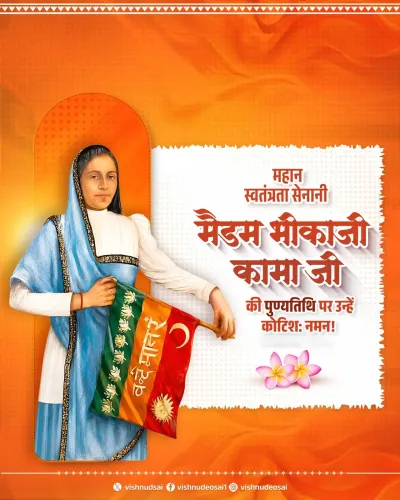
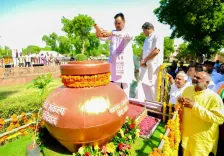
CM Vishnu Deo Sai pays tribute to Madam Bhikaji Cama on her birth anniversary
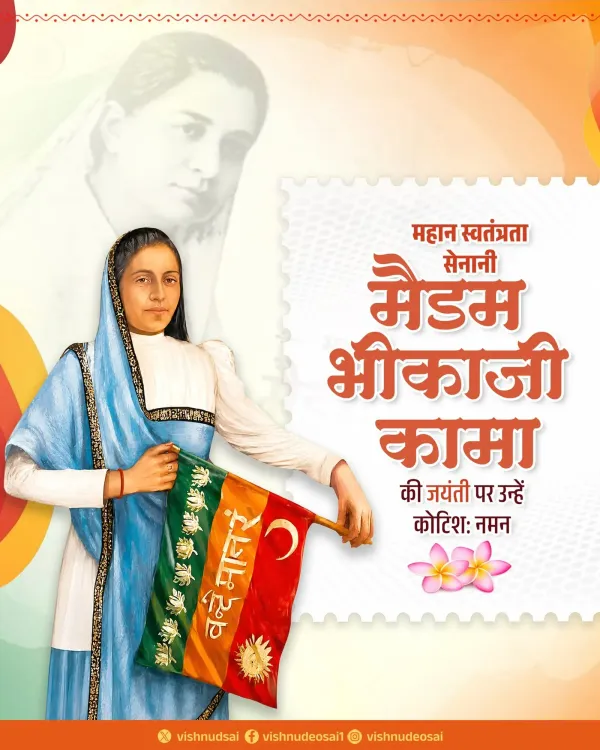
Synopsis
Chhattisgarh Chief Minister Vishnu Deo Sai honoured Madam Bhikaji Cama on her birth anniversary, calling her life an inspiring saga of courage, sacrifice, and nationalism. Cama famously unfurled an Indian flag at the 1907 Stuttgart congress while living in exile in Europe.
Key Takeaways
CM Vishnu Deo Sai paid tribute to Madam Bhikaji Cama on her birth anniversary on 24 September 2026 .
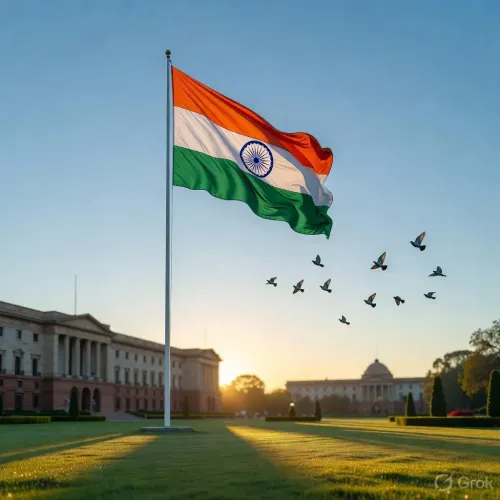
Cama is celebrated for unfurling a version of the Indian national flag at the 1907 International Socialist Congress in Stuttgart .
She spent decades in exile in Europe , publishing revolutionary literature and advocating for Indian independence internationally.
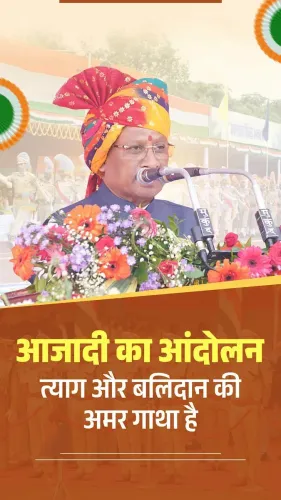
CM Sai described her life as an 'inspiring saga of courage, sacrifice and love for the nation.' He stated her struggle and dedication 'will continue to inspire generations towards national service.' Annual tributes to independence-era figures by Indian political leaders are a well-established tradition across party lines.
A woman who carried India's fight for freedom to the world stage — Madam Bhikaji Cama unfurled a version of the Indian national flag on foreign soil over a century ago, long before the nation was free. On her birth anniversary, Chhattisgarh Chief Minister Vishnu Deo Sai honoured her legacy on Thursday, 24 September 2026, saluting her courage, sacrifice, and unbreakable devotion to the motherland.
In his post, CM Sai wrote: 'माँ भारती की स्वतंत्रता ही जिनके जीवन का ध्येय रही' — 'the freedom of Mother India was the sole purpose of whose life' — describing Cama's journey as 'an inspiring saga of courage, sacrifice and love for the nation.' He added that her struggle and dedication 'will continue to inspire generations towards national service.'
The flag that shocked a continent
Madam Bhikaji Rustom Cama remains one of the most remarkable figures of India's independence movement. Living in self-imposed exile in Europe, she carried the cause of Indian freedom to international audiences at a time when most of the world barely registered the subcontinent's colonial reality. At the 1907 International Socialist Congress in Stuttgart, Germany, she unfurled a version of the Indian national flag — a moment of extraordinary audacity. She declared, in front of delegates from across the globe, that India demanded freedom.
Decades in exile, a lifetime of defiance
Bhikaji Cama spent decades abroad — primarily in Paris and London — running revolutionary publications, funding nationalist activities, and rallying international opinion behind India's cause. She was barred from returning home by British colonial authorities for years. When she finally returned to India, it was in her final years, her health broken but her conviction intact. She died in 1936, nine years before the independence she spent her life fighting for.
India's political calendar regularly pauses on such anniversaries to reconnect citizens with the figures who made the republic possible. Cama's story resonates because it crossed borders — proof that the demand for Indian self-determination was never purely a domestic conversation, and that its memory belongs to every generation that follows.
Point of View
But Madam Bhikaji Cama's legacy carries a distinctive international dimension — she took India's freedom struggle beyond its borders at a time when colonial rule seemed immovable. For BJP leaders like CM Sai, honouring figures like Cama reinforces a broader narrative of pan-Indian patriotism that transcends regional identity. The gesture also subtly underscores the effort to claim a wide sweep of the independence movement's legacy. The real question is whether commemorations like this translate into deeper public education about figures who remain less widely known than the front-rank icons.
NationPress
24 Sept 2026
Frequently Asked Questions
Who was Madam Bhikaji Cama?
Madam Bhikaji Cama was an Indian independence activist and revolutionary who lived in exile in Europe. She is best remembered for unfurling a version of the Indian national flag at the 1907 International Socialist Congress in Stuttgart, Germany.
When is Madam Bhikaji Cama's birth anniversary?
Madam Bhikaji Cama's birth anniversary falls on 24 September and is observed annually across India with tributes from political leaders and public figures.
What did Vishnu Deo Sai say about Bhikaji Cama?
Chhattisgarh Chief Minister Vishnu Deo Sai described Cama's life as 'an inspiring saga of courage, sacrifice and love for the nation,' and said her struggle and dedication would continue to inspire generations towards national service.
What is Madam Bhikaji Cama famous for?
She is most famous for unfurling a version of the Indian national flag at the 1907 International Socialist Congress in Stuttgart while in exile, making an international case for Indian independence decades before it was achieved.
Why do Indian leaders pay tribute to freedom fighters on social media?
Indian political leaders routinely use birth and death anniversaries of independence-era figures to reaffirm themes of patriotism, sacrifice, and national inspiration — connecting the freedom struggle's legacy to contemporary governance and public identity.