CM Sai Honours Fallen Police at Chhattisgarh Police Smriti Diwas
Synopsis
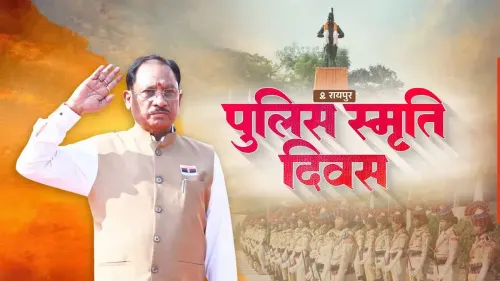
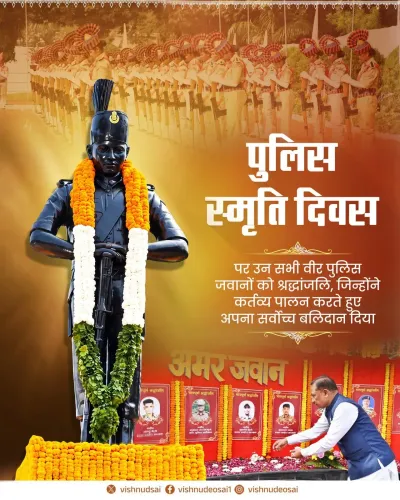
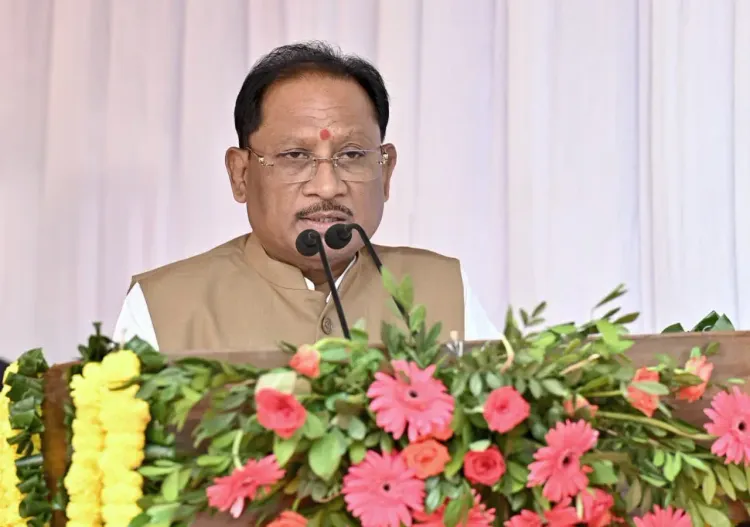
Chief Minister Vishnu Deo Sai observed Police Smriti Diwas on 21 October 2026 at the Fourth Battalion, Chhattisgarh Armed Force, Mana, Raipur, saluting fallen jawans and honouring their families while asserting that security gains in Bastar are paving the way for development.
Key Takeaways
CM Vishnu Deo Sai paid tributes to martyred personnel at the Police Smriti Diwas parade at Mana, Raipur on 21 October 2026 .
The event was held at the Fourth Battalion, Chhattisgarh Armed Force headquarters.
Families of fallen jawans were formally felicitated at the ceremony.
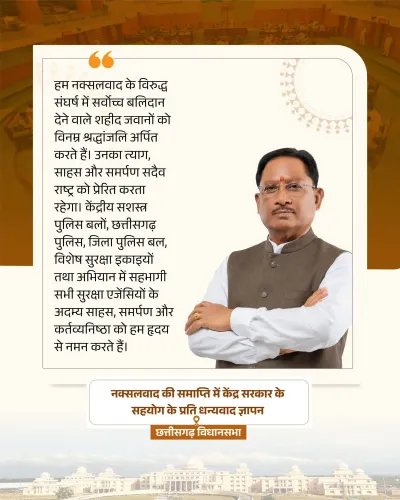
CM Sai credited the 'decisive success' against Naxalism to the courage and sacrifice of police and security forces.
He stated that Bastar is transitioning from an atmosphere of fear and violence to one of peace, security, and development.
Police Smriti Diwas is observed annually on 21 October to honour police personnel killed in the line of duty.
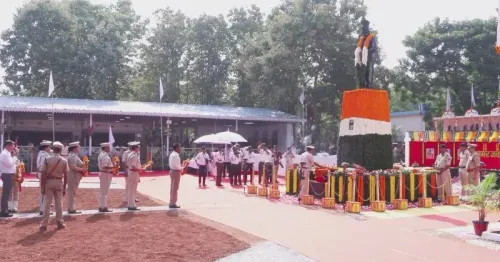
On a morning heavy with remembrance, Chief Minister Vishnu Deo Sai stood before the ranks at the Fourth Battalion, Chhattisgarh Armed Force, Mana, Raipur, and saluted the soldiers who did not come home. The occasion was Police Smriti Diwas, observed on Wednesday, 21 October 2026, and at its centre was a solemn parade — and a government's public reckoning with the cost of its security campaign.
A salute at Mana, and families called to the front
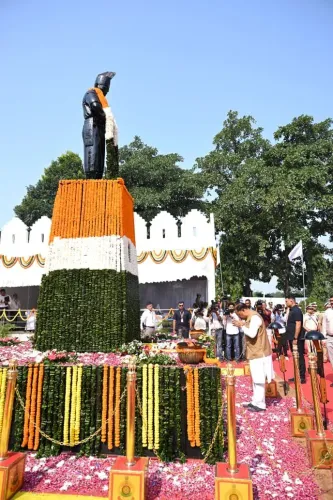
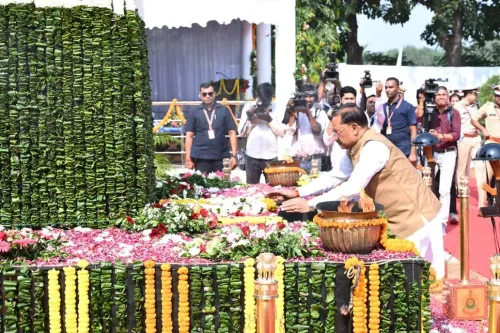
The Chief Minister's Office confirmed that CM Sai paid floral tributes to martyred jawans during the Police Smriti Diwas parade held at the Fourth Battalion headquarters in Mana. He also felicitated the families of fallen personnel — a gesture the state has maintained for years to acknowledge that sacrifice does not end at the graveside; it is carried forward by those left behind.
Addressing those gathered, CM Sai said — 'नक्सलवाद के विरुद्ध मिली निर्णायक सफलता हमारे वीर पुलिस एवं सुरक्षा बलों के अदम्य साहस, शौर्य और सर्वोच्च बलिदान का परिणाम है' — ['The decisive success achieved against Naxalism is the result of the indomitable courage, valour, and supreme sacrifice of our brave police and security forces.']
Bastar's slow turn from fear to footprint
Bastar, the southern Chhattisgarh division that for decades served as the heartland of left-wing extremism in India, sat at the symbolic centre of the address. The Chief Minister declared that in place of fear and violence, an atmosphere of peace, security, and trust is now taking shape there — and that the light of development is reaching even the most remote corners.
These are claims shaped by a longer security arc. Since the 2010s, successive central and state governments have paired intensified anti-Naxal operations with pushes to extend roads, schools, and health infrastructure into areas once considered ungovernable. The Chhattisgarh Armed Force's Fourth Battalion has been a frontline unit in those drives, operating in terrain that cost the state — and the nation — a long and painful roll of names.
CM Sai, who took office in December 2023 on a BJP mandate that foregrounded both tribal welfare and security consolidation, has consistently framed operational gains in Bastar as a foundation for development — not an end in themselves.
Police Smriti Diwas and the annual rite of reckoning
Police Smriti Diwas — observed nationally on 21 October — traces its origin to 1959, when Indian police personnel were killed in an ambush at Hot Springs, Ladakh. Chhattisgarh, with its disproportionately heavy toll from Naxal violence, has invested the day with particular weight. State governments have held annual tributes at least since the early 2000s, ensuring the ceremonial record of sacrifice is renewed each year regardless of which party holds power.
The families honoured on Wednesday carry that weight every day. Bringing them to the parade ground — publicly, on record — is the state's acknowledgement that a policy conversation about Naxalism is also, always, a human one.
As newly secured pockets of Bastar await the infrastructure and welfare schemes that CM Sai's government has promised, the names on Chhattisgarh's martyrs' rolls stand as both a debt and a direction.
Point of View
The CM is framing the state's anti-Naxal campaign not merely as law enforcement but as a precondition for welfare delivery — a narrative the central government has also championed in left-wing extremism-affected states for over a decade. The public felicitation of martyr families adds accountability optics to the tribute, creating a visible social contract. Whether that contract is fulfilled will depend on the pace at which promised schemes actually reach newly secured villages.
NationPress
21 Oct 2026
Frequently Asked Questions
What is Police Smriti Diwas and why is it observed?
Police Smriti Diwas is observed every year on 21 October to honour police personnel who died in the line of duty. It dates to 1959, when Indian police officers were killed in an ambush in Ladakh.
Where was the Police Smriti Diwas 2026 ceremony held in Chhattisgarh?
The ceremony was held at the Fourth Battalion, Chhattisgarh Armed Force, Mana, Raipur , where a formal parade and tribute were organised.
What did CM Vishnu Deo Sai say at the Police Smriti Diwas event?
CM Sai said the decisive success against Naxalism is the result of the indomitable courage, valour, and supreme sacrifice of police and security forces, and that Bastar is now seeing peace and development replace fear and violence.
What is the security situation in Bastar, Chhattisgarh?
Bastar in southern Chhattisgarh has long been the epicentre of left-wing Naxalite-Maoist insurgency. The state and central governments have conducted intensified security operations since the 2010s, with the government asserting improved ground conditions in recent years.
Who is Vishnu Deo Sai and when did he become Chief Minister of Chhattisgarh?
Vishnu Deo Sai is the BJP Chief Minister of Chhattisgarh, having assumed office in December 2023 . His tenure has focused on security consolidation and tribal development, particularly in the Bastar region.