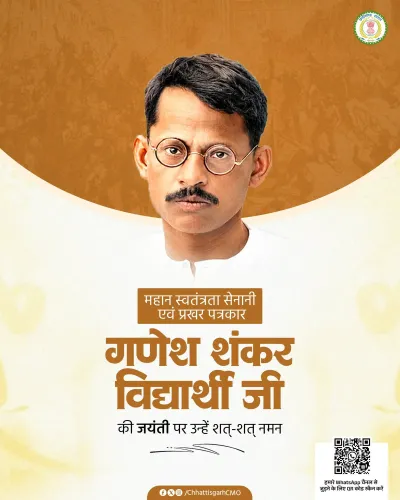
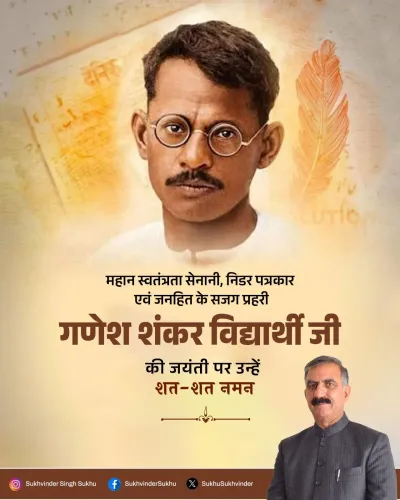
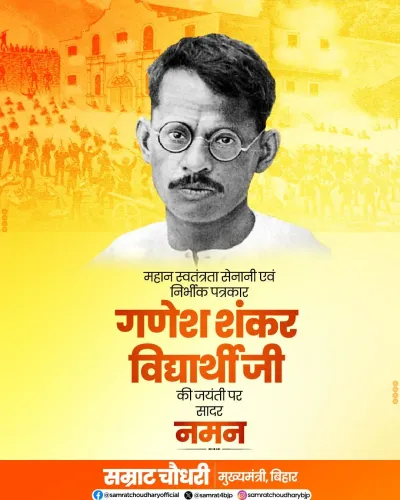
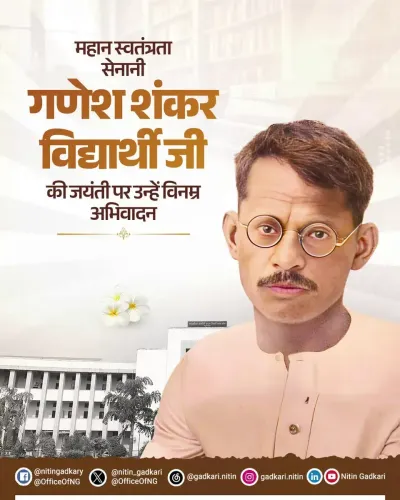
CM Vishnu Deo Sai pays tribute to Ganesh Shankar Vidyarthi
Synopsis
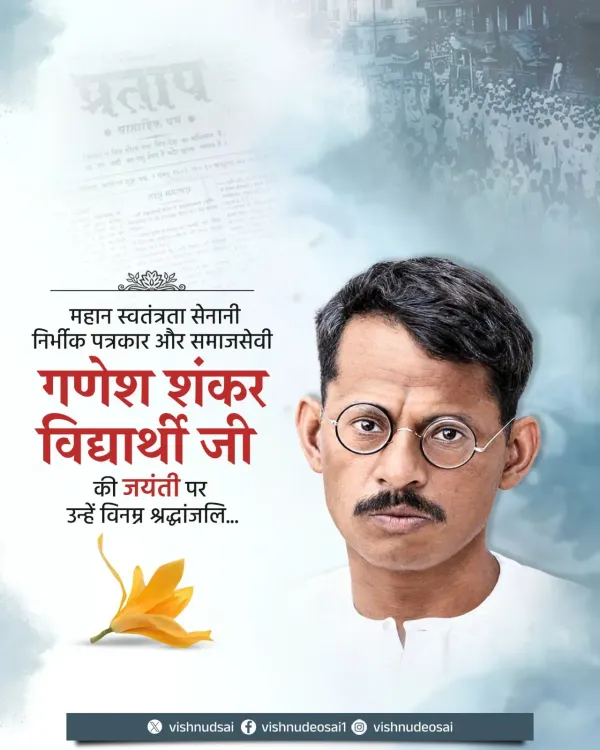
Chhattisgarh CM Vishnu Deo Sai honoured Ganesh Shankar Vidyarthi — editor of nationalist paper Pratap, freedom fighter, and 1931 Kanpur riots martyr — on his birth anniversary, calling his fearless journalism a timeless inspiration for truth and public service.
Key Takeaways
Chhattisgarh Chief Minister Vishnu Deo Sai posted a tribute on 26 October 2026 marking the birth anniversary of Ganesh Shankar Vidyarthi .
Vidyarthi was the editor of the nationalist Hindi newspaper Pratap , a leading voice of the Indian independence movement.
He was killed in the Kanpur communal riots of 1931 while trying to protect riot victims — a death that cemented his martyr status.
CM Sai described Vidyarthi's writing as transforming journalism into 'a powerful medium of public consciousness and national service.' Annual tributes to Vidyarthi are a recurring observance among Indian political leaders across party lines.
A fearless pen, a martyr's death, and a legacy that still defines what journalism at its finest can be — Chhattisgarh Chief Minister Vishnu Deo Sai on Monday, 26 October 2026 paid tribute to Ganesh Shankar Vidyarthi, the pioneering journalist and freedom fighter, on his birth anniversary.
Paying his respects in Hindi, CM Sai wrote: 'भारतीय पत्रकारिता के पुरोधा एवं महान स्वतंत्रता सेनानी गणेश शंकर विद्यार्थी जी की जयंती पर विनम्र श्रद्धांजलि।' — 'Humble tribute on the birth anniversary of Ganesh Shankar Vidyarthi, a pioneer of Indian journalism and a great freedom fighter.' He added that Vidyarthi's fearless writing transformed journalism into a powerful medium of public consciousness and national service, and that his ideas would continue to inspire generations to stand on the side of truth, justice, and the public good.
The journalist who made 'Pratap' a weapon of conscience
Ganesh Shankar Vidyarthi edited the nationalist newspaper Pratap, which became one of the most influential Hindi-language voices of the independence movement. At a time when the colonial press was tightly controlled, Pratap fearlessly championed social reform, reported on the suffering of the poor, and gave voice to dissent that the establishment would rather have silenced. Vidyarthi's journalism was inseparable from his activism — he saw the pen and the movement as one.
A martyr in the 1931 Kanpur riots
Vidyarthi's story did not end at a desk. He was killed in the communal riots that tore through Kanpur in 1931, while trying to protect victims caught in the violence. The manner of his death — a journalist dying in defence of ordinary people — became the defining image of his legacy, cementing his place not just in press history but in the broader narrative of India's freedom struggle.
Why leaders keep returning to Vidyarthi
Across parties and decades, Indian political figures have regularly invoked Vidyarthi on his birth anniversary, and the pattern is not accidental. At a moment when questions about press freedom and editorial courage surface repeatedly in public debate, invoking a journalist who literally died for those values carries particular resonance. CM Sai's tribute, brief as it is, taps into that longer tradition — reminding journalists and citizens alike that the standard was set a century ago, and it was set high.
Vidyarthi's life is a standing challenge to every generation of journalists: the question is not whether fearless journalism is possible, but whether there is the will to pursue it.
Point of View
Where invoking independence-era journalist-activists signals alignment with values of fearless public service. Vidyarthi's legacy is particularly resonant because it fuses press freedom, social reform, and martyrdom — a combination that transcends partisan lines. In a media environment where editorial courage is frequently debated, holding up Vidyarthi's standard is an implicit argument about what journalism should aspire to. Whether such commemorations translate into concrete press-freedom policy is the question that gives these annual tributes their political edge.
NationPress
26 Oct 2026
Frequently Asked Questions
Who was Ganesh Shankar Vidyarthi?
Ganesh Shankar Vidyarthi was an Indian journalist and freedom fighter who edited the nationalist Hindi newspaper Pratap . He used his journalism to advocate for truth, social reform, and independence from colonial rule, and was killed during the Kanpur communal riots of 1931 while protecting riot victims.
How did Ganesh Shankar Vidyarthi die?
Vidyarthi was killed during the communal riots that erupted in Kanpur in 1931 . He died while trying to shield victims caught in the violence, an act that made him one of the most revered martyrs of the Indian independence movement.
What was the newspaper Pratap?
Pratap was a nationalist Hindi-language newspaper edited by Ganesh Shankar Vidyarthi. It became one of the most influential press voices of the Indian freedom movement, known for fearless reporting on colonial injustice and social reform.
Why did Vishnu Deo Sai pay tribute to Ganesh Shankar Vidyarthi?
Chhattisgarh Chief Minister Vishnu Deo Sai paid tribute on Vidyarthi's birth anniversary, describing him as a pioneer of Indian journalism whose fearless writing made journalism a vehicle of public consciousness and national service.
When is Ganesh Shankar Vidyarthi Jayanti observed?
Ganesh Shankar Vidyarthi Jayanti is observed annually on his birth anniversary. Indian political leaders, media organisations, and state governments mark the occasion with tributes recognising his contributions to journalism and the independence movement.