CM Sai Hosts Workshop on Digital Justice Under New Criminal Laws
Synopsis
Chhattisgarh Chief Minister Vishnu Deo Sai announced a state-level workshop on strengthening digital justice under India's three new criminal laws — the Bharatiya Nyaya Sanhita, Bharatiya Nagarik Suraksha Sanhita, and the new Evidence Act — which replaced colonial-era codes from 1 July 2024.
Key Takeaways
Chhattisgarh held a state-level workshop focused on implementing India's new criminal laws with a digital-justice lens.
Bharatiya Nyaya Sanhita and Bharatiya Nagarik Suraksha Sanhita replaced the IPC and CrPC respectively, effective 1 July 2024 .
The new laws mandate electronic FIRs, video-recorded statements, and structured digital evidence handling.
States have been running capacity-building programmes since mid-2024 to train police, prosecutors, and judges.
CM Vishnu Deo Sai publicly flagged the workshop, signalling it as a governance priority for the state administration.
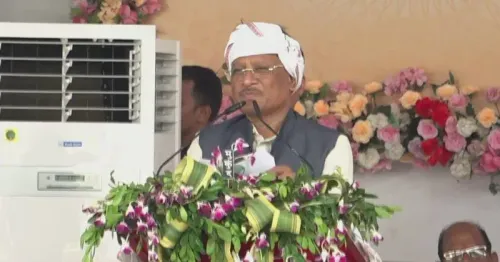
A state-level workshop in Chhattisgarh is putting the spotlight on one of India's most sweeping legal overhauls — and Chief Minister Vishnu Deo Sai is making it a governance priority.
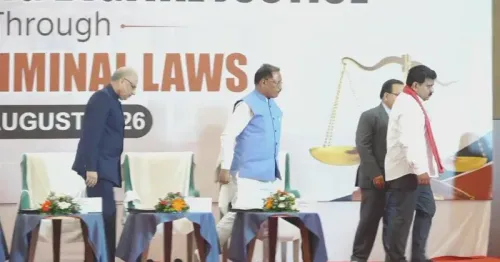
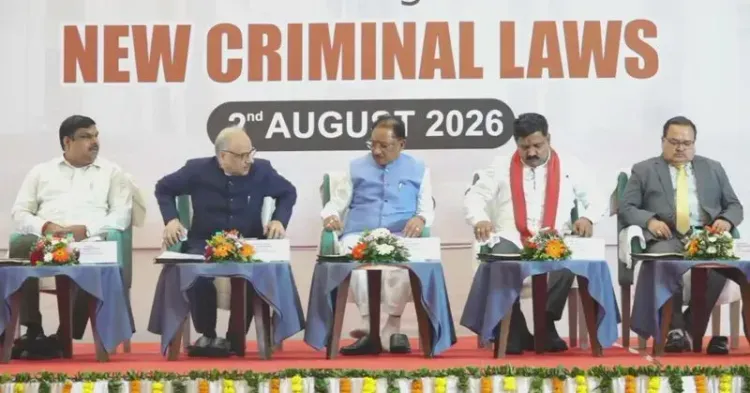
The BJP leader and Chief Minister of Chhattisgarh shared news of the 'State Level Workshop Strengthening Digital Justice Through New Criminal Laws' on Sunday, 2 August 2026, signalling the state's active push to embed the new legal framework into day-to-day justice delivery.
Three Laws, One Seismic Shift
The backdrop is substantial. In December 2023, Parliament enacted three landmark laws — the Bharatiya Nyaya Sanhita (replacing the Indian Penal Code of 1860), the Bharatiya Nagarik Suraksha Sanhita (replacing the Code of Criminal Procedure), and a revamped Evidence Act — all of which came into force nationwide on 1 July 2024. The changes are not cosmetic: electronic FIRs, video-recorded statements, and digital evidence handling are now baked into procedure, not optional add-ons. For a state like Chhattisgarh, with its mix of urban centres and remote tribal districts, making that transition work on the ground is a real operational challenge.Why Capacity-Building Workshops Matter Now
Since mid-2024, states across India have been running training programmes to bring police personnel, prosecutors, and judicial officers up to speed. The new laws demand more than awareness — they require infrastructure: servers for electronic FIRs, devices for video recording, and trained hands at every link in the chain. A workshop pitched at the state level, with the Chief Minister's office signalling it publicly, carries weight beyond routine training. It tells district administrations this is not optional. The Chhattisgarh workshop is squarely aimed at that gap — translating legislative intent into courtroom and police-station reality. How quickly Chhattisgarh builds the IT backbone to match the legal mandate will be the real test of whether 'digital justice' moves from slogan to system.Point of View
Publicly championing digital justice delivery also serves a political purpose — demonstrating administrative momentum under CM Sai, who took office in December 2023. The deeper test is infrastructure: electronic FIR systems and video-recording capacity remain uneven across Indian states, and training without hardware is hollow. If Chhattisgarh can pair capacity-building with concrete IT upgrades, it could become a reference model for other BJP-governed states navigating the same transition.
NationPress
2 Aug 2026
Frequently Asked Questions
What are the new criminal laws India introduced?
India enacted three new criminal laws in December 2023 — the Bharatiya Nyaya Sanhita, Bharatiya Nagarik Suraksha Sanhita, and Bharatiya Sakshya Adhiniyam — replacing the IPC, CrPC, and Indian Evidence Act respectively. They came into force on 1 July 2024.
What is the Chhattisgarh digital justice workshop about?
The state-level workshop, flagged by CM Vishnu Deo Sai, focuses on strengthening digital justice delivery under India's new criminal laws, including training for electronic FIRs, digital evidence handling, and video-recorded statements.
Who is Vishnu Deo Sai?
Vishnu Deo Sai is the Chief Minister of Chhattisgarh and a senior BJP leader who assumed office in December 2023 after the party's victory in the state assembly elections.
What changed under the Bharatiya Nagarik Suraksha Sanhita?
The Bharatiya Nagarik Suraksha Sanhita introduced mandatory timelines for investigations, provisions for electronic FIRs, video recording of statements, and digital summons, replacing the older Code of Criminal Procedure.
Why are states holding training workshops on new criminal laws?
The new laws introduced significant procedural changes that require police, prosecutors, and judges to learn new digital processes. States have been organising capacity-building workshops since mid-2024 to ensure smooth implementation on the ground.