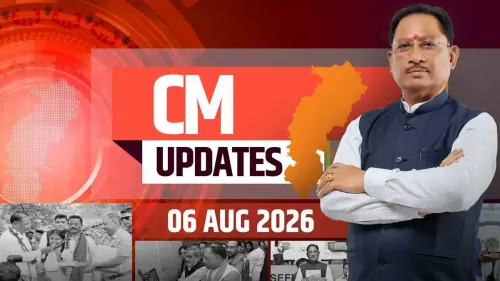
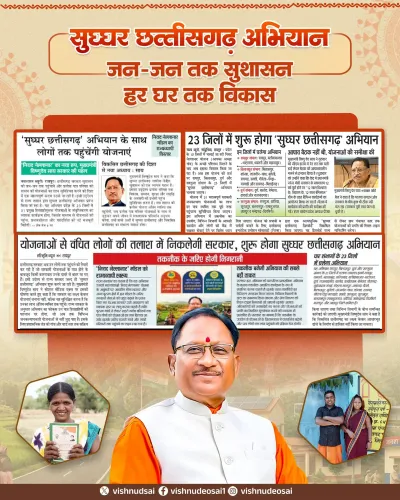
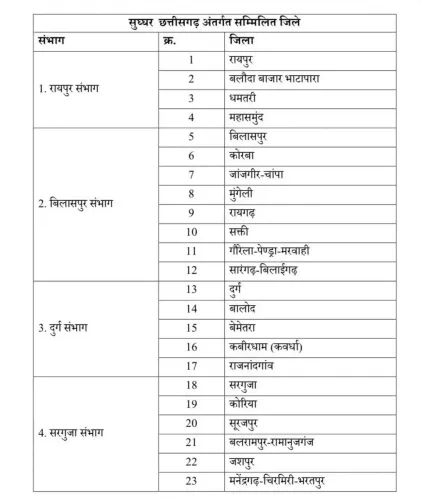
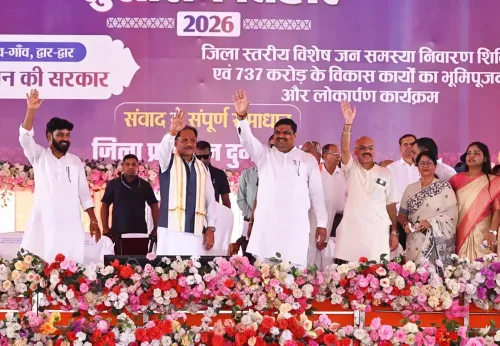
CM Sai Launches Seva Samvad Yatra Across 144 Dharsiwa Villages
Synopsis
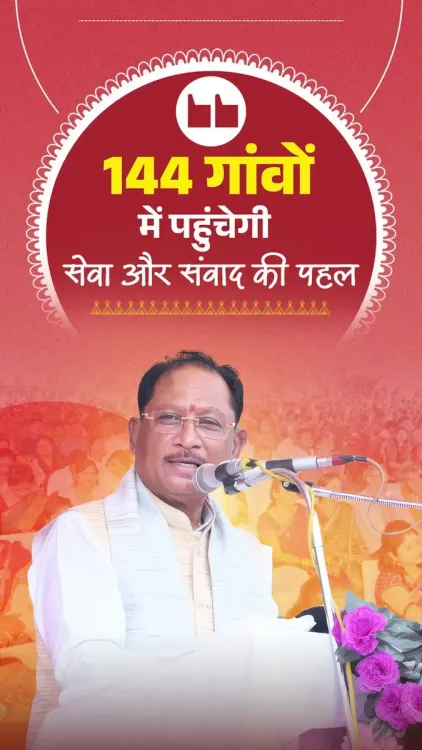
Chhattisgarh Chief Minister Vishnu Deo Sai has launched the Seva Samvad Yatra to reach all 144 villages in Dharsiwa assembly constituency, holding direct conversations with rural residents about central and state welfare scheme provisions, eligibility and benefits under the BJP's 'double engine' government model.
Key Takeaways
Seva Samvad Yatra will cover all 144 villages in the Dharsiwa assembly constituency , Raipur district, Chhattisgarh.
The drive aims to inform rural residents directly about welfare scheme provisions, eligibility criteria, and benefits .
CM Vishnu Deo Sai framed the yatra under the BJP's 'double engine sarkar' model, linking state and central welfare delivery.
The BJP government in Chhattisgarh has been in power since December 2023 , with aligned central government support.
Constituency-level yatras of this format have been used by BJP in multiple states to convert welfare announcements into grassroots enrolment.
Extension of the yatra to other Chhattisgarh constituencies remains a key development to watch.
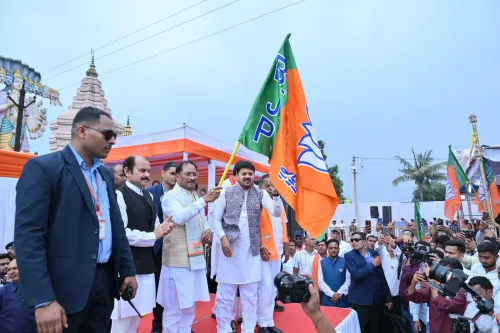
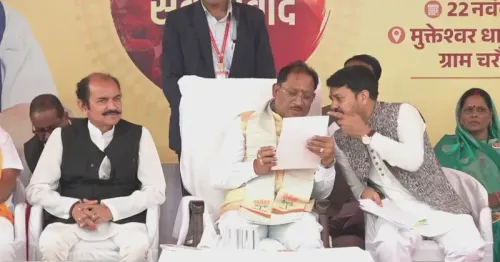
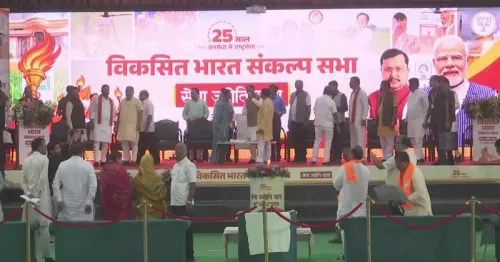
A grassroots outreach drive is now threading through every one of Dharsiwa assembly constituency's 144 villages — and Chhattisgarh Chief Minister Vishnu Deo Sai wants no eligible beneficiary left uninformed. On Sunday, 22 November 2026, the Chief Minister announced that the Seva Samvad Yatra (Welfare Dialogue Journey) would carry the state and central government's welfare schemes directly to rural doorsteps across the constituency in Raipur district.
What the Yatra promises on the ground
The core pitch is straightforward: face-to-face conversations with villagers about scheme provisions, eligibility criteria, and the specific benefits they can claim. CM Sai framed it as the 'double engine sarkar' — the BJP's shorthand for aligned BJP governments at both the state and central levels — delivering not just policy on paper but awareness in practice. Village after village, the yatra's teams are tasked with closing the gap between a government announcement and a citizen who actually receives the benefit.
Dharsiwa's 144 villages: why local saturation matters
Dharsiwa is an assembly segment within Raipur district, Chhattisgarh's administrative heartland. Reaching all 144 villages in a single structured campaign signals an intent at total saturation rather than a selective urban-fringe outreach. Rural welfare programmes in India consistently report an implementation gap — schemes exist, funds are allocated, but awareness and enrolment lag. The Seva Samvad Yatra is designed to attack precisely that gap at the constituency level.
BJP's yatra model: a tested playbook, now local
Since the BJP formed Chhattisgarh's state government in December 2023 under CM Sai, the administration has aligned state schemes with central programmes under the 'double engine' framework. Constituency-level yatras of this kind are a well-worn BJP mobilisation tool in states where it holds both the assembly and central alignment — deployed in Madhya Pradesh, Uttar Pradesh, and Rajasthan as well. The logic is consistent: make a named official or party worker the human face of a scheme's paperwork, so a farmer or a beneficiary in a remote village can ask a live person 'am I eligible?'
What to watch: whether the Seva Samvad Yatra format is extended to other Chhattisgarh constituencies once the Dharsiwa rollout concludes — and whether enrolment or saturation numbers from this drive are made public.
Chhattisgarh's villages now have a government caravan knocking on 144 doors. The real test is whether that knock turns into a benefit delivered.
Point of View
Whose government is still consolidating its post-2023 mandate in Chhattisgarh, saturating a 144-village constituency with scheme awareness is as much a political reinforcement exercise as an administrative one. If the Dharsiwa model produces measurable uptake data, it will almost certainly be replicated across the state's other 89 assembly constituencies. The yatra format also quietly positions local BJP workers as welfare delivery agents — a proven strategy for deepening party presence in rural Chhattisgarh ahead of future electoral cycles.
NationPress
22 Nov 2026
Frequently Asked Questions
What is the Seva Samvad Yatra in Chhattisgarh?
The Seva Samvad Yatra is a grassroots outreach programme announced by Chhattisgarh CM Vishnu Deo Sai to visit all 144 villages in the Dharsiwa assembly constituency and directly inform residents about government welfare scheme provisions, eligibility and benefits.
Which constituency does the Seva Samvad Yatra cover?
The yatra covers the Dharsiwa assembly constituency in Raipur district, Chhattisgarh, encompassing all 144 villages within it.
What is the 'double engine sarkar' CM Sai refers to?
The 'double engine sarkar' is the BJP's term for states where both the state government and the central government are BJP-led, implying coordinated and faster delivery of welfare schemes at both levels.
When did Vishnu Deo Sai become Chief Minister of Chhattisgarh?
Vishnu Deo Sai was sworn in as Chief Minister of Chhattisgarh in December 2023 after the BJP won the state assembly elections.
Will the Seva Samvad Yatra be extended to other Chhattisgarh constituencies?
CM Sai has not officially announced an extension beyond Dharsiwa, but completion of the 144-village rollout and any enrolment outcomes are expected to determine whether the format is replicated across other constituencies.