CM Sai Launches 'Mera Parivar Gauvrati Parivar' Campaign in Raipur
Synopsis
Chief Minister Vishnu Deo Sai launched the 'Mera Parivar Gauvrati Parivar' campaign in Raipur on 20 July 2026, framing cow protection as a pillar of rural livelihoods, organic farming, and environmental conservation under schemes including the Surabhi Gaudham Yojana.
Key Takeaways
CM Vishnu Deo Sai launched the 'Mera Parivar Gauvrati Parivar' campaign on 20 July 2026 at Indira Gandhi Agricultural University, Raipur .
The campaign encourages households across Chhattisgarh to adopt cow care and protection practices.
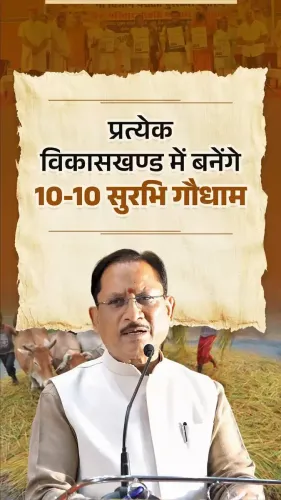
The Surabhi Gaudham Yojana provides financial and infrastructure support to gaushalas and is a central pillar of the state's cow-protection framework.
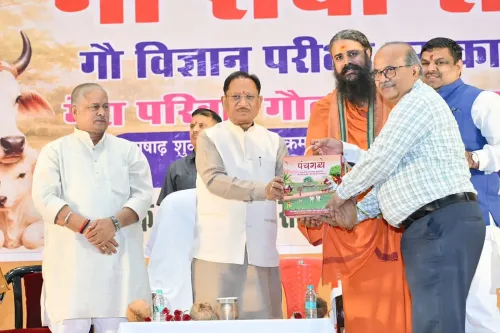
Meritorious students of the Gau Vigyan Pariksha were honoured at the ceremony, reflecting the government's push to build scientific awareness about cattle among youth.
The state is promoting dung-based products and dairy development as rural income diversification tools alongside cultural cow-protection goals.
The initiative mirrors integrated livestock-welfare programmes pursued by several other BJP-governed states linking cultural objectives to organic farming and rural economy.
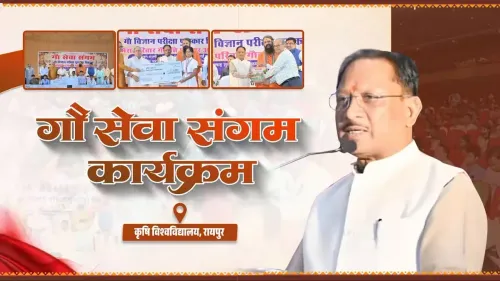
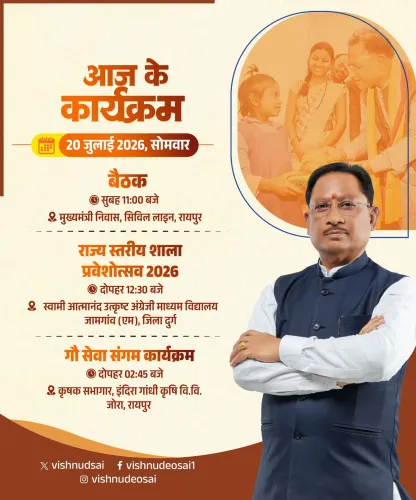
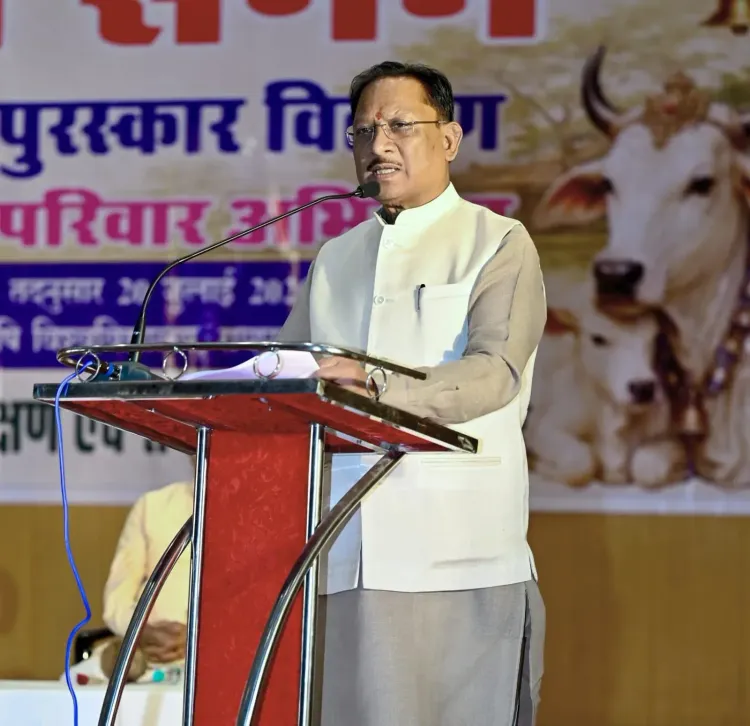
Chief Minister Vishnu Deo Sai on Monday, 20 July 2026, attended the Gau Seva Sangam and Gau Vigyan Pariksha Award Distribution Ceremony at the Krishak Sabhagar of Indira Gandhi Agricultural University in Raipur, where he formally launched the 'Mera Parivar Gauvrati Parivar' campaign and honoured meritorious students who appeared in the Gau Vigyan Pariksha.
Context
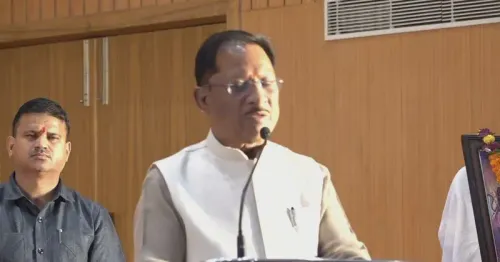
The ceremony brought together students, farmers, and gaushala administrators under one roof to celebrate and advance the cause of cow protection in Chhattisgarh. Speaking at the event, CM Sai stated that cow protection is not merely a matter of faith but 'bharatiya sanskriti, gramin arthavyavastha, jaivik krishi aur paryavaran sanrakshan ka sashakt aadhar' — 'a strong foundation of Indian culture, rural economy, organic farming, and environmental conservation.' The newly launched household-level campaign invites families across the state to adopt cow care and protection practices as part of daily life.
Policy Backdrop
The event highlighted several ongoing state initiatives under the Chhattisgarh government's cow-protection framework. These include the Surabhi Gaudham Yojana, which provides financial and infrastructural support to gaushalas; enhanced assistance amounts for existing cow shelters; promotion of dung-based products; and dairy sector development. Indira Gandhi Agricultural University, established in 1987, has served as a hub for agricultural research and education, making it a fitting venue to frame cow protection within a scientific and economic context. Chhattisgarh governments have progressively expanded gaushala support since the mid-2010s, linking cow welfare to organic farming goals.
Stakeholders and Impact
The primary beneficiaries of these interlinked schemes are small and marginal farmers, rural households, and the dairy sector across Chhattisgarh. By promoting gobar-based products — including vermicompost and biogas — the government aims to generate supplementary income streams for rural families while reducing chemical inputs in agriculture. The Gau Vigyan Pariksha targets students, building scientific awareness about cattle care from a young age and creating a pipeline of informed participants in the rural livestock economy. Multiple BJP-governed states have pursued similar integrated approaches, combining cultural objectives with measurable economic outcomes in the livestock and organic-farming sectors.
What's Next
The rollout of the 'Mera Parivar Gauvrati Parivar' campaign across all districts of Chhattisgarh will be a key indicator of the initiative's reach and administrative ambition. Observers will watch for supplementary budget allocations directed at gaushala infrastructure and dairy development in the next state assembly session. If the campaign achieves wide household participation, it could serve as a model for similar community-level livestock welfare drives in other BJP-ruled states. The broader implication is that Chhattisgarh is positioning cow protection not as a standalone cultural agenda but as an integrated rural-livelihood and sustainability strategy.
Point of View
Organic farming, dairy development — the government insulates the agenda from being read as purely symbolic, giving it a measurable policy footprint. This mirrors a broader BJP-state playbook of institutionalising gaushala management and student engagement programmes, which have proven effective at building grassroots visibility. The true test will be district-level rollout and whether supplementary budget support follows the campaign's launch momentum.
NationPress
21 Jul 2026
Frequently Asked Questions
What is the 'Mera Parivar Gauvrati Parivar' campaign?
'Mera Parivar Gauvrati Parivar' is a campaign launched by Chhattisgarh Chief Minister Vishnu Deo Sai on 20 July 2026 to encourage families across the state to adopt cow care and protection practices as part of daily household life.
What is the Surabhi Gaudham Yojana in Chhattisgarh?
The Surabhi Gaudham Yojana is a Chhattisgarh state scheme that provides financial and infrastructure support to gaushalas and cow shelters, aiming to strengthen rural livelihoods and promote organic farming through better cattle management.
What is the Gau Vigyan Pariksha?
The Gau Vigyan Pariksha is a state-level examination in Chhattisgarh designed to promote scientific awareness about cows among students. Meritorious participants are recognised at events such as the Gau Seva Sangam ceremony.
Where was the Gau Seva Sangam ceremony held on 20 July 2026?
The ceremony was held at the Krishak Sabhagar of Indira Gandhi Agricultural University in Raipur , Chhattisgarh .
How does Chhattisgarh link cow protection to rural livelihoods?
Chhattisgarh promotes gobar-based products such as vermicompost and biogas, provides enhanced support to gaushalas, and supports dairy development — all framed as tools to diversify rural incomes and reduce dependence on chemical farming inputs.