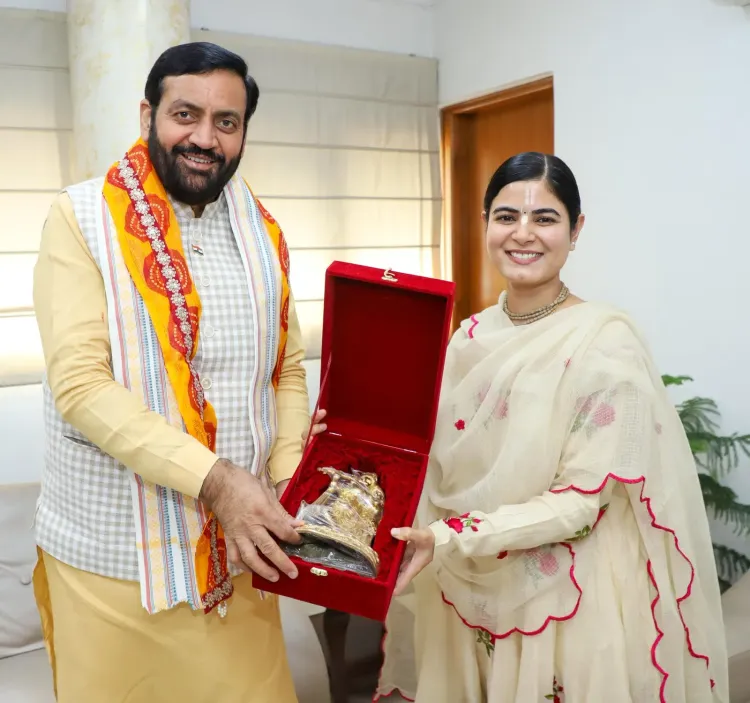
CM Saini meets Devi Chitralekha at Haryana Bhawan, Delhi
Synopsis
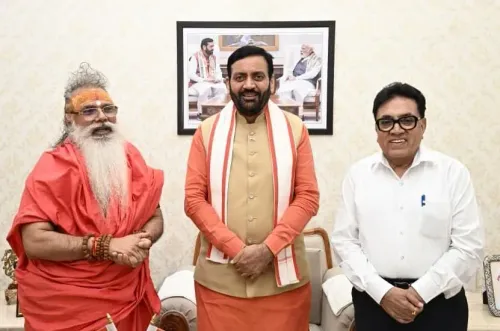
Haryana Chief Minister Nayab Singh Saini met spiritual speaker Devi Chitralekha at Haryana Bhawan in New Delhi on June 10, 2026, acknowledging her Shrimad Bhagwat Katha outreach and praising her institution's cow protection work in Palwal district.
Key Takeaways
Haryana CM Nayab Singh Saini held a courtesy meeting with spiritual speaker Devi Chitralekha at Haryana Bhawan, New Delhi on June 10, 2026 .
Saini praised Devi Chitralekha's work in spreading the divine message of Sanatan Dharma through Shrimad Bhagwat Katha recitals across India.
Her institution in Palwal district, Haryana , conducts cow service, protection, and conservation programmes that Saini called 'praiseworthy and inspiring.' Haryana has supported gaushalas and cow protection legislation since at least 2015 , making this engagement consistent with long-standing state policy.
No specific funding or policy announcement was made; analysts will watch for follow-up action on gaushala support in Palwal and neighbouring districts.
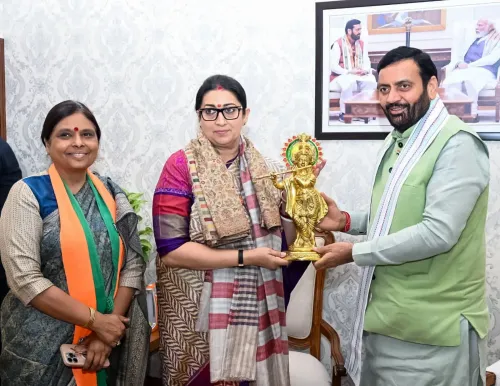
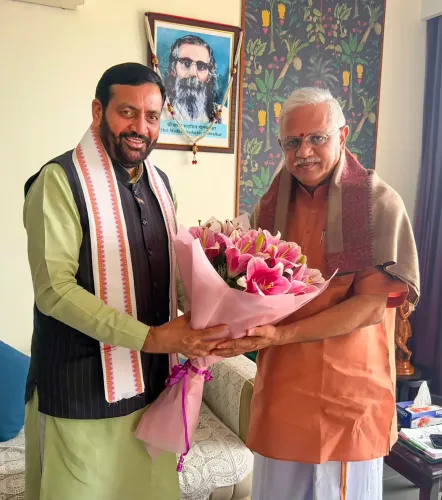
Haryana Chief Minister Nayab Singh Saini met spiritual speaker Devi Chitralekha at Haryana Bhawan, New Delhi, on Wednesday, June 10, 2026, in a courtesy call that highlighted her role in spreading the message of Sanatan Dharma through Shrimad Bhagwat Katha recitals across the country.
Context
Saini took to X to share details of the meeting, writing in Hindi: 'Shrimad Bhagwat Katha ke madhyam se Sanatan ke divya sandesh ko jan-jan tak pahunchane...' ('Through Shrimad Bhagwat Katha, she is carrying the divine message of Sanatan to every person'). He described the meeting as a courtesy visit and praised her contributions to the promotion of Indian culture.
The Chief Minister also acknowledged the efforts of Devi Chitralekha's institution in Palwal district, Haryana, specifically commending its work in the service, protection, and conservation of cows — calling these efforts 'praiseworthy and inspiring.'
Policy Backdrop
Cow protection has been a consistent policy priority for Haryana governments. The state has backed gaushalas and enacted anti-cow-slaughter measures through legislation and dedicated schemes since at least 2015, making institutional support for such initiatives a well-established feature of governance in the state.
BJP-led state governments across northern India have regularly engaged with kathavachaks — religious orators who deliver scriptural discourses — as part of a broader effort to promote Sanatan traditions and cultural outreach. Such meetings serve both a ceremonial and a visibility function, connecting administrative leadership with grassroots religious communities.
Stakeholders and Impact
Devi Chitralekha is widely recognised for her Shrimad Bhagwat Katha recitals, which draw large audiences across India and are credited with reaching diverse demographics. Her institution in Palwal district operates programmes centred on cow protection and conservation, activities that align with the state government's stated cultural and religious priorities.
Gaushala operators, religious institutions, and communities invested in the preservation of traditional practices stand to benefit from the visibility that high-level government engagement brings. Such meetings can precede formal announcements of funding or policy support, though no such announcement was made in this post.
What's Next
Attention will turn to whether the Saini government follows up this meeting with concrete support — such as expanded funding or infrastructure — for gaushalas in Palwal and neighbouring Haryana districts. The interaction fits an established pattern in which state-level engagement with spiritual figures precedes broader cultural or welfare scheme announcements.
Point of View
Saini signals alignment with a constituency that values both scriptural tradition and agrarian-religious practice. The choice of Haryana Bhawan — an official state venue in the national capital — lends administrative weight to what might otherwise read as a purely ceremonial interaction. Whether this translates into gaushala funding or scheme expansion will determine its policy significance beyond optics.
NationPress
26 Oct 2026
Frequently Asked Questions
Who is Devi Chitralekha?
Devi Chitralekha is a prominent Indian spiritual speaker known for delivering Shrimad Bhagwat Katha discourses across India, reaching large audiences and contributing to the promotion of Sanatan Dharma and Indian culture.
Why did CM Nayab Singh Saini meet Devi Chitralekha?
Haryana CM Nayab Singh Saini met Devi Chitralekha for a courtesy visit at Haryana Bhawan in New Delhi on June 10, 2026, to acknowledge her cultural outreach work and praise her institution's cow protection activities in Palwal district.
What cow protection work is being done in Palwal, Haryana?
Devi Chitralekha's institution in Palwal district, Haryana, runs programmes focused on the service, protection, and conservation of cows. CM Saini described these efforts as praiseworthy and inspiring, though exact operational details have not been officially disclosed.
What is Haryana Bhawan in Delhi?
Haryana Bhawan is the official state guesthouse and meeting facility of the Haryana government in New Delhi, regularly used for high-level meetings between Haryana officials and visiting dignitaries.
Does the Haryana government support gaushalas?
Yes. Haryana governments have backed gaushalas and enacted cow protection measures through legislation and dedicated schemes since at least 2015, making institutional support for cow conservation a consistent feature of state policy.