CM Sai Launches 'Resham Se Roshan Jashpur' Silk Initiative
Synopsis
Chhattisgarh CM Vishnu Deo Sai launched 'Resham Se Roshan Jashpur' on August 17, 2026, offering women 100% subsidised Tasar reeling machines and free training. Jashpur, which topped the state in Tasar cocoon production for 2025-26, aims to build a full local silk value chain.
Key Takeaways
Jashpur ranked first in Tasar Kosa production across Chhattisgarh for 2025-26 .
CM Vishnu Deo Sai launched 'Resham Se Roshan Jashpur' at the CM Camp Office, Bagiya , on August 17, 2026 .
Women will receive Tasar thread-reeling and spinning machines at 100 per cent government subsidy — fully free.
Free skill training in Tasar reeling and spinning is included for all beneficiaries.
The initiative targets women's self-reliance, local employment generation, and a stronger market identity for Jashpur's Tasar silk.
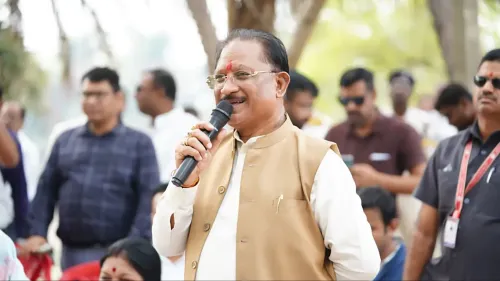
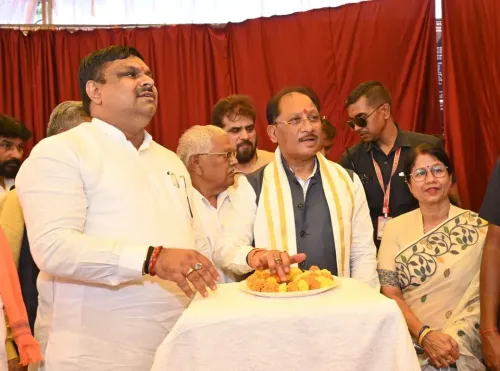
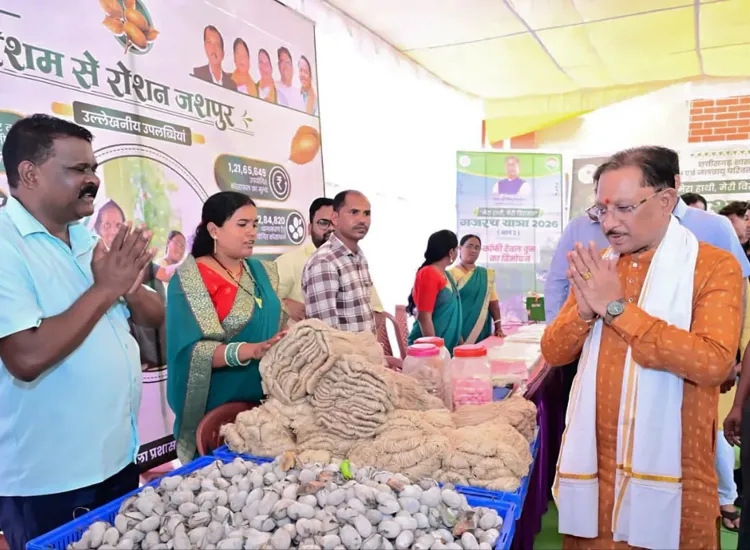
A district once known quietly for its forests is now weaving a new economic identity — thread by thread. Chhattisgarh Chief Minister Vishnu Deo Sai on Monday, August 17, 2026, launched the 'Resham Se Roshan Jashpur' (Silk-Lit Jashpur) initiative at the Chief Minister's Camp Office in Bagiya, placing women's economic empowerment at the centre of the state's sericulture push.
The announcement came with a headline achievement: Jashpur has secured the first rank in Tasar Kosa (cocoon) production across Chhattisgarh for the year 2025-26 — a milestone CM Sai called a matter of pride for the district.
Machines at Zero Cost, Skills at No Charge
At the heart of the initiative is a direct, tangible offer to women in Jashpur: Tasar thread-reeling and spinning machines will be provided at 100 per cent government subsidy — meaning no out-of-pocket cost. Alongside the equipment, beneficiaries will receive free skill training in Tasar thread-reeling and spinning, equipping them to convert raw cocoons into marketable yarn from their own localities.
CM Sai framed the initiative as a three-pronged mission: making women self-reliant (aatmanirbhar), expanding local employment, and building a distinct, recognisable identity for Jashpur's Tasar in the market.
Jashpur's Tasar: A Forest Craft Turned Economic Engine
Tasar silk is a wild variety produced from Antheraea mylitta silkworms that feed on arjun and sal trees — precisely the forest species abundant across Jashpur's tribal belt. Unlike mulberry silk, Tasar has a coarser texture and a natural golden-brown sheen that commands a premium in ethnic and handloom markets. The district's tribal communities, particularly women, have historically been involved in cocoon rearing, but value addition — spinning, weaving, finishing — has largely happened elsewhere, leaving local producers at the low end of the supply chain.
By placing reeling and spinning machines directly in women's hands at no cost, the initiative attempts to capture more of that value chain locally — turning a raw-material economy into a finished-goods economy, even if at a cottage scale.
Topping the State Chart
Jashpur's number-one ranking in Tasar Kosa production in Chhattisgarh for 2025-26 is not incidental context — it is the political and policy foundation for this launch. A district that leads in raw output is a natural candidate for investment in processing infrastructure. The ranking signals that the cocoon supply is already there; the gap is in what happens next. The 'Resham Se Roshan Jashpur' initiative is designed to close exactly that gap.
For Chhattisgarh's tribal economy, where forest-based livelihoods are central but often precarious, a state-backed push to add processing capacity at the village level — with women as the primary beneficiaries — carries real structural weight. Whether the training pipeline and market linkages can keep pace with the machinery rollout will determine how far Jashpur's silk story travels.
Point of View
CM Sai is making a politically shrewd move: directing state investment to a district that can demonstrate returns quickly. The 100 per cent subsidy model for machinery is a high-visibility commitment, but the real test will be whether market linkages for finished Tasar yarn and fabric are built in parallel — without that, the initiative risks equipping women to produce goods with nowhere to sell them. If the value-chain logic holds, Jashpur could become a replicable model for Chhattisgarh's other Tasar-producing tribal districts.
NationPress
18 Aug 2026
Frequently Asked Questions
What is the 'Resham Se Roshan Jashpur' initiative?
'Resham Se Roshan Jashpur' is a Chhattisgarh government scheme launched by CM Vishnu Deo Sai on August 17, 2026, that provides women in Jashpur with Tasar thread-reeling and spinning machines at 100 per cent subsidy along with free skill training, aiming to build a local silk processing economy.
Why did Jashpur get this silk scheme?
Jashpur secured the first rank in Tasar Kosa (cocoon) production across Chhattisgarh for 2025-26, making it the state's top raw-silk producing district and a natural candidate for investment in processing infrastructure.
Who are the beneficiaries of the Jashpur Tasar scheme?
Women in Jashpur are the primary beneficiaries. They will receive Tasar reeling and spinning machines free of cost under 100 per cent government subsidy, plus free training in thread-reeling and spinning.
What is Tasar silk and why is it significant for Jashpur?
Tasar is a wild silk produced from silkworms that feed on arjun and sal trees, which are abundant in Jashpur's forests. It has a natural golden-brown sheen and commands a premium in ethnic textile markets. Jashpur's tribal communities have long reared cocoons, and the new scheme aims to add value locally by enabling spinning and reeling.
Where was the 'Resham Se Roshan Jashpur' initiative launched?
The initiative was launched at the Chief Minister's Camp Office in Bagiya, Jashpur, Chhattisgarh, on August 17, 2026.