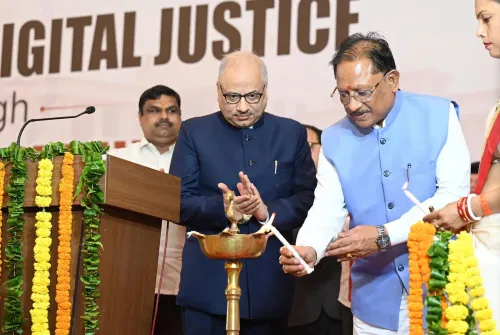
CM Sai, CJ Ramesh Sinha Launch Digital Justice Workshop in Raipur
Synopsis
Chief Minister Vishnu Deo Sai and Chief Justice Ramesh Sinha jointly addressed a state-level 'Strengthening Digital Justice' workshop in Raipur, focusing on rolling out India's three new criminal laws — Bharatiya Nyaya Sanhita, Bharatiya Nagarik Suraksha Sanhita, and Bharatiya Sakshya Adhiniyam — through digital policing and technology-driven investigation across Chhattisgarh.
Key Takeaways
CM Vishnu Deo Sai and Chief Justice Ramesh Sinha jointly led the 'Strengthening Digital Justice' state-level workshop in Raipur on 2 August 2026 .
The workshop targets effective implementation of the three new criminal laws that replaced the IPC, CrPC, and Evidence Act from 1 July 2024 .
CM Sai highlighted digital policing, technology-based investigation, digital evidence management , and online services as the pillars of the reformed justice system.
Chhattisgarh's effort is part of a national wave of training programmes run by central and state governments since mid-2024 to operationalise the new statutes.
The e-Courts project provides the infrastructure backbone that state-level workshops like this are designed to activate at the ground level.
A state-level workshop in Raipur brought together the top rungs of Chhattisgarh's executive and judiciary on Sunday, 2 August 2026 — a rare joint signal that the state is serious about embedding India's sweeping new criminal laws into everyday practice. Chief Minister Vishnu Deo Sai shared the dais with Chief Justice of the Chhattisgarh High Court, Justice Ramesh Sinha, at the 'Strengthening Digital Justice' workshop focused on the effective implementation of the new criminal laws and a digitised justice ecosystem.
Three new laws, one urgent mandate
The workshop's urgency traces back to 1 July 2024, when three landmark statutes — the Bharatiya Nyaya Sanhita, the Bharatiya Nagarik Suraksha Sanhita, and the Bharatiya Sakshya Adhiniyam — replaced the colonial-era Indian Penal Code, Code of Criminal Procedure, and Indian Evidence Act respectively. Passed by Parliament in December 2023, the laws introduced explicit provisions for digital evidence, electronic records, and technology-driven investigation — provisions that require hands-on training to operationalise. Chhattisgarh's workshop is squarely aimed at closing that gap.What Sai said on the justice system's transformation
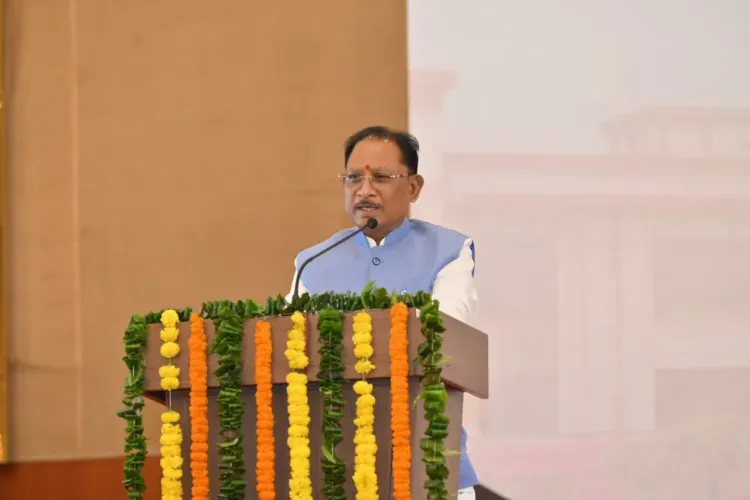
Addressing the gathering, CM Sai described the new laws as 'aitihāsik parivartana ke vāhak' — carriers of historic transformation — suited to the challenges of the present and the needs of a new India. He outlined a multi-pronged approach: digital policing, technology-based investigation, digital evidence management, online citizen services, and a modernised police apparatus. Together, he argued, these tools are making the justice system more effective, transparent, and accountable — a governance posture his administration brands as 'Sushasan Sarkar' (good-governance government).Chhattisgarh inside a national training wave
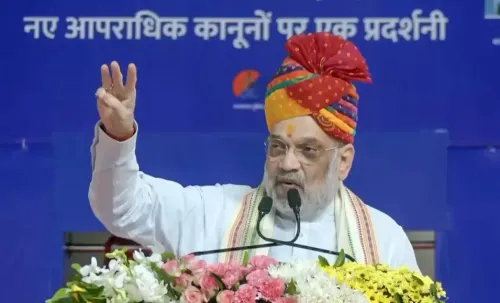
Chhattisgarh is not moving alone. Since mid-2024, central and state governments across India have run parallel training programmes to bring police forces and judicial officers up to speed on the new statutes and the digital tools they mandate. The Union government's long-running e-Courts project has provided the infrastructure backbone — case management software, electronic filing, and evidence repositories — that workshops like this one are designed to activate at the ground level. The presence of the High Court's Chief Justice at a state executive event underscores how much the transition depends on judicial and police wings moving in step. The real test now is whether Raipur's momentum travels to the district courts and police stations where the new laws will live or die in practice.Point of View
Not a unilateral executive push. The workshop fits a broader post-July 2024 pattern in which state governments are racing to convert legislative intent into operational capacity — and those that move faster will see the practical benefits of the new digital evidence and e-trial provisions sooner. For the BJP-led Sushasan Sarkar in Chhattisgarh, the 'Strengthening Digital Justice' branding also serves a political purpose: it ties the state's governance narrative to a central reform that carries the Modi government's imprint, reinforcing federal alignment ahead of future electoral cycles.
NationPress
16 Sept 2026
Frequently Asked Questions
What is the 'Strengthening Digital Justice' workshop in Chhattisgarh?
It is a state-level workshop held in Raipur on 2 August 2026, co-chaired by CM Vishnu Deo Sai and Chief Justice Ramesh Sinha, focused on implementing India's new criminal laws and building digital infrastructure for policing and evidence management in Chhattisgarh.
What are the new criminal laws being implemented?
The three new laws are the Bharatiya Nyaya Sanhita, Bharatiya Nagarik Suraksha Sanhita, and Bharatiya Sakshya Adhiniyam, which replaced the IPC, CrPC, and Indian Evidence Act respectively and came into force on 1 July 2024.
Who is Vishnu Deo Sai?
Vishnu Deo Sai is the Chief Minister of Chhattisgarh, heading the state's BJP-led government, which brands its governance approach as 'Sushasan Sarkar' or good-governance government.
What is digital policing and why does it matter under the new laws?
Digital policing refers to the use of technology-based investigation tools, digital evidence management systems, and online citizen services; the new criminal laws explicitly provide for digital evidence, making these tools legally relevant and operationally essential for police and courts.
Is Chhattisgarh the only state running such training workshops?
No. Since mid-2024, multiple state governments and the central government have conducted similar training programmes to familiarise police and judicial officers with the new criminal statutes and digital tools, as part of a nationwide rollout effort.