CM Sai Leads State-Level Yoga Day Event in Ambikapur
Synopsis
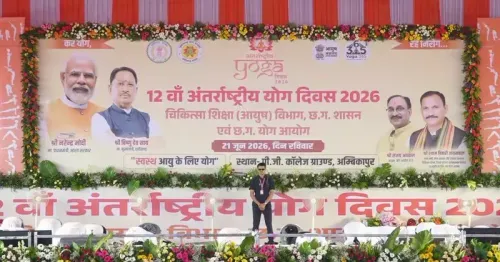
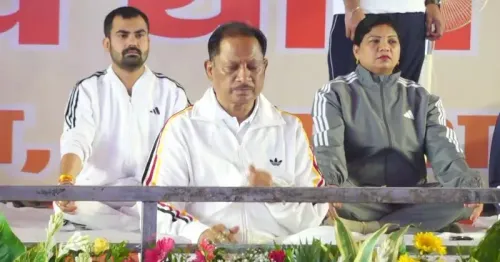
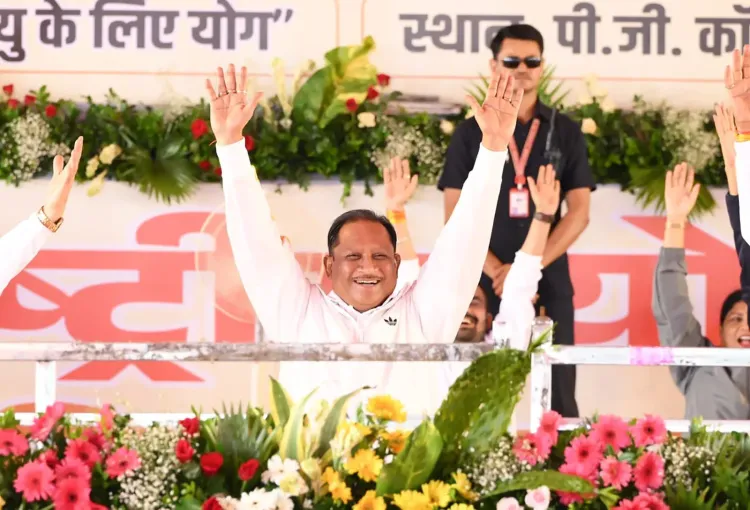
Chief Minister Vishnu Deo Sai joined Chhattisgarh's state-level International Day of Yoga event at Ambikapur's PG College Ground on 21 June 2026, performing yoga and urging residents to adopt the practice for a healthy, balanced life.
Key Takeaways
CM Vishnu Deo Sai participated in the state-level International Day of Yoga 2026 programme in Ambikapur .
The event was held at PG College Ground, Ambikapur , the administrative centre of Surguja district in northern Chhattisgarh.
The Chief Minister's message called on citizens to adopt yoga regularly for a 'healthy, balanced, and disease-free life.' International Day of Yoga is observed on 21 June every year following a 2014 UN General Assembly resolution initiated by India.
India's state governments have organised public yoga events annually since 2015 under the broader AYUSH preventive health framework.
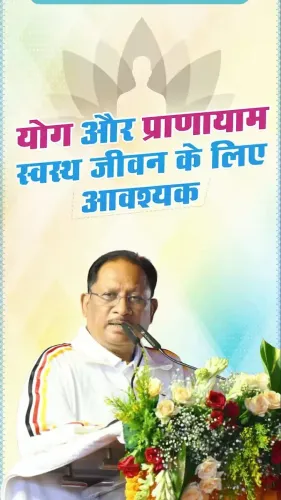
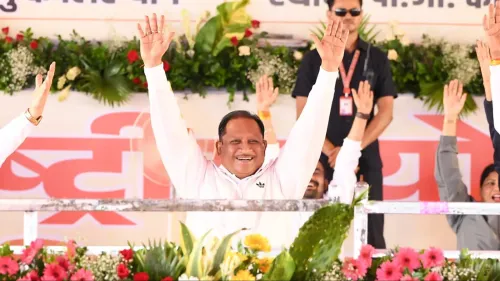
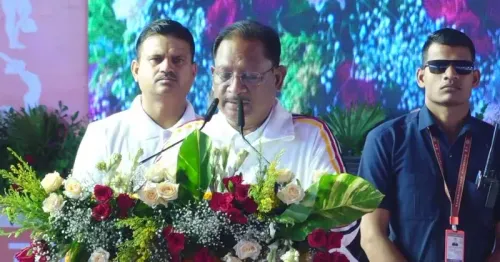
Chief Minister Vishnu Deo Sai participated in a state-level International Day of Yoga programme at the PG College Ground in Ambikapur on Sunday, 21 June 2026, performing yoga alongside residents and urging citizens across Chhattisgarh to adopt the practice as a path to a healthy and balanced life.
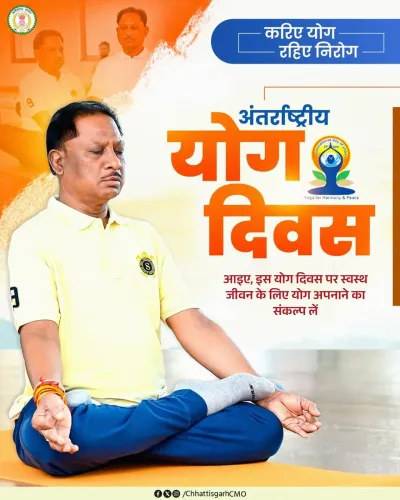
The Chief Minister's Office of Chhattisgarh shared the event on X with the message 'Karein yog, rahein nirog' ('Do yoga, stay healthy'), capturing the spirit of the occasion and the government's call for citizens to embrace yoga as a daily discipline.
Context
International Day of Yoga is observed every year on 21 June, following a landmark United Nations General Assembly resolution in December 2014 that was proposed by India. Since 2015, the date has been marked by mass public events across the country, with state governments organising their own flagship sessions to maximise public participation. Ambikapur, the administrative hub of Surguja district in northern Chhattisgarh, hosted this year's state-level observance.
Policy Backdrop
India's central and state governments have consistently used International Day of Yoga as a platform to advance preventive health under the broader AYUSH framework, which promotes traditional systems of medicine and wellness. Chief-minister-led mass yoga sessions have become a standard feature across states, designed to encourage citizens to view yoga not as a ceremonial gesture but as a sustainable daily habit. Chhattisgarh's 2026 observance follows this well-established pattern of high-visibility state participation.
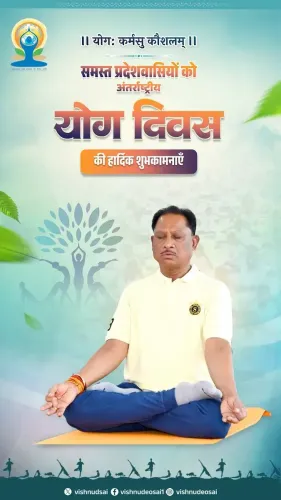
CM Sai, who assumed office in December 2023 as the Bharatiya Janata Party chief minister of the state, used the occasion to deliver a public wellness message, calling on residents to lead 'swasth, santulit evam nirog jeevan' — a 'healthy, balanced, and disease-free life' — through regular yoga practice.
Stakeholders and Impact
The primary beneficiaries of sustained yoga promotion are Chhattisgarh's general population, particularly communities with limited access to formal healthcare, for whom preventive wellness practices can reduce long-term health burdens. Public participation in events like this also reinforces the state's broader public-health messaging. Organisers, educational institutions such as the PG College in Ambikapur, and local administration all play a role in scaling such programmes to district and block levels.
What's Next
Policy observers will watch whether Chhattisgarh translates the momentum of Yoga Day 2026 into concrete institutional steps — such as integrating yoga into school curricula or embedding yoga sessions within primary health centres across the state. Such measures would signal a shift from annual ceremonial observance to year-round preventive health infrastructure. The direction of upcoming state budget allocations for AYUSH and school health programmes will be a key indicator.
Point of View
The annual observance remains a high-visibility ritual whose long-term public-health impact depends on year-round institutional follow-up.
NationPress
21 Jun 2026
Frequently Asked Questions
Where did CM Vishnu Deo Sai participate in Yoga Day 2026?
CM Vishnu Deo Sai participated in the state-level International Day of Yoga 2026 event at PG College Ground in Ambikapur, Chhattisgarh.
When is International Day of Yoga celebrated?
International Day of Yoga is celebrated every year on 21 June, following a United Nations General Assembly resolution in December 2014 that was proposed by India.
What was CM Sai's message on Yoga Day 2026?
CM Sai urged the people of Chhattisgarh to adopt yoga regularly to lead a healthy, balanced, and disease-free life, encapsulated in the phrase 'Karein yog, rahein nirog.'
Why is Ambikapur significant for Chhattisgarh's Yoga Day event?
Ambikapur is the administrative and educational hub of Surguja district in northern Chhattisgarh and was chosen as the venue for the state-level International Day of Yoga 2026 programme.
How long has India been observing International Day of Yoga?
India has been observing International Day of Yoga since 2015, the year after the UN General Assembly adopted the resolution in December 2014 on India's initiative.