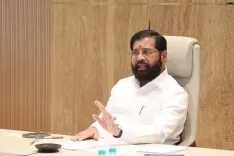
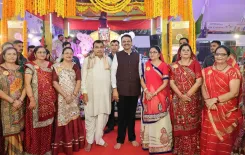
CM Vishnu Deo Sai offers Mahashtami prayers at Raipur pandal
Synopsis
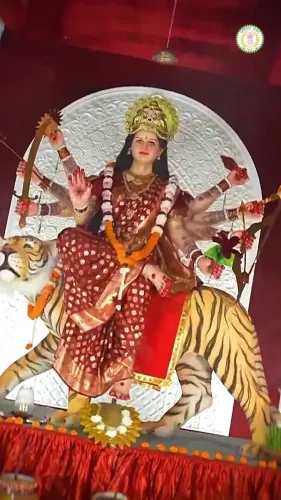
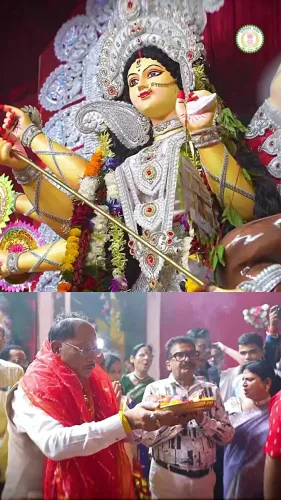
Chhattisgarh CM Vishnu Deo Sai offered Mahashtami prayers at the Mana Camp Durga pandal in Raipur on October 18, 2026, invoking a Sanskrit shloka and praying for state-wide happiness and prosperity while linking the occasion to the government's 'Mahatari' women-welfare theme.
Key Takeaways
Chhattisgarh CM Vishnu Deo Sai visited the Durga pandal at Mana Camp, Raipur on October 18, 2026 for Mahashtami rituals.
He performed vidhi-vat puja-archana (formal, scripture-prescribed worship) of Maa Durga and prayed for the well-being of all state residents.
The Sanskrit invocation 'Sarva-mangala-mangalye' — a classical Durga stuti — anchored the post spiritually.
Hashtags #महतारी_का_सम्मान and #महतारी_के_मान linked the Navratri observance to the government's 'Mahatari' women's welfare brand.
The visit reflects a standard pattern of chief ministerial festival engagement across Indian states, given additional political texture by the 'Mahatari' messaging.
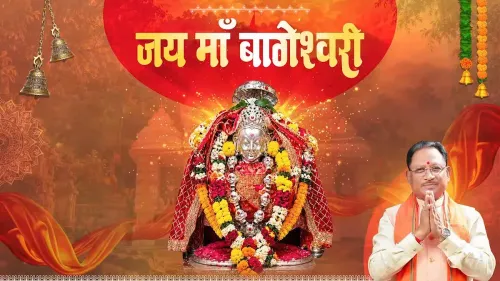
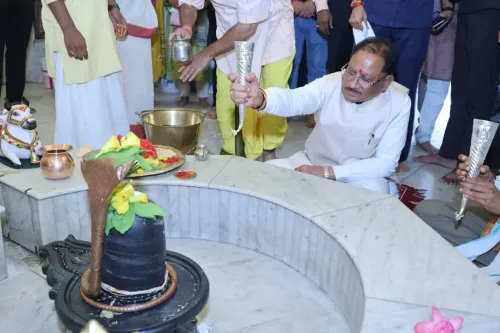
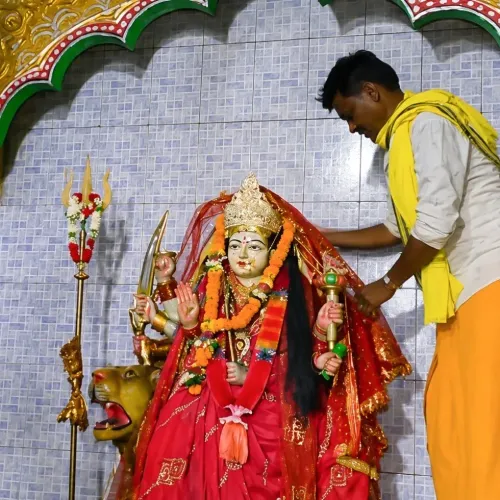
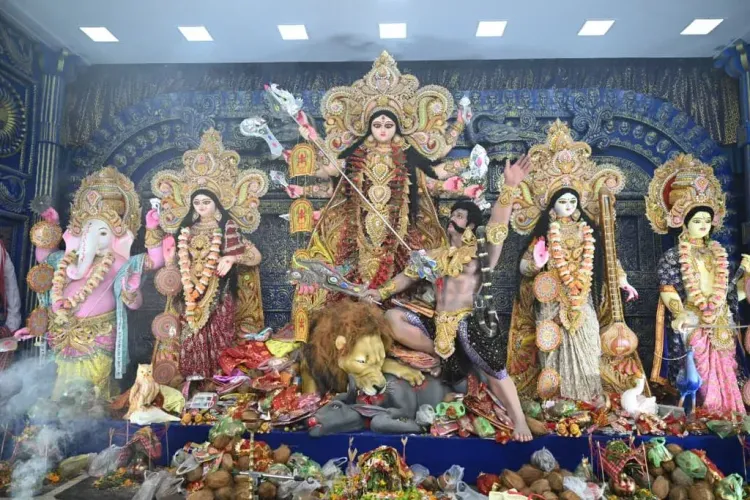
On the sacred occasion of Mahashtami — the eighth and most venerated night of Sharadiya Navratri 2026 — Chhattisgarh Chief Minister Vishnu Deo Sai visited the Durga pandal at Mana Camp, Raipur, performing a full ritual worship of Maa Durga and offering prayers for the happiness, prosperity, and well-being of every resident of the state.
Invoking the ancient Sanskrit shloka — 'Sarva-mangala-mangalye, Shive sarvaartha-sadhike' ('O auspicious one, source of all good, fulfiller of every purpose') — the Chief Minister's post framed the visit not merely as a personal act of devotion but as a public expression of the state government's prayers for Chhattisgarh's peace, harmony, and collective welfare.
Mana Camp pandal and the Mahashtami moment
Mahashtami, the eighth day of Navratri, is considered among the most auspicious in the nine-day festival cycle, when devotees across India observe Kanya Pujan and elaborate rituals honouring the goddess in her fiercer forms. The Mana Camp area of Raipur, home to a well-known community Durga pandal, draws large crowds of devotees each year during the festival. Chief Minister Sai's presence there on Sunday, October 18, 2026, underscored the ritual importance of the occasion.
The 'Mahatari' theme woven through the celebration
The hashtags #महतारी_का_सम्मान and #महतारी_के_मान — roughly translating to 'respect for the mother' and 'honour of the mother' — signal a deliberate link between the religious observance and the BJP-led state government's flagship women's welfare positioning. Mahatari is the Chhattisgarhi word for 'mother', and it anchors the state's Mahatari Vandan Yojana, a direct-benefit scheme for women that became a centrepiece of the party's governance narrative after its December 2023 assembly election victory. The Navratri messaging ties the divine feminine to the policy feminine — goddess and beneficiary in the same frame.
Chief Ministers across party lines routinely visit prominent Durga pandals during Navratri, making the visit itself a standard act of festival governance. What distinguishes Sai's post is the double layering: a Sanskrit invocation, a personal act of puja, and a political hashtag ecosystem that keeps the 'Mahatari' brand alive in public discourse ahead of any further announcements during the festival's closing days.
Point of View
Inclusive, and faith-affirming — but the 'Mahatari' hashtag layer is the more politically telling detail. The BJP's Chhattisgarh unit has consistently used the 'Mahatari' frame to keep its women-welfare flagship scheme front-of-mind between budget cycles. Tying the divine mother to the policy mother during Navratri is a calibrated brand exercise. Whether it translates into fresh scheme announcements before Dussehra will be the real indicator of intent.
NationPress
19 Oct 2026
Frequently Asked Questions
Where did CM Vishnu Deo Sai offer Mahashtami prayers in 2026?
CM Vishnu Deo Sai offered Mahashtami prayers at the Durga pandal located at Mana Camp in Raipur , the capital of Chhattisgarh, on October 18, 2026 .
What is the significance of Mahashtami in Navratri?
Mahashtami is the eighth day of the Sharadiya Navratri festival and is considered one of the most auspicious days, traditionally marked by elaborate rituals, Kanya Pujan , and worship of the goddess in her powerful forms.
What is the 'Mahatari' scheme linked to CM Sai's Navratri post?
The Mahatari Vandan Yojana is a women's welfare direct-benefit scheme launched by the BJP government in Chhattisgarh after its December 2023 assembly election victory; the word mahatari means 'mother' in the Chhattisgarhi dialect.
Which Sanskrit shloka did CM Sai quote in his Navratri post?
He quoted the shloka 'Sarva-mangala-mangalye, Shive sarvaartha-sadhike, Sharannye Tryambake Gauri, Narayani namo'stu te' — a classical invocation of Goddess Durga meaning 'O auspicious one, source of all good, I bow to you, Narayani.'
When did Vishnu Deo Sai become Chief Minister of Chhattisgarh?
Vishnu Deo Sai was sworn in as Chief Minister of Chhattisgarh in December 2023 following the BJP's victory in the state assembly elections.