CM Sai Marks 'Constitution Murder Day', Recalls Emergency Pain
Synopsis
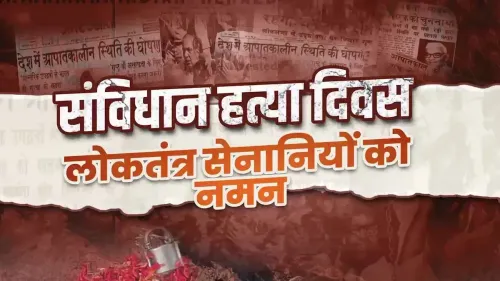
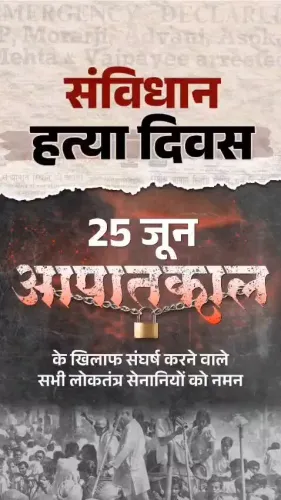
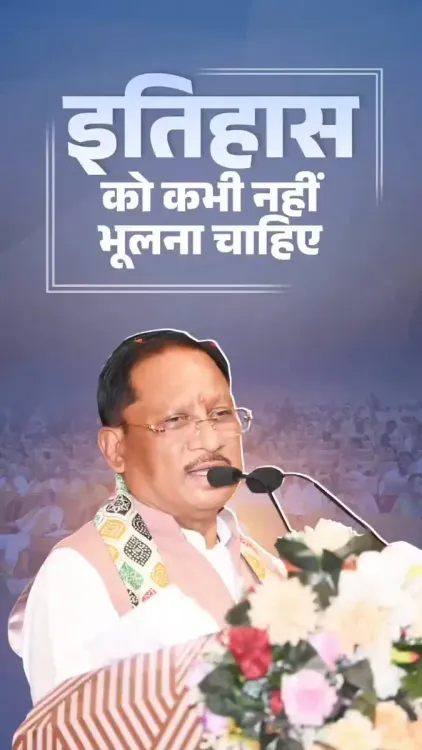
Chhattisgarh Chief Minister Vishnu Deo Sai marked 25 June as 'Constitution Murder Day' on X, thanking PM Narendra Modi for institutionalising the observance and revealing that his own family endured hardship during the 1975 Emergency — reinforcing the BJP's annual commemoration of the 21-month suspension of democratic rights.
Key Takeaways
CM Vishnu Deo Sai posted on 28 June 2026 observing 25 June as Samvidhan Hatya Diwas (Constitution Murder Day).
He thanked Prime Minister Narendra Modi for institutionalising the national commemoration of the date.
Sai disclosed that his own family suffered during the Emergency period imposed on 25 June 1975 .
The Emergency lasted 21 months (June 1975 – March 1977), during which fundamental rights were suspended and opposition leaders were jailed.
The BJP-led central government formally designated 25 June as Samvidhan Hatya Diwas in 2024 .
Sai's statement signals active state-level observance of the day in Chhattisgarh under the BJP government.
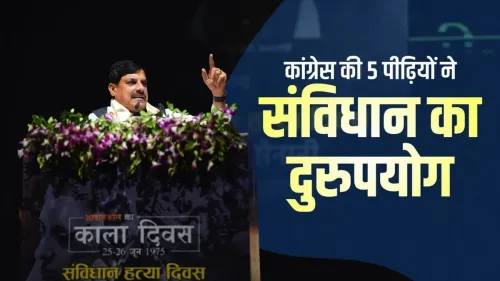
Chhattisgarh Chief Minister Vishnu Deo Sai on Sunday, 28 June 2026 took to X to observe 25 June as 'Samvidhan Hatya Diwas' (Constitution Murder Day), expressing gratitude to Prime Minister Narendra Modi for institutionalising the commemoration and disclosing that his own family had suffered during the Emergency era.
Context
In his post, CM Sai wrote: '25 June ko pura desh Samvidhan Hatya Diwas ke roop mein manata hai' — 'The entire country observes 25 June as Constitution Murder Day.' He thanked Prime Minister Modi 'from the heart' for this recognition and added a personal dimension, stating, 'Our family too has endured the pain of that difficult period of the Emergency.'
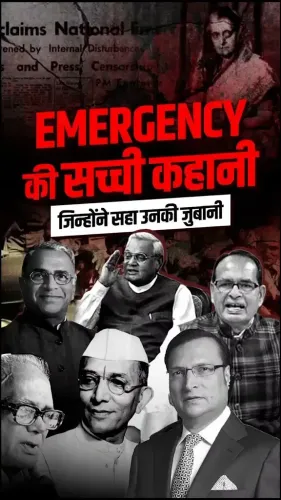
25 June 1975 marks the date on which then-Prime Minister Indira Gandhi imposed a nationwide Emergency, suspending fundamental rights and civil liberties for 21 months until March 1977. The period saw mass arrests of opposition leaders, press censorship, and the suspension of elections — events that remain deeply contested in Indian political memory.
Policy Backdrop
The BJP-led central government formally designated 25 June as 'Samvidhan Hatya Diwas' (Constitution Murder Day) in 2024, directing that the day be observed across the country each year to remind citizens of what the ruling party describes as an assault on democratic and constitutional values. The move was part of a broader political effort by the BJP to keep the legacy of the Emergency — and the Congress party's role in it — in public discourse.
CM Sai's post, coming three days after the 51st anniversary of the Emergency's imposition, reflects the ruling party's continued emphasis on the commemoration at both the national and state levels. His personal testimony — invoking his family's suffering — adds a ground-level human dimension to what is otherwise a top-down political observance.
Stakeholders and Impact
For the BJP and its affiliated organisations, Samvidhan Hatya Diwas serves as an annual occasion to contrast their governance record with the Congress-era Emergency. For the opposition, particularly the Indian National Congress, the framing is contentious; Congress has historically argued that the Emergency was a response to extraordinary political circumstances and has rejected the 'Constitution murder' characterisation.
At the state level in Chhattisgarh, CM Sai's public statement signals that the BJP government intends to actively observe the day, potentially through official programmes, awareness campaigns in schools, and party-led events. Citizens and civil society groups in the state who lived through or study the Emergency period are likely to engage with these commemorations in varying ways.
What's Next
With Samvidhan Hatya Diwas now an institutionalised annual observance, state governments led by the BJP are expected to deepen its reach through educational and administrative channels in the coming years. CM Sai's personal account of family hardship during the Emergency may also prompt similar testimonies from other BJP leaders, reinforcing the party's broader narrative ahead of future electoral cycles. The tension between the BJP's framing of the Emergency as a constitutional catastrophe and the opposition's counter-narrative is likely to intensify each year as the anniversary approaches.
Point of View
He moves the narrative from abstract constitutional argument to lived experience, making it harder for opponents to dismiss as mere political point-scoring. The three-day lag between the anniversary (25 June) and his post (28 June) suggests a sustained, rolling communication campaign rather than a single-day burst, indicating the party intends the observance to occupy the news cycle for an extended period. Chhattisgarh, a state the BJP recaptured in 2023 after five years in opposition, is also a test case for how deeply the party can embed its national ideological calendar into state governance. The invocation of Modi by name — framing the PM as the architect of this remembrance — simultaneously elevates Modi's stature and ties state-level BJP leaders firmly to the central party's political narrative.
NationPress
29 Jun 2026
Frequently Asked Questions
What is Samvidhan Hatya Diwas?
Samvidhan Hatya Diwas , or 'Constitution Murder Day', is the name given by the BJP-led central government to 25 June , the anniversary of the imposition of the Emergency in 1975 by then-Prime Minister Indira Gandhi. The day was formally designated in 2024 to commemorate what the BJP describes as an assault on India's constitutional democracy.
Why did CM Vishnu Deo Sai post about the Emergency?
CM Vishnu Deo Sai posted on 28 June 2026 to mark Samvidhan Hatya Diwas , thank PM Modi for institutionalising the observance, and share that his own family endured hardship during the Emergency — personalising the BJP's broader political commemoration of the 1975 crackdown.
When was the Emergency imposed in India and for how long?
The Emergency was imposed on 25 June 1975 by Prime Minister Indira Gandhi and lasted 21 months , ending in March 1977 . During this period, fundamental rights were suspended, the press was censored, and thousands of opposition leaders and activists were arrested.
What is Vishnu Deo Sai's role and party?
Vishnu Deo Sai is the Chief Minister of Chhattisgarh and a senior leader of the Bharatiya Janata Party (BJP) . He assumed office after the BJP's victory in the 2023 Chhattisgarh assembly elections .
How does the BJP observe 25 June each year?
Since the central government designated 25 June as Samvidhan Hatya Diwas in 2024 , BJP-governed states and the party's organisations observe the day through awareness programmes, public events, and social media campaigns reminding citizens of the 1975 Emergency and its impact on democratic rights.