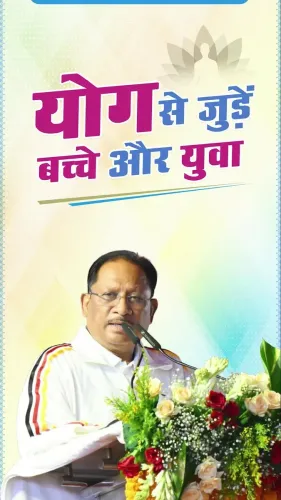
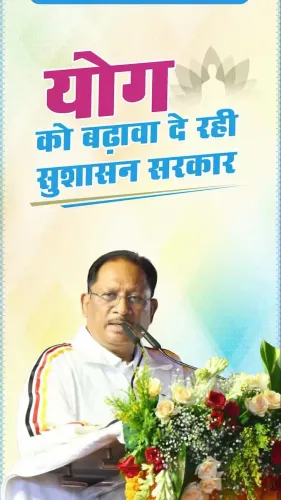
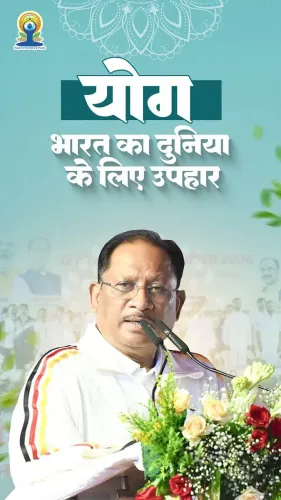
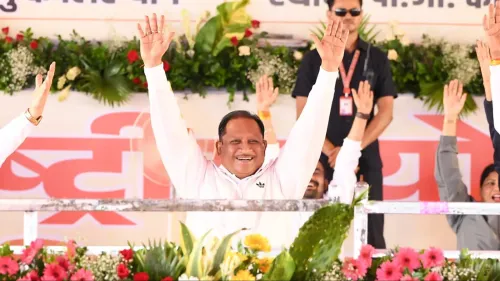
CM Sai Marks International Yoga Day, Calls Yoga India's Timeless Heritage
Synopsis
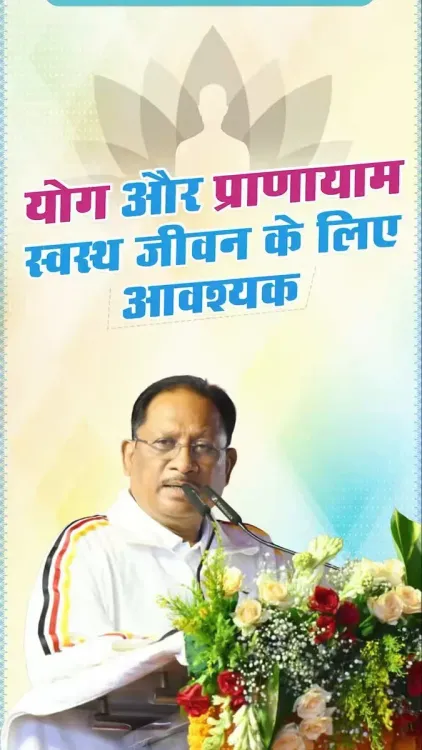
On International Day of Yoga, Chhattisgarh Chief Minister Vishnu Dev Sai described yoga as India's priceless ancient heritage and called it the foundation of a healthy, balanced life in an era of stress and irregular lifestyles.
Key Takeaways
Chief Minister Vishnu Dev Sai issued a message on June 21, 2026 marking the International Day of Yoga .
He described yoga as the 'priceless heritage' of India's ancient sages and civilisational way of life.
CM Sai highlighted yoga and pranayama as essential tools against modern-day stress and irregular lifestyles.
The International Day of Yoga was established by the UN General Assembly in 2014 on India's proposal.
The Ministry of AYUSH , created in 2014 , anchors India's national yoga and traditional health promotion policy.
Chhattisgarh's endorsement aligns with a broader pattern of state governments supporting central AYUSH-led yoga initiatives.
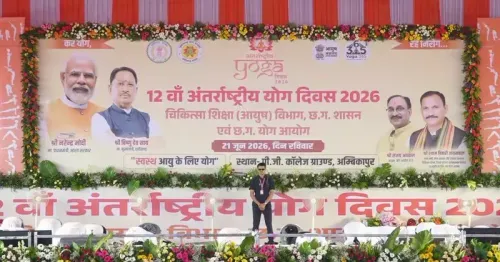
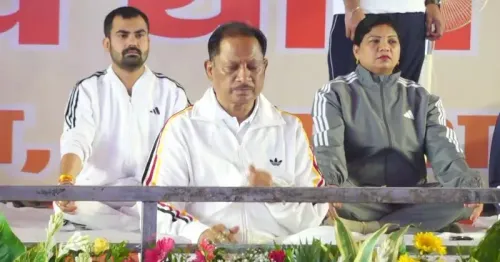
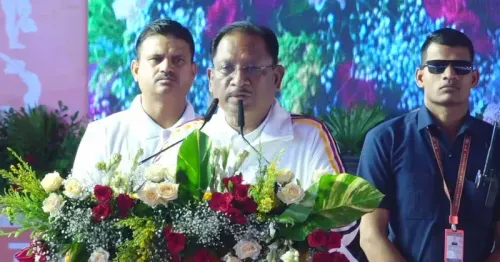
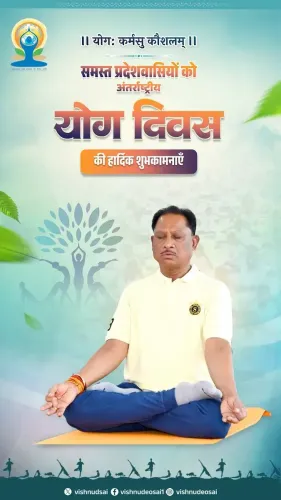
The Chief Minister's Office of Chhattisgarh shared a message from Chief Minister Vishnu Dev Sai on Sunday, June 21, 2026, marking the International Day of Yoga and calling yoga an invaluable legacy of India's ancient sages and way of life.
In his message, CM Sai stated: 'Yog hamare rishi-muniyon ki tapasya aur Bharatiya jeevan-paddhati ki amulya dharohar hai' — 'Yoga is the priceless heritage of the penance of our sages and the Indian way of life.' He further noted that in today's age of stress, rush, and irregular lifestyles, yoga and pranayama have become the foundation of a healthy and balanced life.
Context
The statement was issued on June 21, the date observed globally as the International Day of Yoga, established by a United Nations General Assembly resolution in 2014 following a proposal by India. The day has since been marked annually by governments, institutions, and communities across the world with mass yoga sessions, awareness drives, and official communications.
CM Vishnu Dev Sai, who assumed office in December 2023 as the Bharatiya Janata Party's Chief Minister of Chhattisgarh, framed yoga not merely as a physical practice but as a cultural and civilisational inheritance, a framing consistent with how the discipline has been positioned in national discourse since 2014.
Policy Backdrop
The Ministry of AYUSH, created by the Government of India in 2014, has been the nodal body for promoting yoga and other traditional health systems — including Ayurveda, Unani, Siddha, and Homeopathy — as part of a national wellness and preventive-healthcare strategy. Yoga has been positioned as a low-cost, accessible public health intervention particularly relevant to combating the rise of lifestyle diseases such as diabetes, hypertension, and mental health disorders.
State governments across India routinely align with central AYUSH programmes around June 21, organising events and issuing official endorsements. Chhattisgarh's message follows this established pattern of sub-national governments reinforcing a nationally driven cultural-health initiative.
Stakeholders and Impact
The message is directed at residents of Chhattisgarh, a central Indian state with a significant tribal population and a government focus on welfare and health outreach. By invoking the twin practices of yoga and pranayama — breath-regulation exercises considered foundational to yogic tradition — CM Sai's statement addresses a broad public audience, from urban professionals facing workplace stress to rural communities seeking accessible health practices.
The emphasis on an 'irregular lifestyle' as a contemporary challenge reflects a wider public health concern across India, where rapid urbanisation and sedentary habits have contributed to a surge in non-communicable diseases. Yoga's appeal as a zero-cost, community-scalable intervention makes it a recurring theme in state-level health messaging.
What's Next
Observers will watch whether Chhattisgarh follows its ceremonial endorsement with programmatic action — such as integration of yoga modules in state schools, primary health centres, or anganwadi networks — in alignment with AYUSH ministry frameworks. State-level institutionalisation of yoga, beyond annual observance messaging, would mark a concrete policy step in the direction CM Sai's statement points toward.
Point of View
But it carries a degree of political weight for a BJP government in a state where tribal and rural health outreach remains a persistent challenge. The framing of yoga as civilisational heritage — rather than merely a fitness practice — reflects the ideological register the BJP has consistently used to mainstream yoga since 2014, linking ancient tradition to contemporary public health. For Chhattisgarh, the real test will be whether the rhetoric translates into measurable AYUSH programme expansion at the district and block level. Until then, the statement functions as symbolic endorsement of a national policy consensus rather than a standalone state initiative.
NationPress
21 Jun 2026
Frequently Asked Questions
Why is June 21 celebrated as International Day of Yoga?
June 21 is observed as the International Day of Yoga following a United Nations General Assembly resolution in 2014, adopted after India proposed the observance. The date coincides with the summer solstice, the longest day of the year in the Northern Hemisphere.
What did Chhattisgarh CM Vishnu Dev Sai say on Yoga Day 2026?
CM Vishnu Dev Sai said yoga is the priceless heritage of India's ancient sages and the Indian way of life, and that yoga and pranayama have become the foundation of a healthy and balanced life in today's stressful, fast-paced world.
What is the Ministry of AYUSH and what does it do?
The Ministry of AYUSH, established in 2014, is the Government of India's nodal body for promoting traditional health systems including Ayurveda, Yoga, Unani, Siddha, and Homeopathy as part of national wellness and preventive healthcare policy.
Who is Vishnu Dev Sai?
Vishnu Dev Sai is the Chief Minister of Chhattisgarh from the Bharatiya Janata Party, who assumed office in December 2023. He represents the BJP's leadership in the central Indian state.
Does the Chhattisgarh government have a yoga programme in schools?
No specific state-level yoga programme in Chhattisgarh schools has been confirmed in available information. Observers note the possibility of future integration of yoga modules in schools or health centres in alignment with AYUSH ministry frameworks.